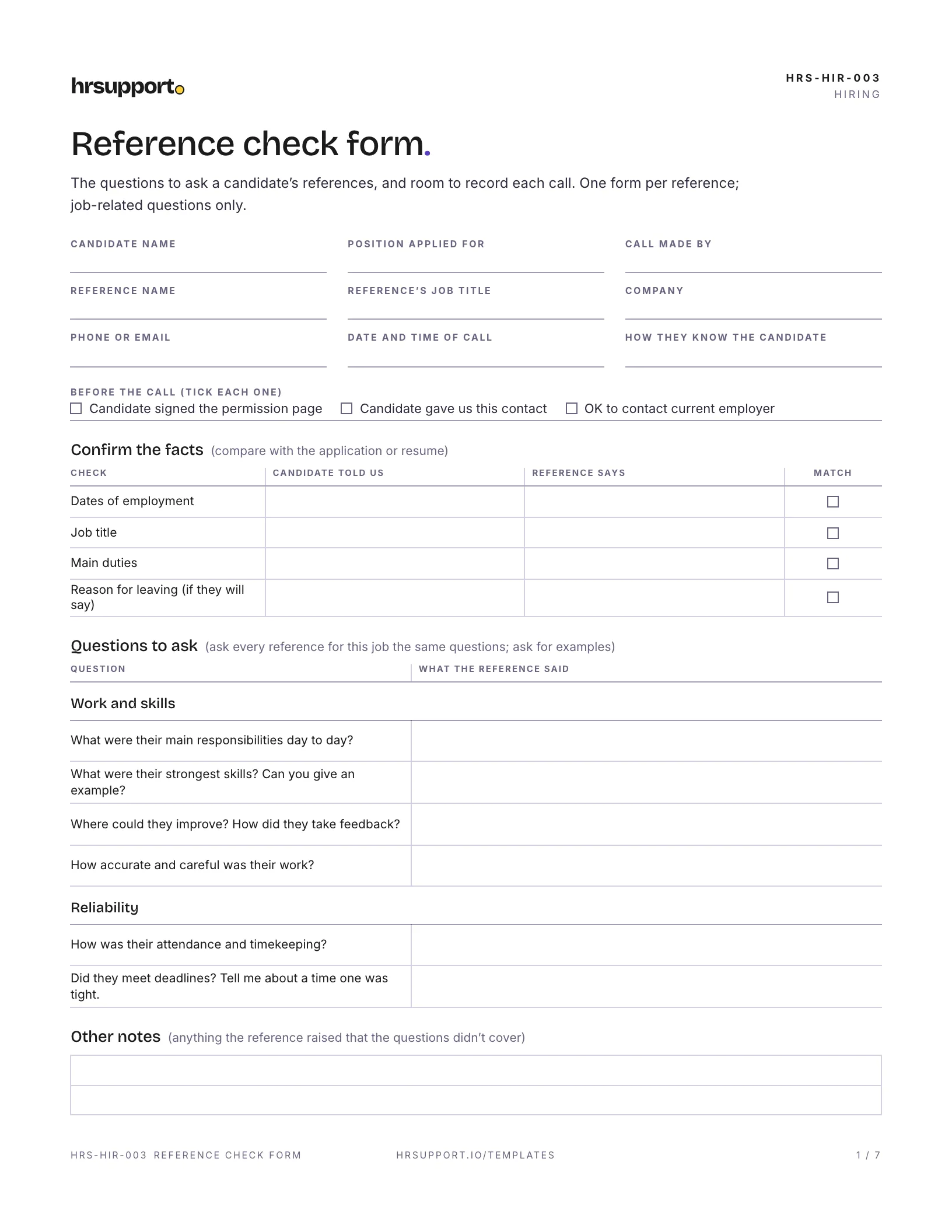
 Reference Check Questions and FormJob-related questions, a form for each call, and the candidate's permission.Free
 Word
Word PDF
PDFTell candidates they didn't get the job, kindly and briefly. A letter for people you interviewed, a short email for everyone else, and a record of who you told.
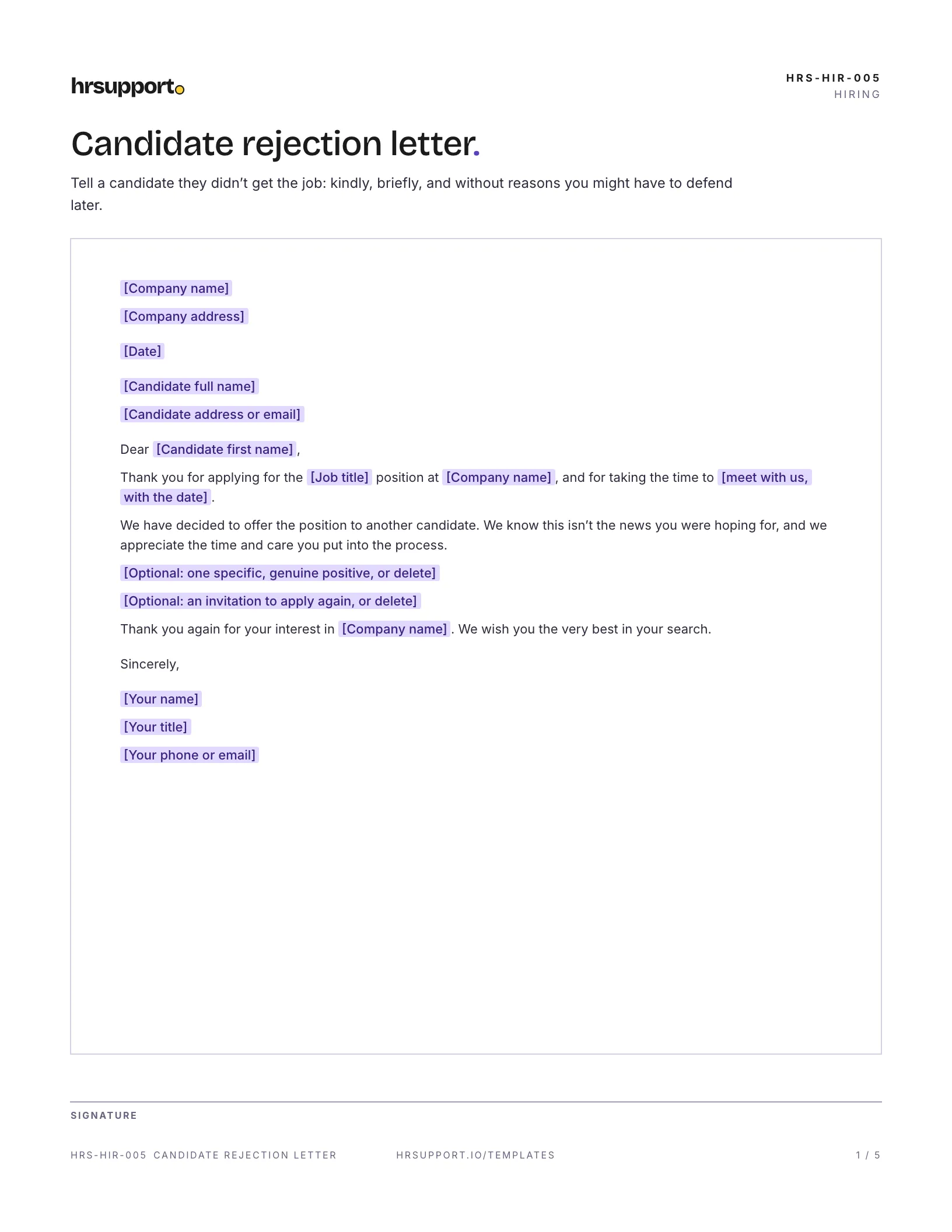
A free rejection letter template for employers, in Word and PDF. Use it when a job is filled and you need to tell the other candidates. Sheet one is a short, kind letter for people you interviewed. Sheet two is a candidate rejection email for applicants you didn’t interview, with a table to record who you told and when. Both say no clearly and give no reasons you might have to defend later.
The example in the download is from the owner of a fictional bakery, filling an assistant baker job. The letter thanks a candidate for meeting on October 7, tells her the job went to someone else, and mentions one genuine moment from the interview: the rye loaf she brought in. The email goes to an applicant who wasn’t interviewed. The record table shows four notices sent on the same day, two after interviews and two at the application stage.
People who only sent an application don’t need a letter, but a short email is a courtesy they’ll remember. Keep it to two or three lines: thanks for applying, you won’t be moving forward with their application for this role, and good luck. Send it once the job is filled, from a person rather than a no-reply address. If you used a job board, its built-in message is fine too; just keep the wording the same for everyone at that stage.
Some candidates will reply and ask what they could have done better. You don’t have to give feedback, but if you do, keep it short, job-related and true: “The role needed someone with experience running a production oven on their own, and the person we hired had three years of it.” Don’t compare them with the other candidate as a person, and don’t reopen the decision. Whatever you choose, do the same for everyone who asks, and keep a note of what you said with their application.
A plain rejection letter isn’t enough if a report from a background screening company is any part of the reason. The FTC says you must first send the candidate a notice that includes a copy of the report. After you decide, you send an adverse action notice. It names the screening company, with its address and phone number, and tells the candidate they can dispute the accuracy or completeness of the report. If you checked references yourself, see the reference check form.
If you have 15 or more employees, the EEOC’s rule at 29 CFR 1602.14 requires you to keep applications and other hiring records for one year. The year runs from the date of the record or the hiring decision, whichever is later, and longer if a discrimination charge is filed. With 20 or more employees, 29 CFR 1627.3 also requires one year for applications and records about a refusal to hire. Keep a copy of each rejection and the record table with them.
Filling a job and not sure what your state requires? hrsupport.io answers HR questions for your state, with the law behind every answer.
Ready to use it? It’s free, and comes with a filled-in example.
Template questions
Thank them for applying and, if you met, for their time. Say plainly that you've offered the job to someone else or won't be moving forward. Add one genuine, specific positive if you have one, and invite them to apply again only if you mean it. Then wish them well. Three or four short paragraphs is plenty.
Usually not in the letter. Reasons invite argument, and vague ones such as "not the right fit" or "overqualified" can be read as cover for something else. If a candidate asks for feedback, you can offer a job-related point, such as the experience the role needed. Keep it factual, and give feedback the same way to everyone who asks.
Once your first choice has accepted the offer and any conditions, such as a reference check, have cleared. Then send the rest within a few days. Rejecting runners-up too early can leave you with no one to turn to if the offer falls through; waiting weeks leaves people hanging.
Yes. Most small businesses email it, either as the body of the email or as a PDF letter attached. A phone call is a kind touch for finalists who met the team several times, followed by the letter so they have it in writing. Send it from a real person's address, not a no-reply inbox.
Yes, if you can. A short email closes the loop and leaves a better impression of your business. The template's second sheet is a two-line candidate rejection email for this, plus a table to record who was told, when and how. If you had hundreds of applicants, a note in the job ad saying you'll only contact people you interview is a common alternative.
If you have 15 or more employees, EEOC rules (29 CFR 1602.14) require you to keep applications and other hiring records for one year from the date of the record or the hiring decision, whichever is later, and longer if a discrimination charge is filed. With 20 or more employees, the age discrimination rules (29 CFR 1627.3) also require one year.
Free HR templates
Reference Check Questions and FormJob-related questions, a form for each call, and the candidate's permission.FreeWordPDF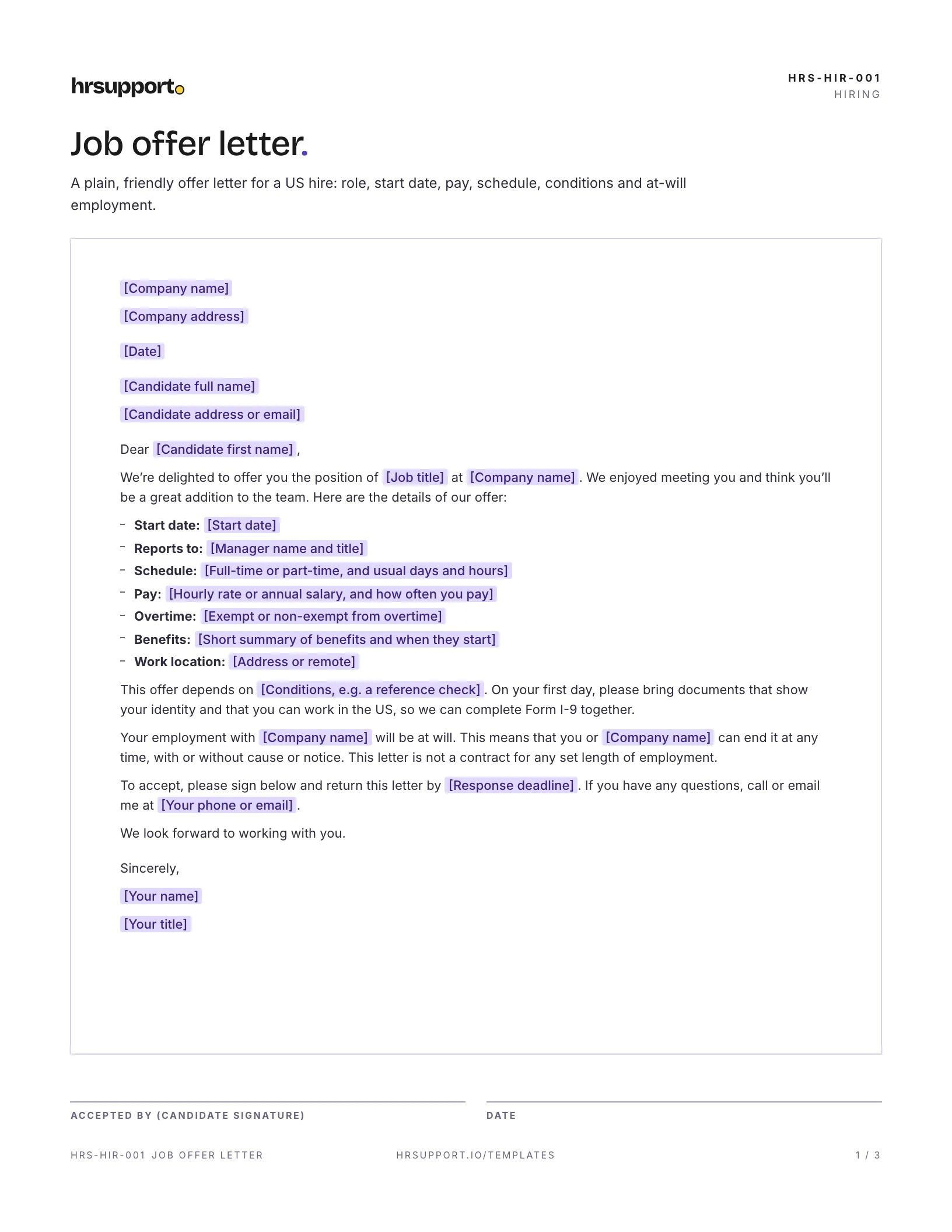 Offer Letter TemplateRole, start date, pay, schedule and at-will wording, ready to edit in Word.FreeWordPDF
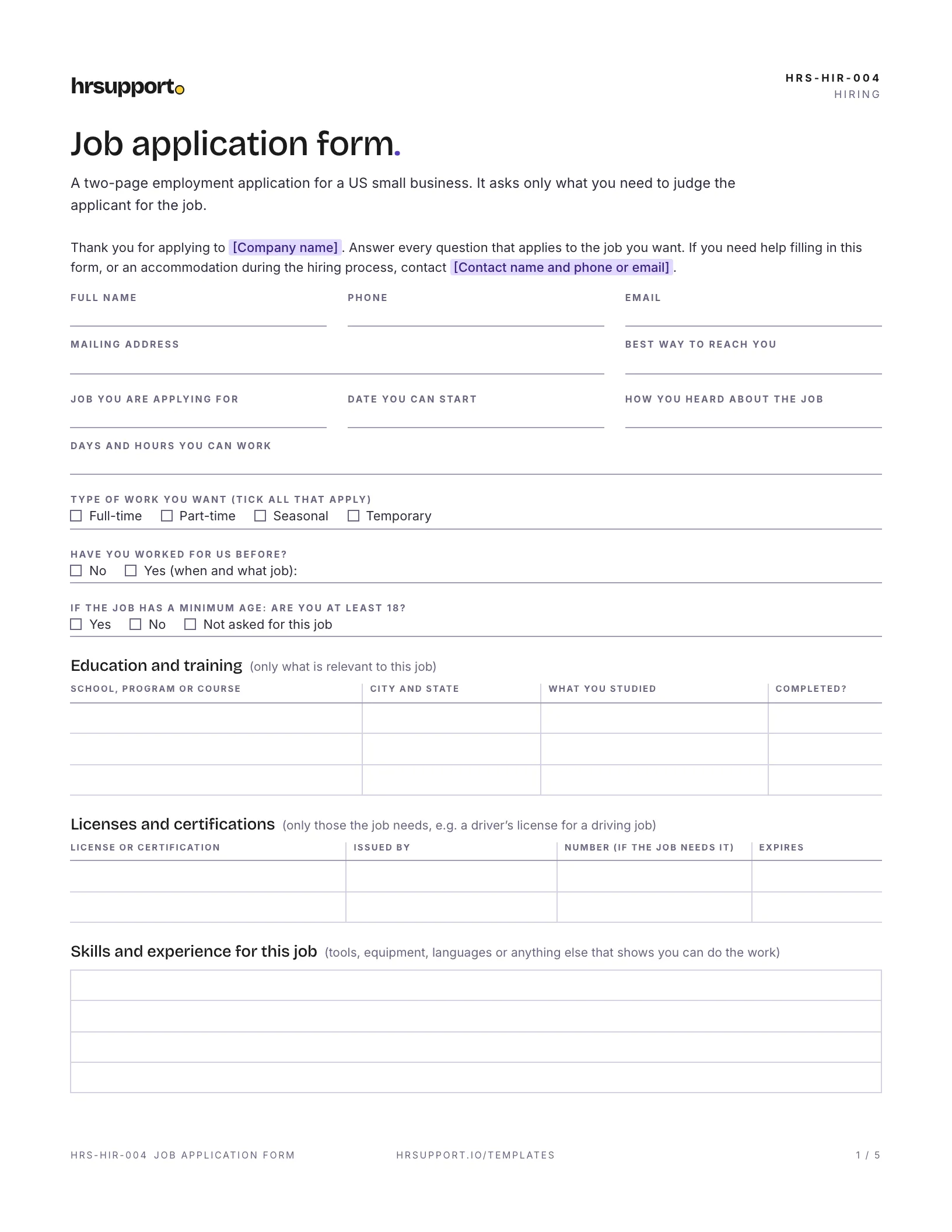 Employee Application FormAvailability, work history, references and a signed certification, on two pages.FreeWordPDF
Join the waitlist for early access and early-access pricing. It takes ten seconds.