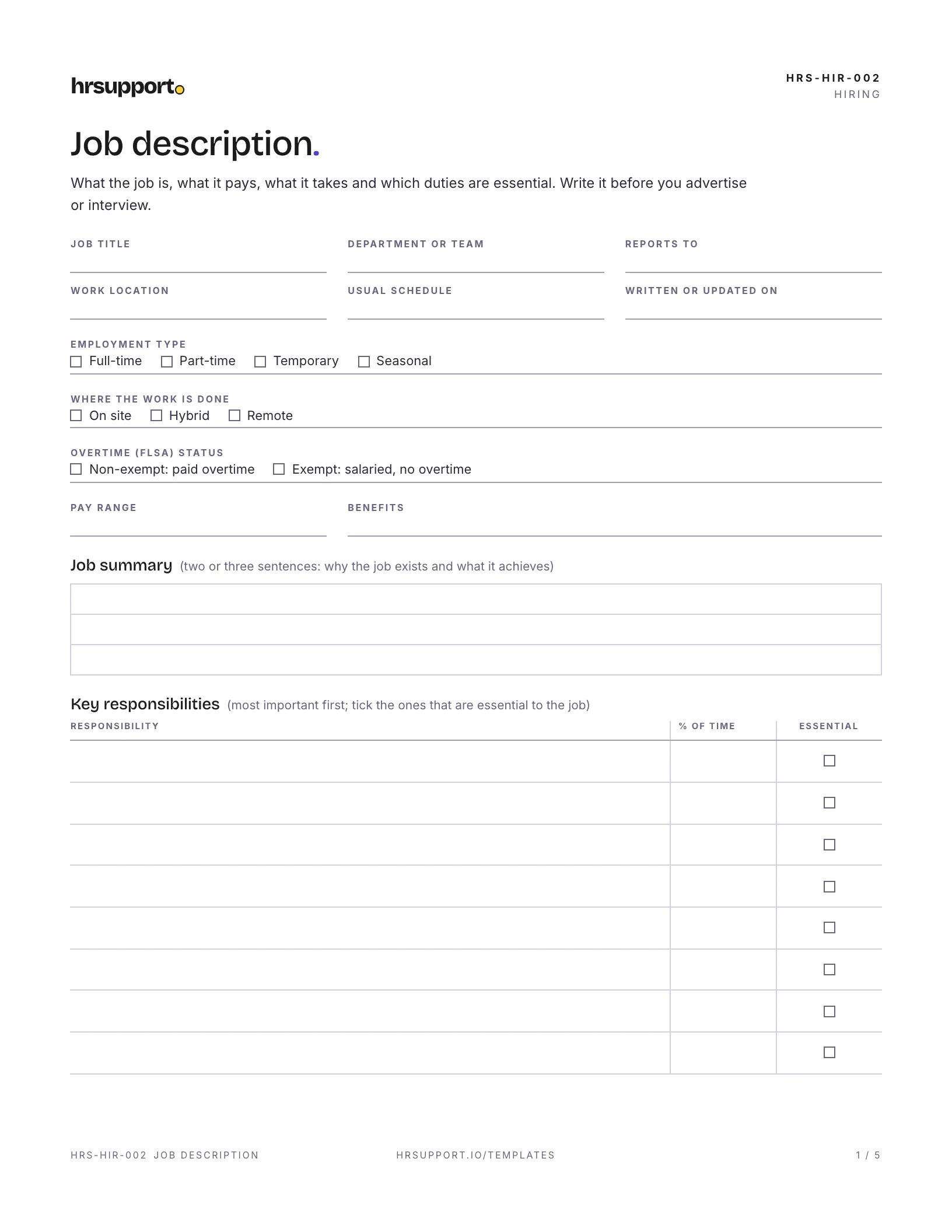
 Job Description TemplateDuties, essential functions, FLSA status, pay range, qualifications and an EEO statement.Free
 Word
Word PDF
PDFThe questions to ask a candidate's references, a form to record each call, and a page for the candidate's list of references and permission.
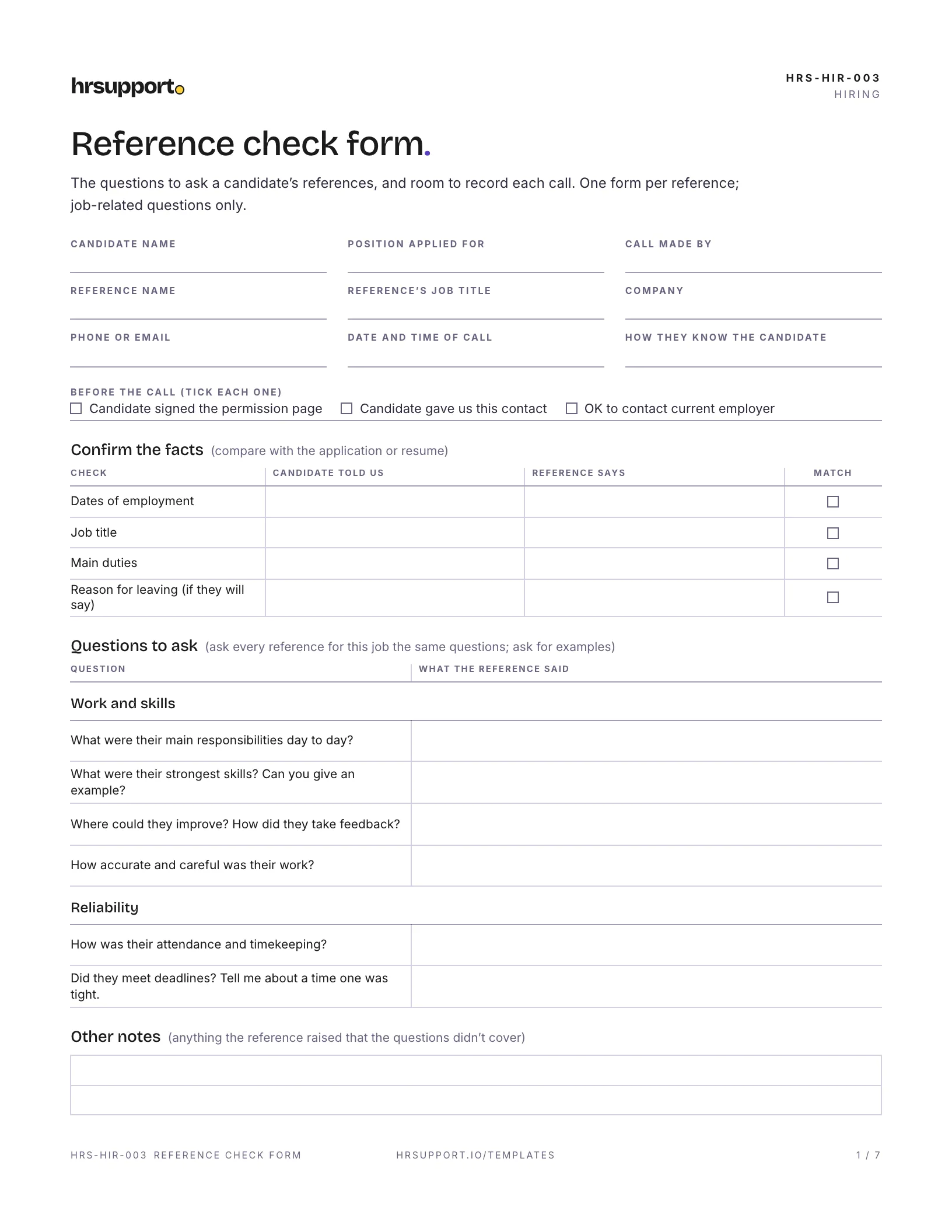
Reference check questions that stick to the job, and a free form to record each call, in Word and PDF. Use it when you’ve interviewed your finalists and want to hear from people who have seen their work. Every reference gets the same questions, so you can compare candidates fairly. The answers go on paper, and the candidate’s permission is on file before you pick up the phone.
A Word file to fill in on screen, and a seven-page PDF sized for US Letter paper:
Page one records who you called and when, confirms you have permission, and checks the facts against the application: dates, job title, duties and reason for leaving. Then come the questions about work and skills and about reliability. Page two covers working with others and fit for the job. It ends with an overall rating, a summary box for follow-up and a reminder of what never to ask.
Work and skills
Reliability
Working with others
Fit for this job
The last question often gets the most useful answer. Leave a pause after it.
The example in the download is from a fictional bookkeeping firm checking references for a staff bookkeeper. The candidate’s former supervisor confirms his dates, job title and duties, and gives specific answers about his accuracy, a vendor dispute he settled and a tight year-end close. One gap comes up: he has entered payroll but never run it. The summary flags it as a question for the second interview. The permission page lists three references, and the office-use box shows which two were called.
The rule of thumb: don’t ask a reference anything you couldn’t ask the candidate. The EEOC says an employer may not ask a third party, including a former employer, any question it couldn’t ask the applicant directly. Before an offer, that means no questions about disability, health or workers’ compensation claims. You can ask about a past attendance record.
Also leave out age, pregnancy or family plans, religion, race, national origin and other protected traits. Some states and cities ban asking about pay history. California, for example, bars employers from seeking it “personally or through an agent” (Labor Code 432.3). Where a ban applies, don’t ask references about past pay either.
Calling references yourself is a reference check. Paying a screening company to do it, or to run a background check, brings in the Fair Credit Reporting Act. A report built from interviews with people who know the candidate is an “investigative consumer report” (15 U.S.C. 1681a(e)). Before you get one, the FTC says you must tell the candidate in writing, in a stand-alone document, and get their written permission. If you then reject them because of the report, there are notices to send first. The permission page in this template covers your own calls; it isn’t an FCRA disclosure.
A reference check asks people who know the candidate’s work how they did it. An employment verification only confirms facts from the employer’s records, such as job title and dates, and many employers answer every reference call that way. If that’s all you get, record it under “Confirm the facts”, tick “Facts only” and ask the candidate for another work reference. When your own former employees ask you for a letter, the employment verification letter and the reference letter cover both sides.
Hiring and not sure what you can ask in your state? hrsupport.io answers HR questions for your state, with the law behind every answer.
Ready to use it? It’s free, and comes with a filled-in example.
Template questions
Start by confirming the facts, such as dates, job title and duties. Then ask about the work. What were their main responsibilities and strongest skills? Where could they improve, and how did they take feedback? How was their attendance? How did they handle a tight deadline or a difficult customer? Would you hire them again? Ask for an example each time, and ask every reference for the same job the same questions.
Anything you couldn't ask the candidate directly. The EEOC says an employer may not ask a third party, such as a former employer, questions it couldn't ask the applicant. That rules out health, disability and workers' compensation history before an offer. Leave out age, pregnancy or family plans, religion, race, national origin and other protected traits. In some states, such as California, pay history is off limits too.
Getting it is good practice, and the form includes a permission page. If you pay a background screening company to contact references for you, the Fair Credit Reporting Act applies. The FTC says you must tell the candidate in writing, in a stand-alone document, and get their written permission before you get the report.
Two or three is common for a small business, and at least one should be someone who supervised the candidate's work. A coworker or a client can add to that. A personal friend tells you much less. If a former employer will only confirm dates and job title, note it and ask the candidate for another work reference.
Many employers have a facts-only policy, so it's not a bad sign on its own. Note it on the form (there's a tick box for it), confirm what they will share, and ask the candidate for another person who knew their work, such as a former supervisor who has since moved on, or a client.
Keep them with the hiring paperwork for the job. If you have 15 or more employees, EEOC rules (29 CFR 1602.14) require you to keep hiring records for one year from the date of the record or the hiring decision, whichever is later, and longer if a discrimination charge is filed. State rules can be longer.
Free HR templates
Job Description TemplateDuties, essential functions, FLSA status, pay range, qualifications and an EEO statement.FreeWordPDF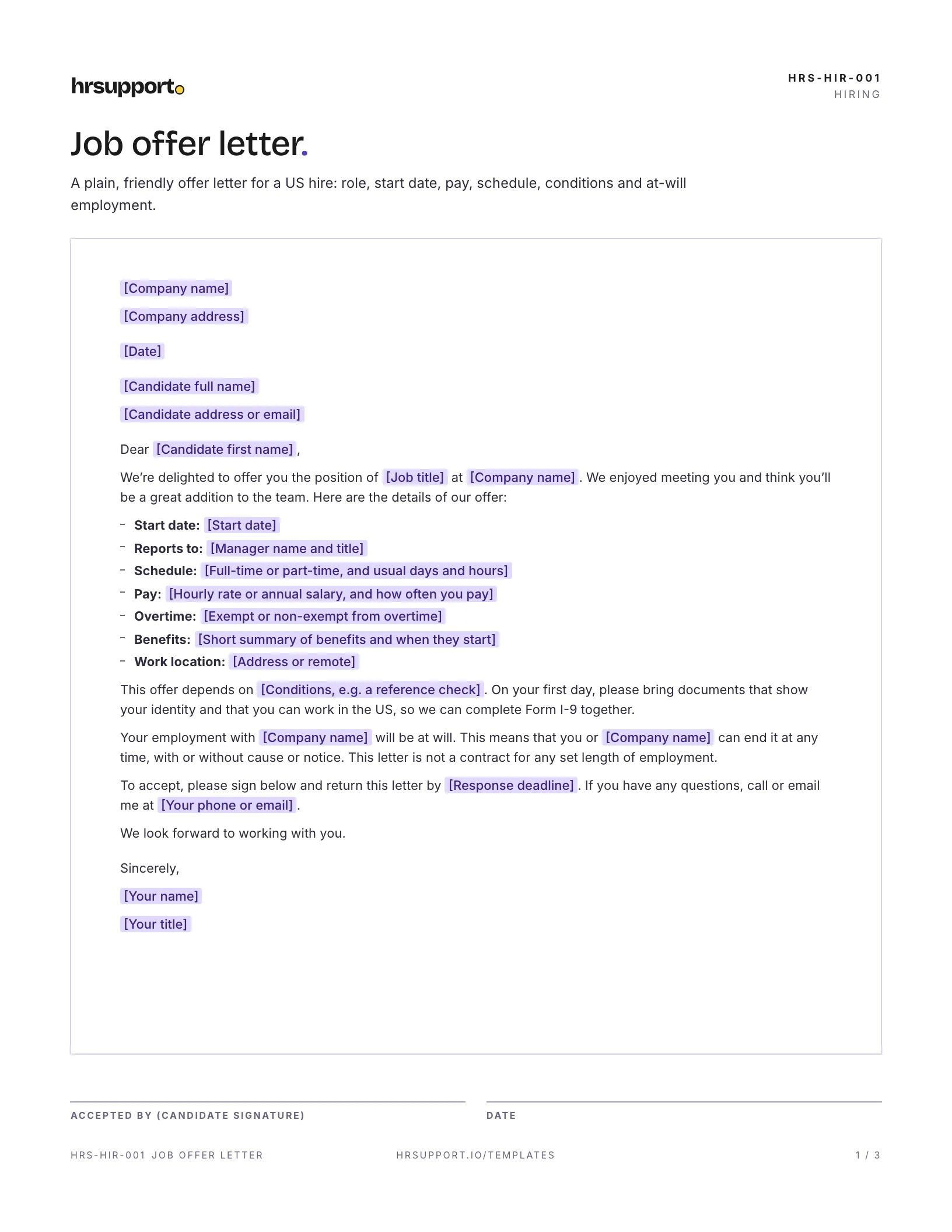 Offer Letter TemplateRole, start date, pay, schedule and at-will wording, ready to edit in Word.FreeWordPDF
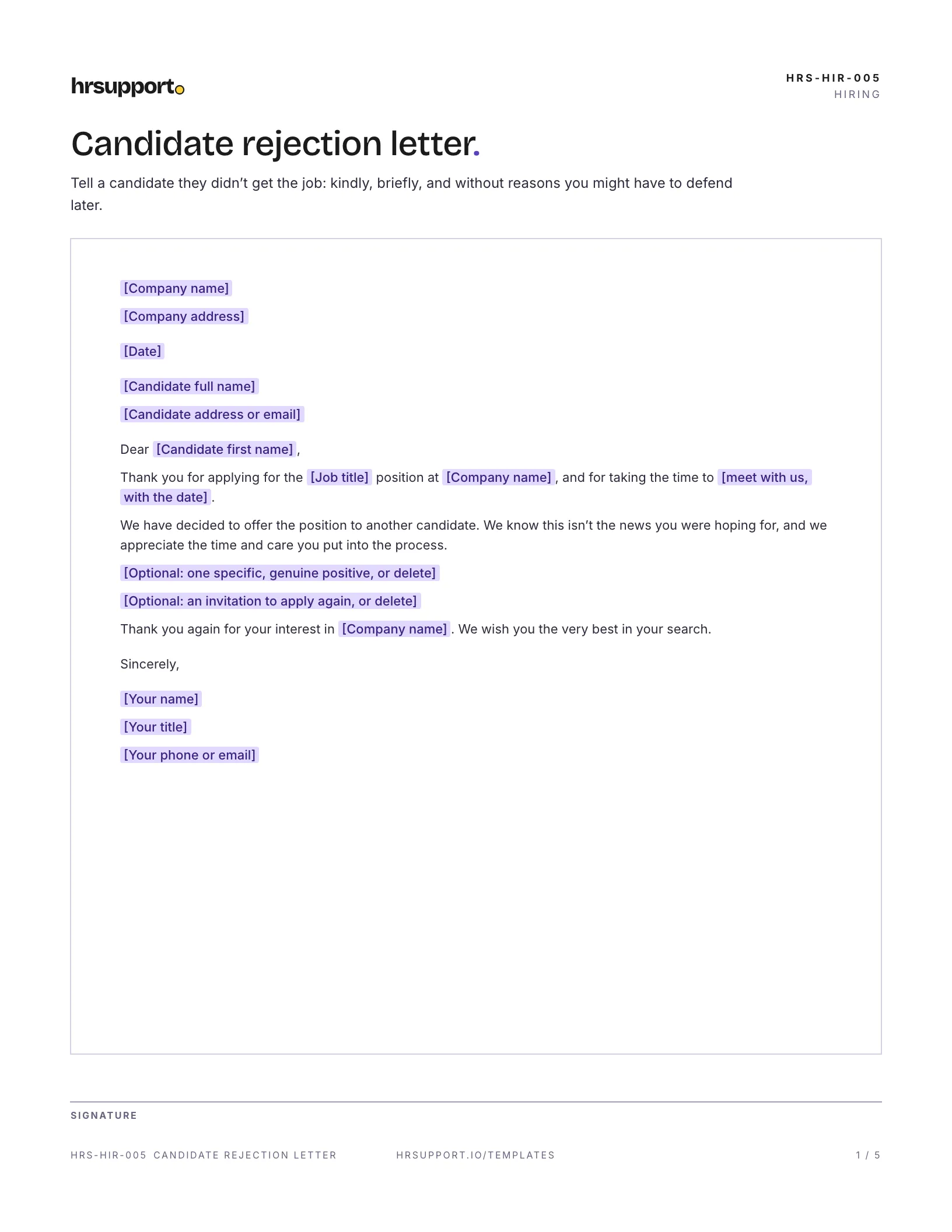 Candidate Rejection Letter TemplateA letter after an interview and a short email for other applicants.FreeWordPDF
Join the waitlist for early access and early-access pricing. It takes ten seconds.