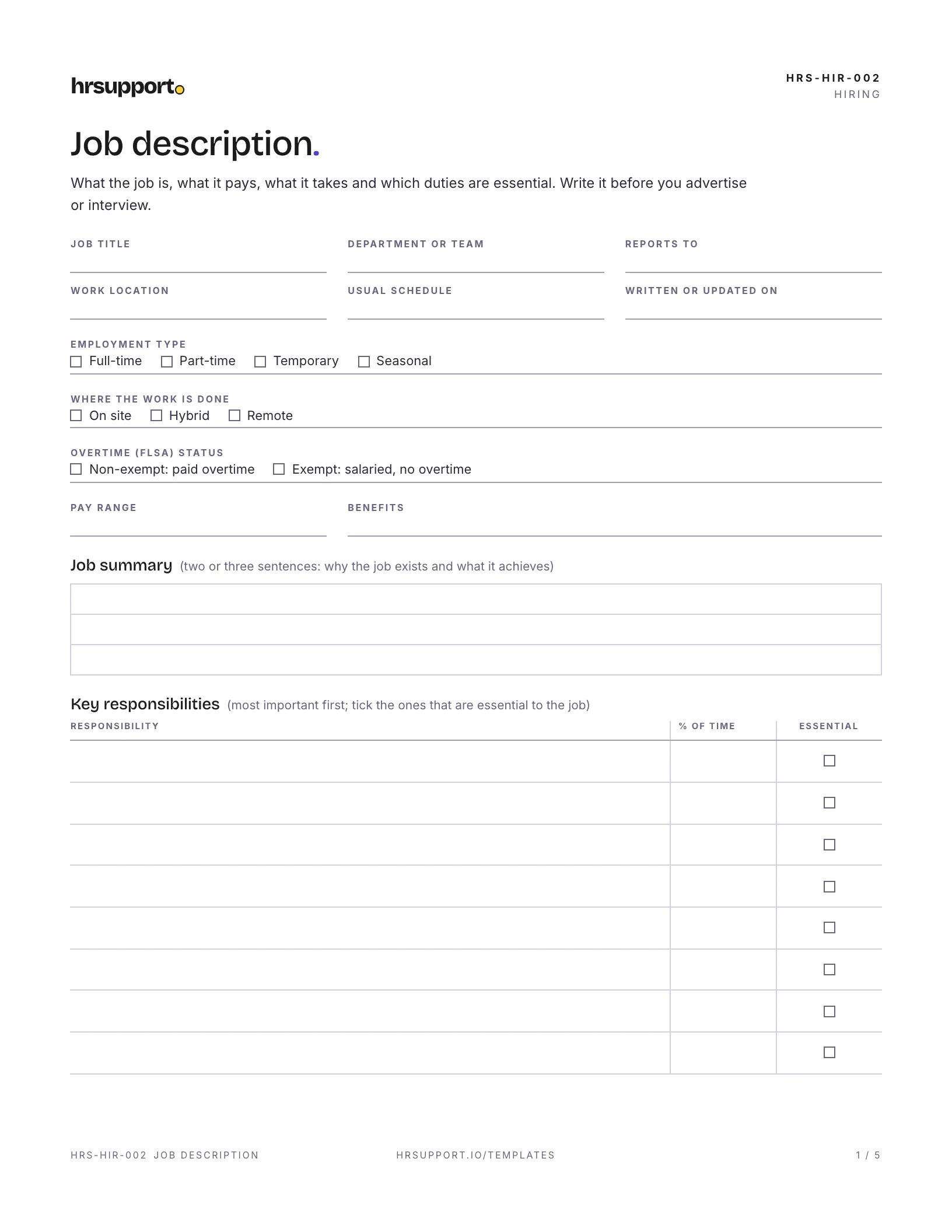
 Job Description TemplateDuties, essential functions, FLSA status, pay range, qualifications and an EEO statement.Free
 Word
Word PDF
PDFA two-page employment application that asks only what you need to judge someone for the job, and leaves out the questions that get employers into trouble.
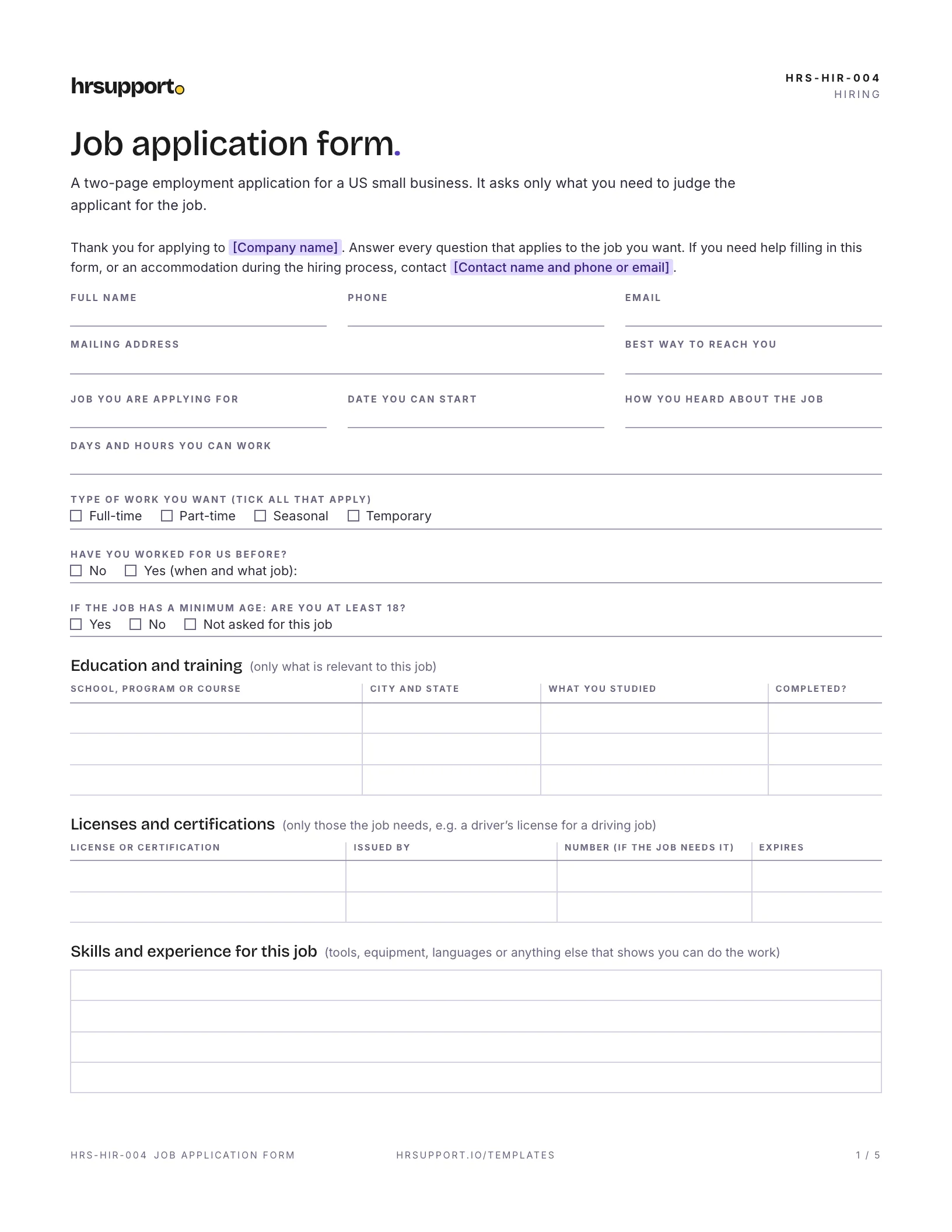
This free employee application form gives a US small business one consistent way to collect job applications. It covers contact details, availability, education, work history, references and a signed certification, on two pages you can print or send as a Word file. Just as important, it leaves out the questions that create legal risk: salary history, criminal history, citizenship, health and personal life.
A five-page PDF, sized for US Letter paper, and an editable Word file:
Page one asks for contact details, the job and start date, the days and hours the person can work, and the type of work they want. It also covers whether they’ve worked for you before, an optional minimum-age check, education, licenses and a box for skills. Page two has the work history and references, an optional “anything else” box, a work eligibility statement, the applicant’s certification and a signature line.
The example in the download is an application for a landscape crew member at a fictional landscaping company in North Carolina. The applicant can start in two weeks, wants full-time seasonal work, and lists two semesters of a horticulture program, a driver’s license and a pesticide license in progress. His work history shows two jobs with reasons for leaving and permission to contact both, and two references from former supervisors. The certification is signed and dated.
The EEOC says information about race, sex, national origin, age and religion is irrelevant to hiring decisions, and that employers shouldn’t ask for a photo (EEOC). It also lists questions about marriage, pregnancy and children among those that can suggest discrimination. These questions are off the form for that reason, along with:
If you run background checks, the FTC says the notice must be a stand-alone document, not part of the application (FTC).
Use the PDF for walk-in applicants: print a stack and keep them at the counter. Use the Word file when you post a job online. Email it, and the applicant can type their answers and send it back, or print, sign and scan it. Either way, keep the questions the same for every applicant for the same job, so you can compare them fairly. If you collect applications through a job board or a form builder instead, use this template as the list of questions to ask, and to leave out.
If you have 15 or more employees, EEOC rules require you to keep application forms for one year from the hiring decision, and longer if a discrimination charge is filed (29 CFR 1602.14). That includes the people you didn’t hire. Store them somewhere private, and keep any notes you made about each applicant with them.
Get advice before you add a question about criminal history, pay or anything medical, or before you hire in a new state or city for the first time. The same goes if you plan to use a background check company, because the notice and consent rules are strict.
Not sure what you can ask applicants in your state? That’s what hrsupport.io is for: HR answers for your state, with the law behind every answer.
Ready to use it? It’s free, and comes with a filled-in example.
Template questions
Contact details, the job applied for, the date the person can start and when they can work, relevant education and licenses, work history with reasons for leaving, references, and a signed statement that the information is true. Leave out anything that isn't needed to judge the person for the job, such as age, marital status, health or a photo.
Federal law bars hiring decisions based on race, color, religion, sex, national origin, age (40 or older), disability or genetic information, and the EEOC advises against questions that touch on them. Under the ADA, you generally can't ask disability-related questions until after a conditional offer. Some states and cities also bar questions about salary history or criminal history.
It depends on where you hire. Some states and cities have "ban the box" laws that keep the question off the application. For example, in California, employers with five or more employees can't ask about conviction history until after a conditional offer. If you run a background check, the FTC requires a separate, stand-alone notice and the applicant's written permission.
Not in a growing number of places. New York and California, for example, both bar employers from seeking an applicant's pay history. That's why this form has no pay column in the work history. Check your state and local law before you add a pay question of any kind.
The EEOC says most employers shouldn't ask whether an applicant is a US citizen before making an offer. Instead, the form includes the EEOC's suggested statement that everyone hired must verify their identity and eligibility to work. The actual check is Form I-9, which the new employee completes after accepting your offer and no later than their first day.
If you have 15 or more employees, EEOC rules require you to keep application forms for one year from the date of the hiring decision, including from people you didn't hire. If someone files a discrimination charge, keep all the related applications until it's resolved.
Free HR templates
Job Description TemplateDuties, essential functions, FLSA status, pay range, qualifications and an EEO statement.FreeWordPDF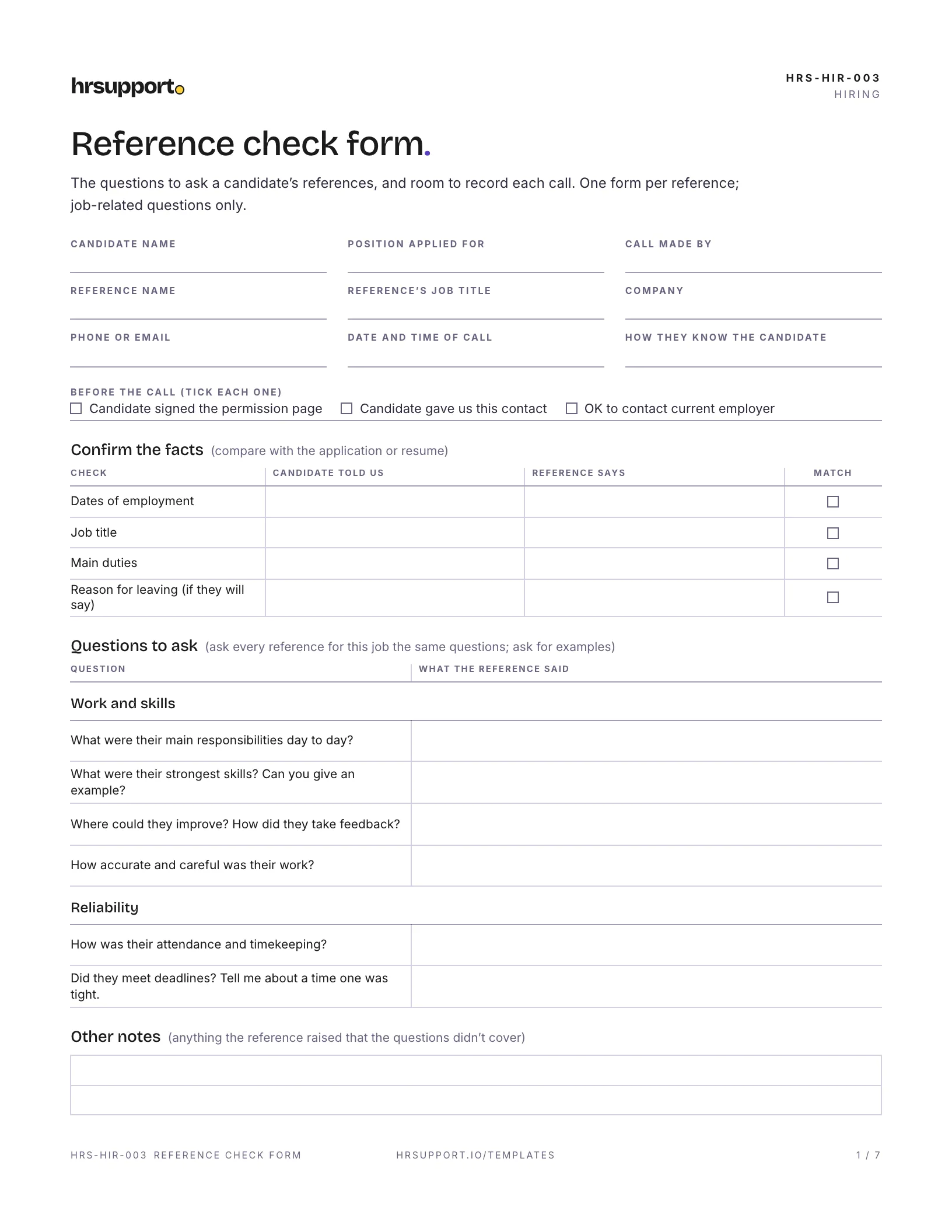 Reference Check Questions and FormJob-related questions, a form for each call, and the candidate's permission.FreeWordPDF
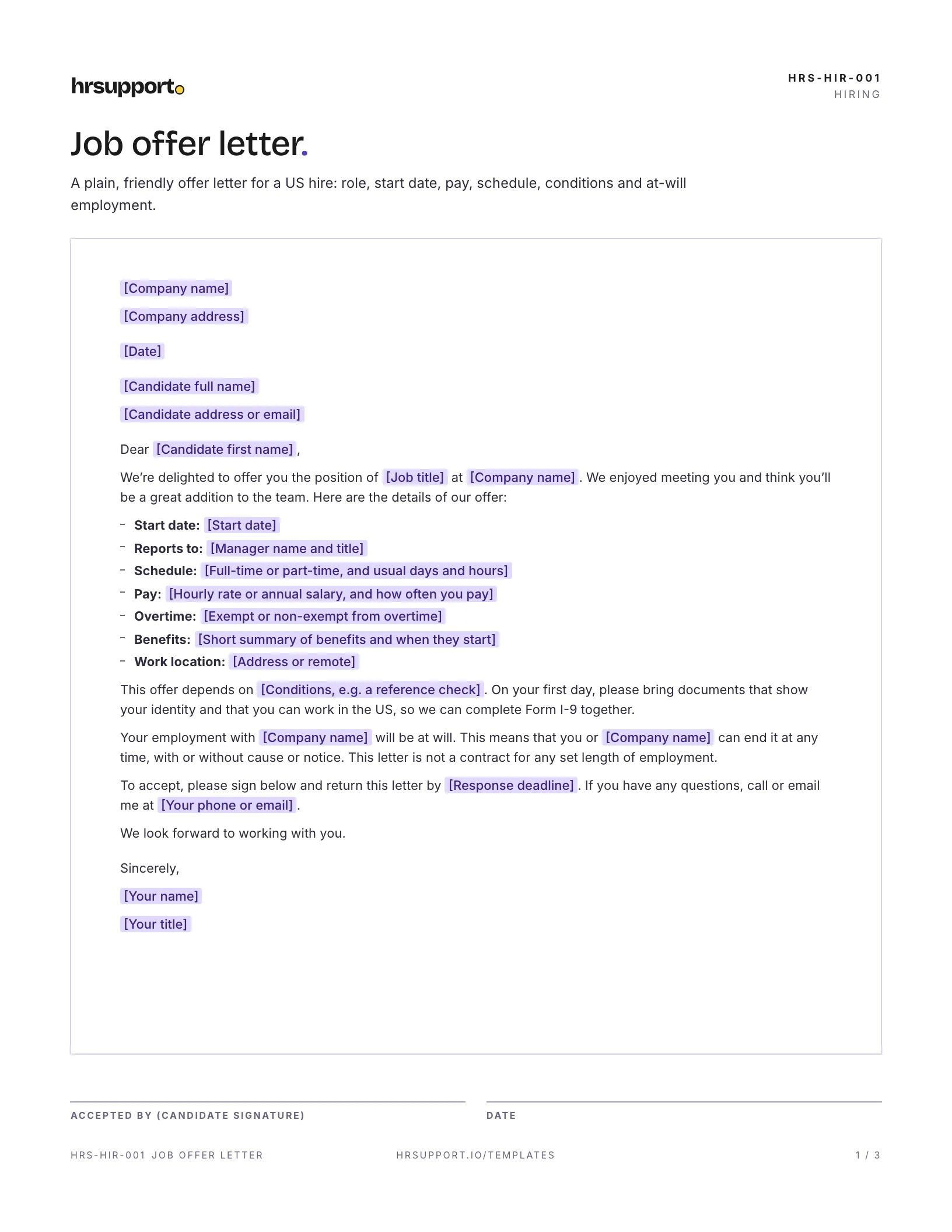 Offer Letter TemplateRole, start date, pay, schedule and at-will wording, ready to edit in Word.FreeWordPDF
Join the waitlist for early access and early-access pricing. It takes ten seconds.