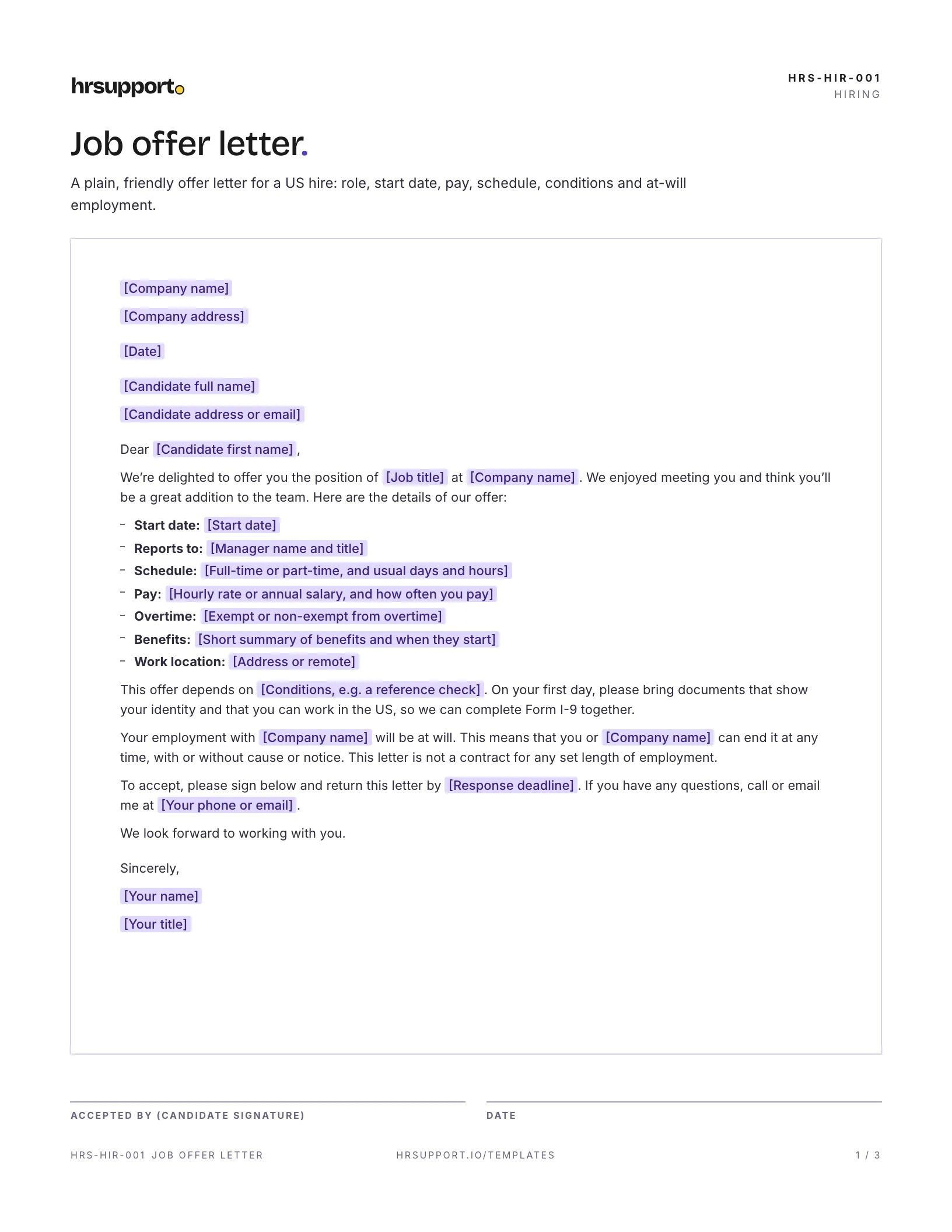
 Offer Letter TemplateRole, start date, pay, schedule and at-will wording, ready to edit in Word.Free
 Word
Word PDF
PDFA short, plain-English handbook for a small business with no HR department. Fill in your details, add your state's rules, and get it signed.
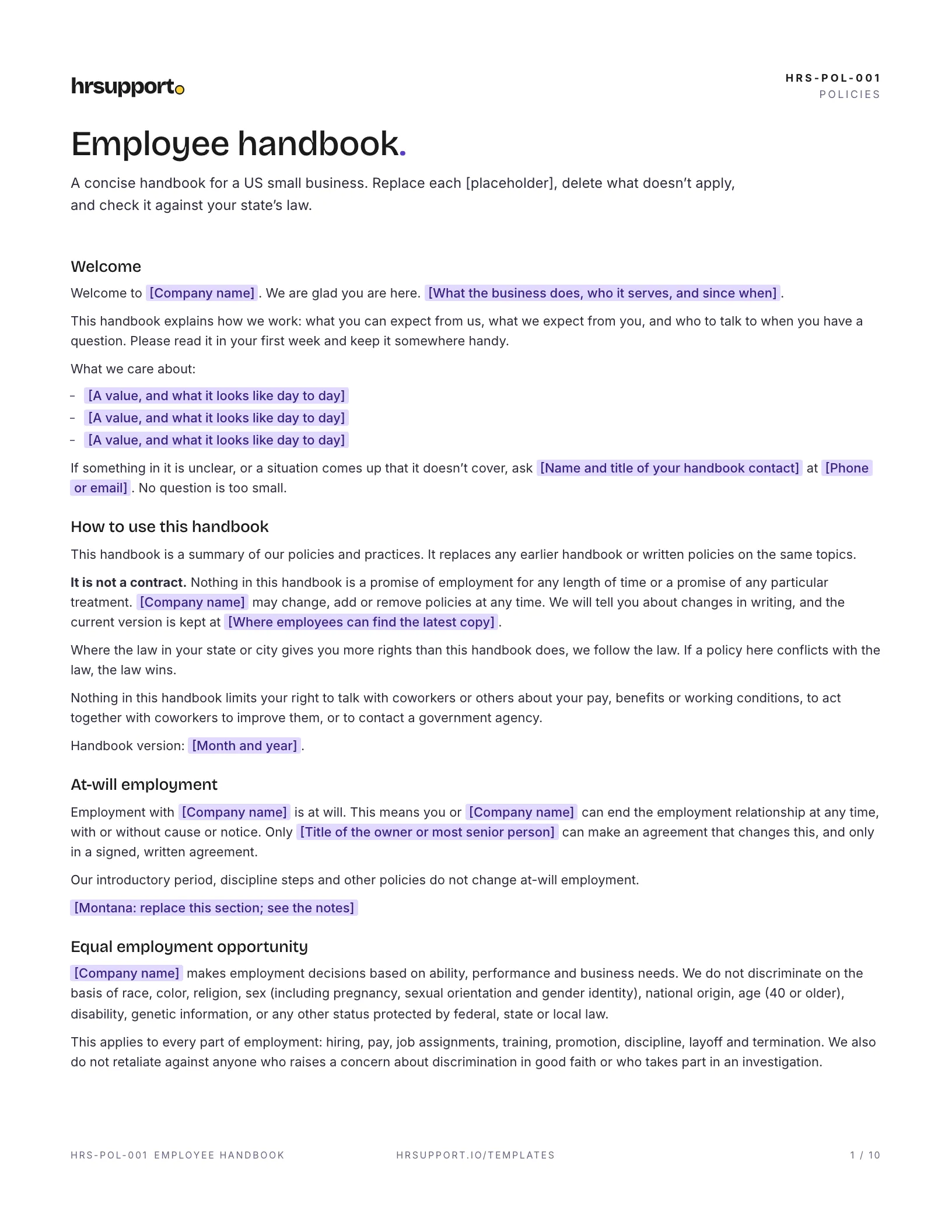
This free employee handbook template gives a US small business a short, plain-English handbook in Word and PDF. It’s built for owners and office managers with no HR department, at businesses with 1 to 50 employees. It covers the policies most small businesses need, with a highlighted [placeholder] for every detail you fill in: your company name, hours, pay days, time off and contacts.
A ten-page PDF, sized for US Letter paper, and an editable Word file:
There’s no filled-in example this time: the handbook itself is the template. Every placeholder is tinted so you can’t miss one, and the Word file lets you delete the policies you don’t need.
Big-company handbooks run to 50 pages and cover benefits plans, unions and global offices. This one is concise on purpose. Each policy is a few short paragraphs, written the way you’d explain it to a new hire, so people actually read it. It still covers what matters most when something goes wrong: how to report harassment, how time is recorded, how discipline works, and that employment is at will.
If you’re hiring for the first time, use it alongside the offer letter template, which repeats the at-will statement and the key terms. When a policy is broken, the employee write-up form lets you quote the handbook section that was missed.
The handbook is written for federal law. Some states require more, and a few states’ rules change how you write the core policies. For example:
Paid sick leave, final pay, vacation payout, meal and rest breaks, and voting and jury leave also vary by state. That’s why the template uses placeholders such as [your state’s paid sick leave rules] instead of numbers.
Most non-supervisory employees, in a union or not, have the right to talk about their pay and working conditions with coworkers and others, and to contact a government agency (NLRB). You can’t discipline or threaten anyone for this, so a confidentiality or social media rule that bans “discussing wages” or “negative comments about the company” only creates risk. The template’s versions say plainly that they don’t limit those rights. Keep that wording if you edit them.
Have a lawyer review the handbook before you hand it out, and again if you open in a new state, reach 15 or 50 employees, or plan drug testing. Get advice before relying on the handbook to discipline or dismiss someone who has recently complained, asked for an accommodation or taken leave.
Want a quick answer on what your state requires before you finish your handbook? That’s what hrsupport.io is for: HR answers for your state, with the law behind every answer.
Ready to use it? It’s free, and comes with a filled-in example.
Template questions
At minimum, a statement that the handbook isn't a contract, at-will employment where it applies, equal opportunity and anti-harassment policies with a clear way to report problems, and your rules on hours, timekeeping, pay, overtime, time off and leave. Add conduct, discipline, safety, technology and confidentiality policies, and an acknowledgment page for each employee to sign. Keep it to what you actually do.
A handbook puts your rules in one place, so they're applied the same way to everyone. Some states also require certain written policies. New York, for example, requires every employer to adopt a sexual harassment prevention policy and give it to employees in writing. California requires a written harassment, discrimination and retaliation prevention policy, distributed to employees.
It shouldn't be, which is why this template says so plainly and why its acknowledgment page repeats it. Write policies as guidelines, not promises, and keep the right to change them. Following your own written policies still matters. In Montana, for example, a dismissal can be wrongful if the employer materially broke an express provision of its own written personnel policy.
Only if you're covered. The federal Family and Medical Leave Act applies to private employers with 50 or more employees in 20 or more workweeks in the current or previous calendar year. Smaller employers can leave it out, but check your state's family and medical leave law, which may apply to smaller businesses. California's, for example, covers employers with five or more employees.
Use this template as the base and add a California addendum. For example, California requires a written harassment, discrimination and retaliation prevention policy that lets employees complain to someone other than their own supervisor. It also requires overtime after eight hours in a workday, not just 40 in a week, and its family leave law covers employers with five or more employees. Have a California employment lawyer review it.
Give each employee a copy, on paper or by email, and ask them to read it and sign the acknowledgment page within a few days. The signature confirms they received it and know where to ask questions; it doesn't make the handbook a contract. File the signed page in their personnel file, and get a new signature when you make an important change.
Free HR templates
Offer Letter TemplateRole, start date, pay, schedule and at-will wording, ready to edit in Word.FreeWordPDF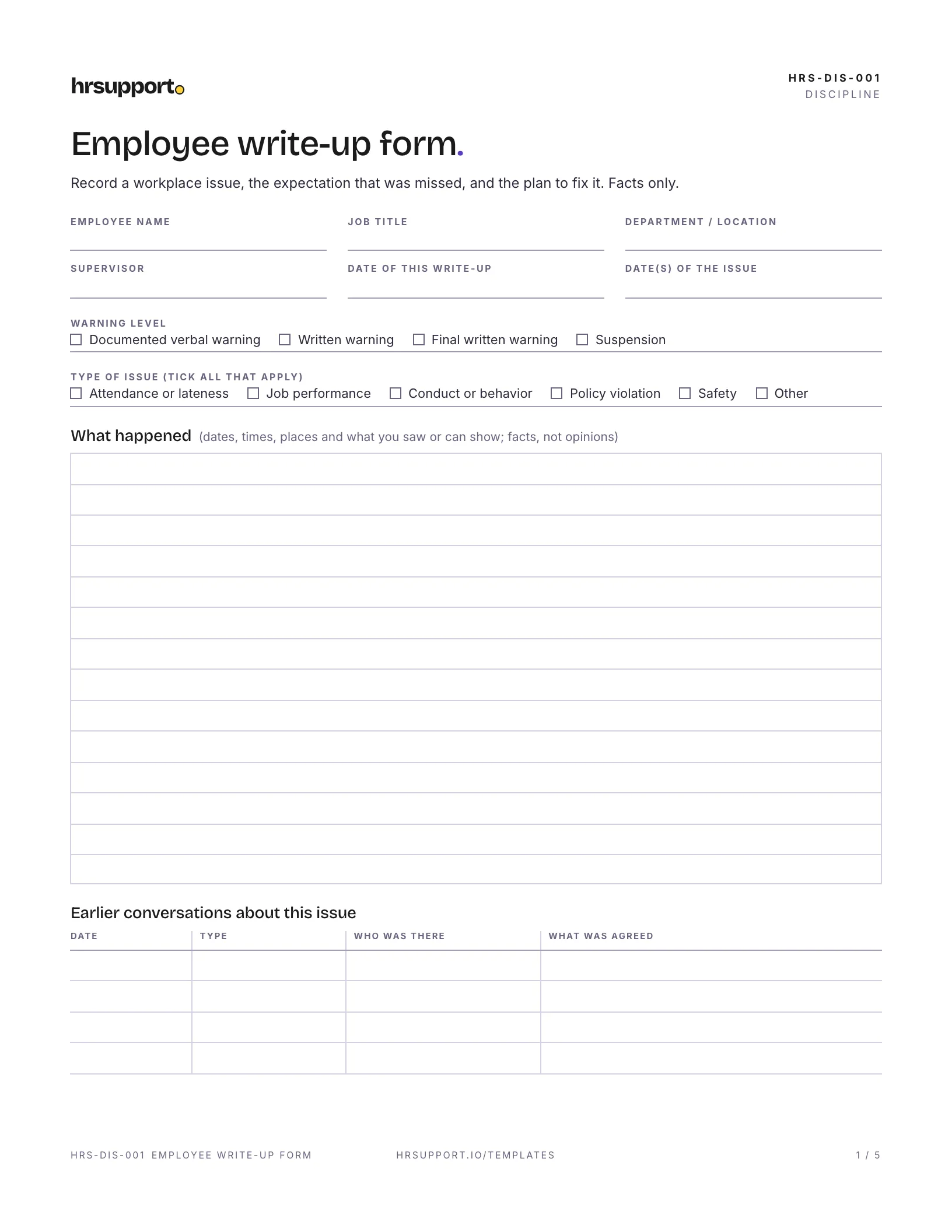 Employee Write-Up FormVerbal, written and final warnings, with an improvement plan and signatures.FreeWordPDF
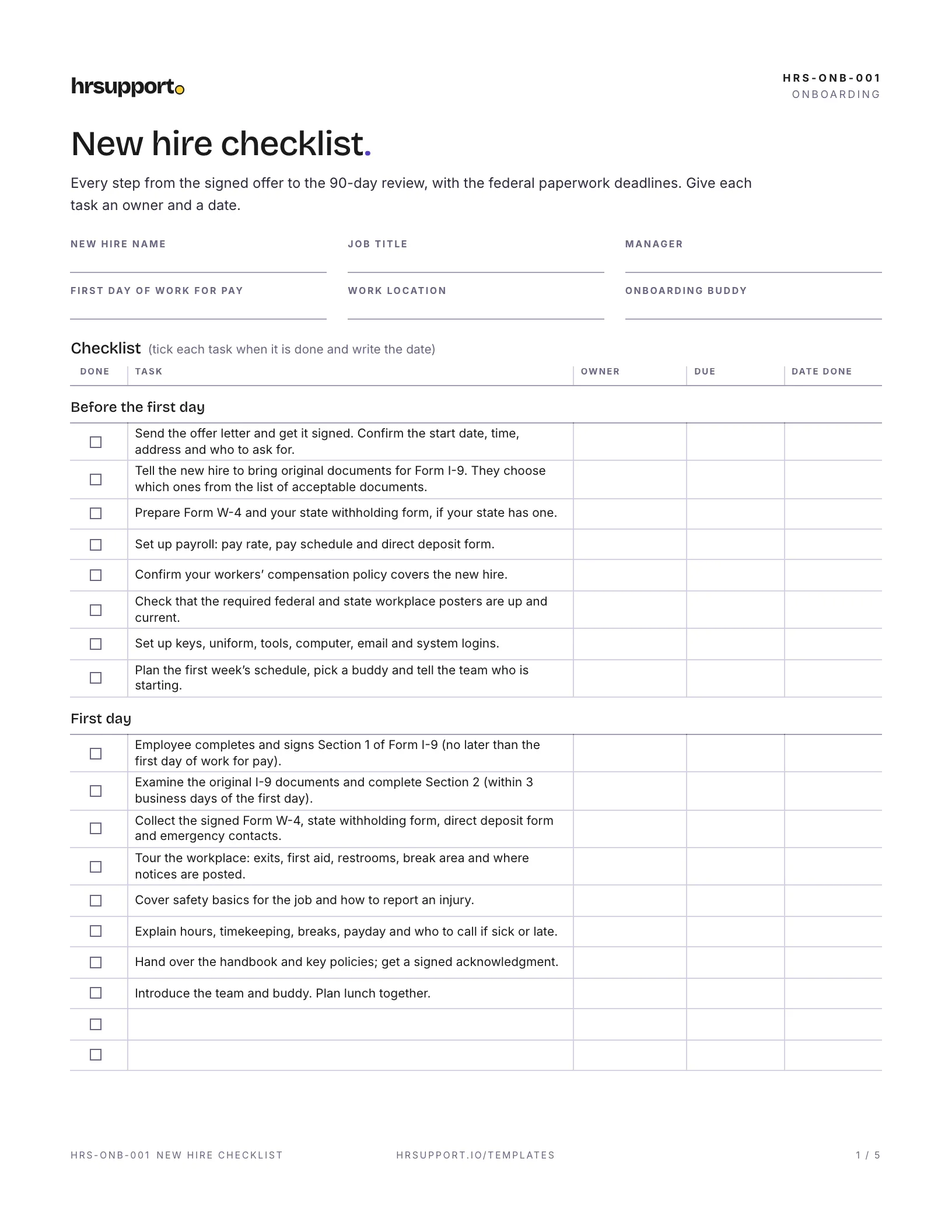 New Hire ChecklistBefore day one to the 90-day review, with the I-9, W-4 and state reporting deadlines.FreeWordPDF
Join the waitlist for early access and early-access pricing. It takes ten seconds.