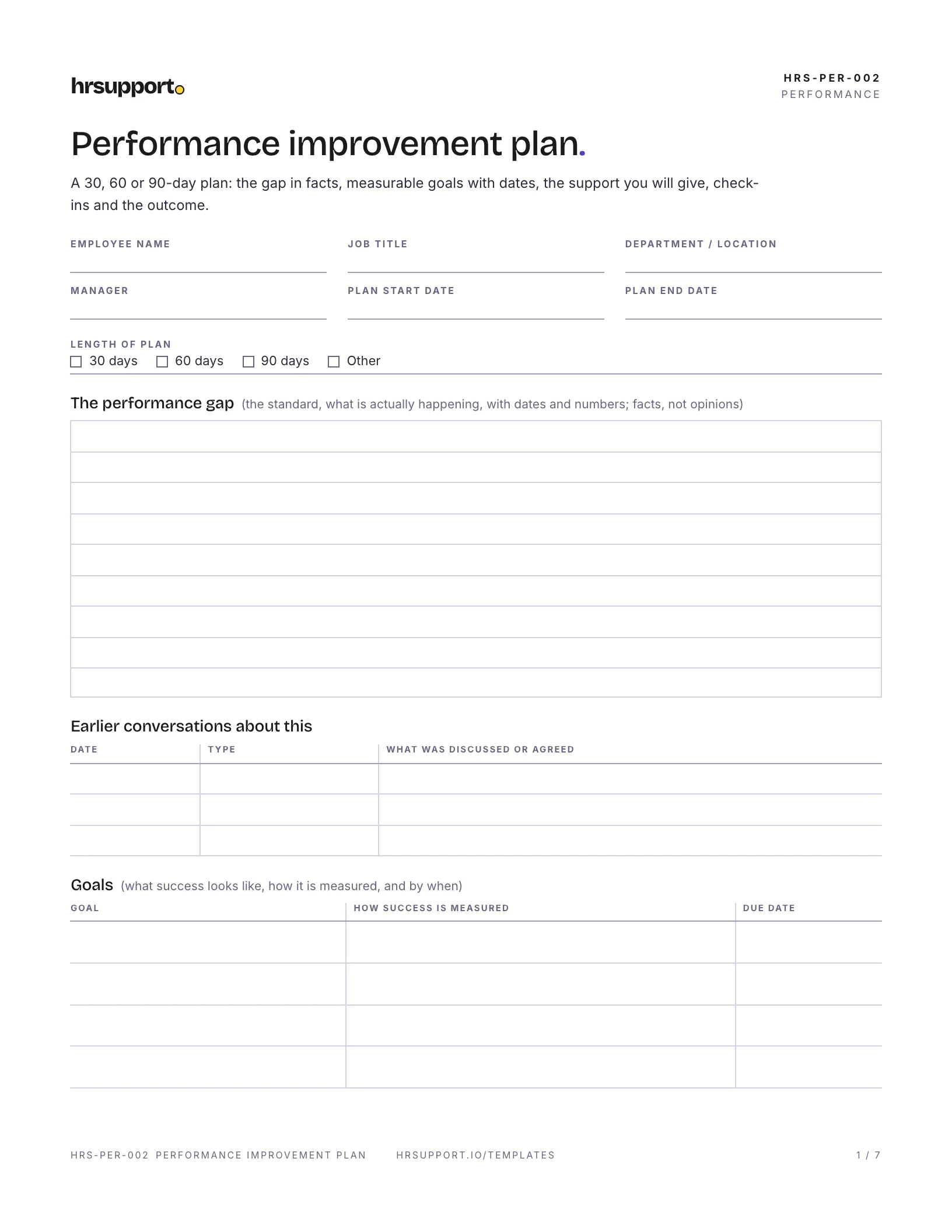
 Performance Improvement Plan Template30/60/90-day PIP with measurable goals, support, check-ins and an outcome page.Free
 Word
Word PDF
PDFDocument a warning the right way. Record the facts, the rule that was missed and a clear plan, then get it signed.
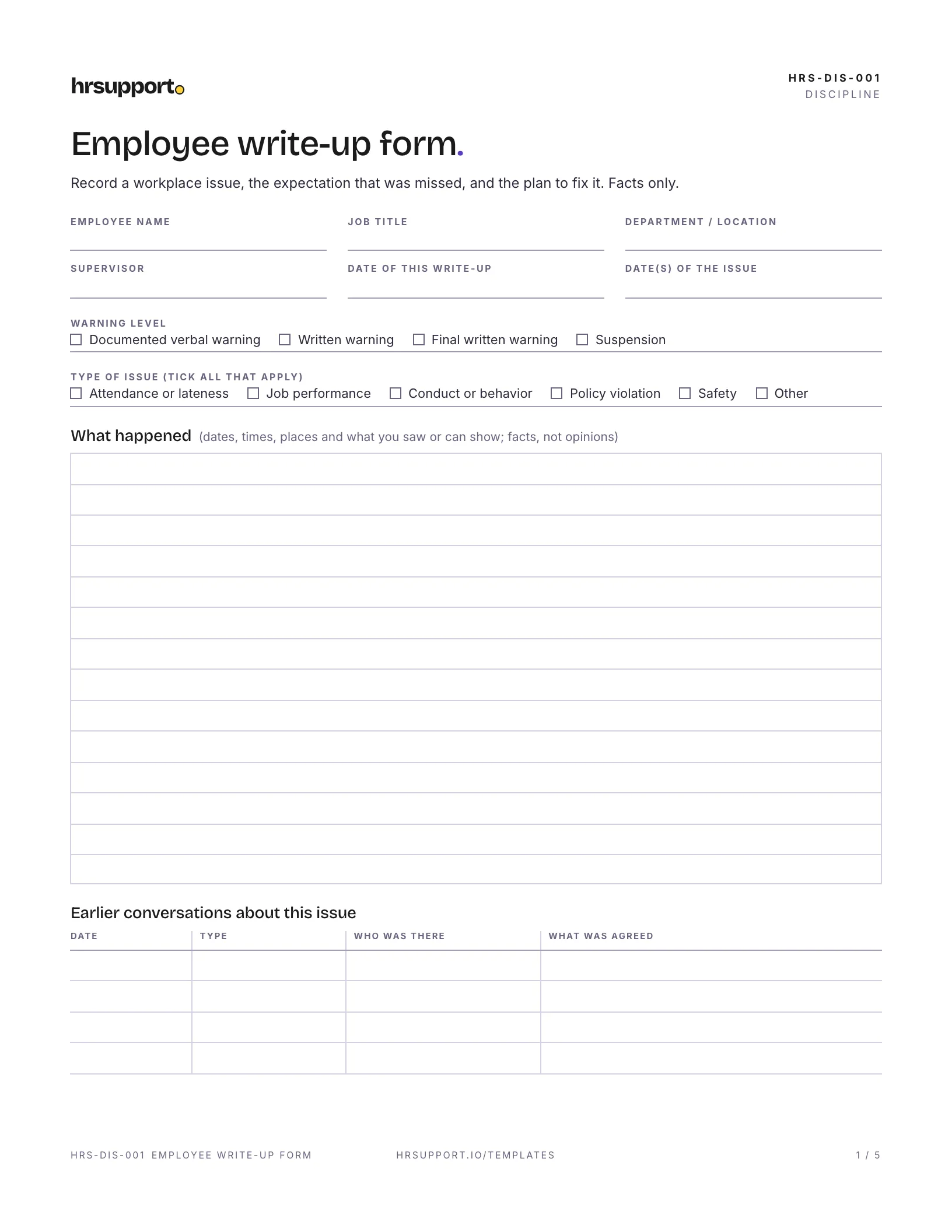
A free employee write-up form for US small businesses. Use it to document a verbal warning, a written warning or a final warning in a way that is clear to the employee and stands up later. It records the facts, the rule that was missed, a plan with dates, the employee’s side, and the signatures.
A Word file to fill in on screen, and a five-page PDF sized for US Letter paper:
Page one records the employee and supervisor, the date of the write-up and of the issue, and the warning level (documented verbal, written, final or suspension). It also covers the type of issue, a ruled box for what happened, and a table of earlier conversations. Page two holds the expectation that was missed, an improvement plan table (what must change, the support you’ll give, check-in dates and a deadline) and what happens if the issue continues. It ends with space for the employee’s comments, a note on what signing means, and lines for the employee, supervisor and a witness.
The example in the download is a written warning for a line cook at a fictional restaurant who arrived late on three Mondays without calling ahead. It quotes the handbook’s attendance rule and records an earlier verbal conversation. The plan moves the Monday start time at the employee’s request, with weekly check-ins, and names a final written warning as the next step. The employee’s comment and both signatures are filled in.
Serious misconduct, such as violence, theft or harassment, can justify skipping steps if your policy allows it. Write down that you did and why.
Pause and get advice first if the employee has recently complained about discrimination, harassment, pay or safety. The same goes if they’ve asked for an accommodation, taken or asked for protected leave, or filed a workers’ compensation claim. Discipline soon after any of these can look like retaliation, even when the reason is genuine. Employees also have the right to discuss pay and working conditions with each other (NLRB), so never write someone up for that.
Not sure if a write-up is the right move, or what your state requires? That’s what hrsupport.io is for: HR answers for your state, with the law behind every answer.
Ready to use it? It’s free, and comes with a filled-in example.
Template questions
The employee's name and job, the date, the warning level, a factual description of what happened (dates, times, and what you saw or can show), the policy or expectation that was missed, any earlier conversations, a specific improvement plan with dates, what happens if the issue continues, space for the employee's comments, and signatures.
Yes. Signing usually only confirms they received the write-up, not that they agree with it, and the form says so. If they still refuse, write "employee declined to sign", date it, and have a witness such as another manager sign. The write-up still counts.
It's good practice everywhere, and some states require it. California, for example, gives employees the right to a copy of documents they sign about their employment (Labor Code section 432) and to inspect and copy their personnel file (section 1198.5). Hand over a copy at the meeting.
Federal law sets no number, and most US employment is at will. But your own handbook may promise a set of steps, such as a verbal, written and final warning, and a court may expect you to follow it. Consistent, documented steps are also your best defence if a firing is challenged. Check your policy and state rules before you skip a step.
They're the same thing under different names. A write-up form, disciplinary action form, employee warning notice and corrective action form all document a performance or conduct problem and the plan to fix it. This template covers each warning level, from a documented verbal warning to a final written warning.
If you have 15 or more employees, EEOC rules (29 CFR 1602.14) require you to keep personnel records, including discipline, for at least one year from when they were made, and longer if a discrimination charge is filed. Many employers keep them for the length of employment plus several years. State rules can be longer.
Free HR templates
Performance Improvement Plan Template30/60/90-day PIP with measurable goals, support, check-ins and an outcome page.FreeWordPDF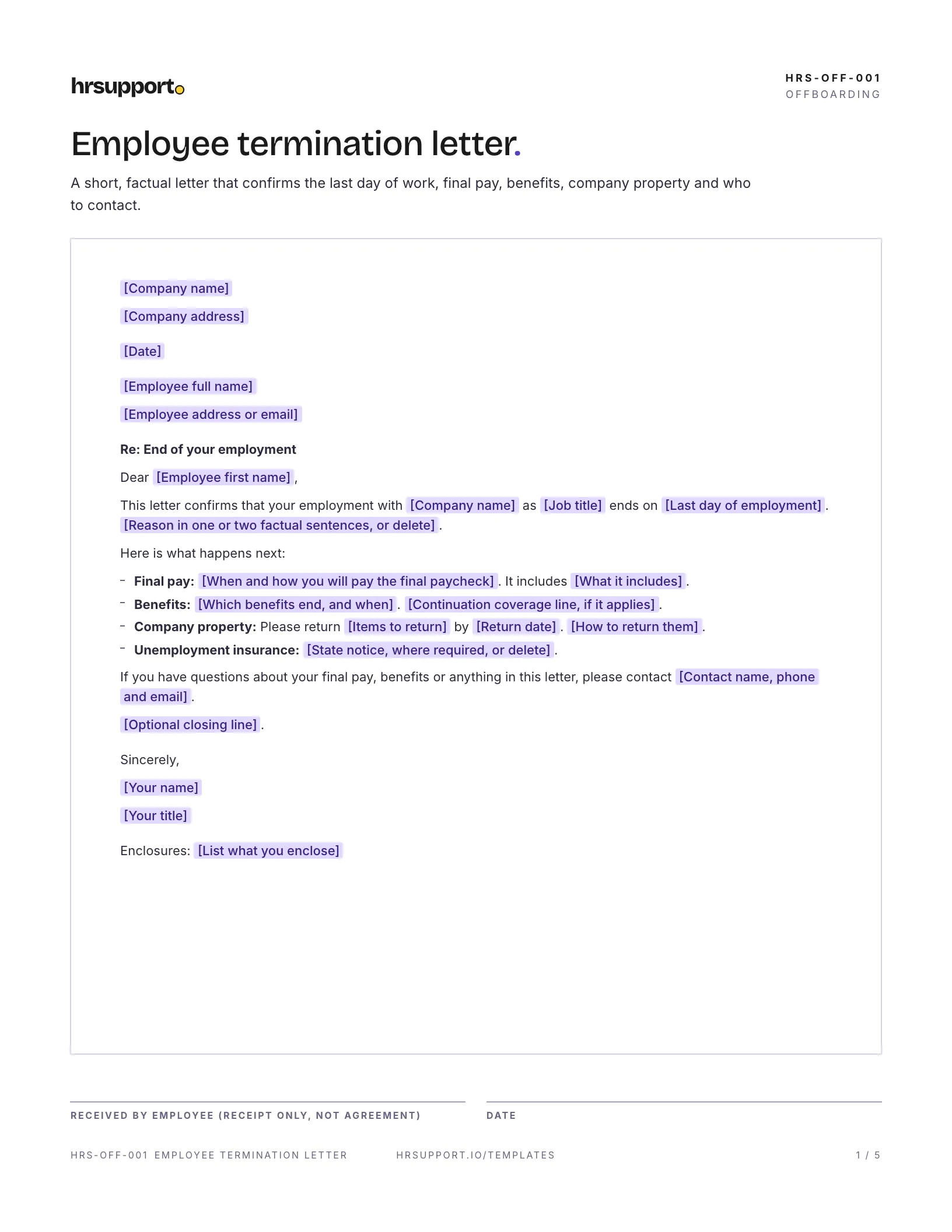 Termination Letter TemplateLast day, final pay, benefits, property and notices, with a termination record.FreeWordPDF
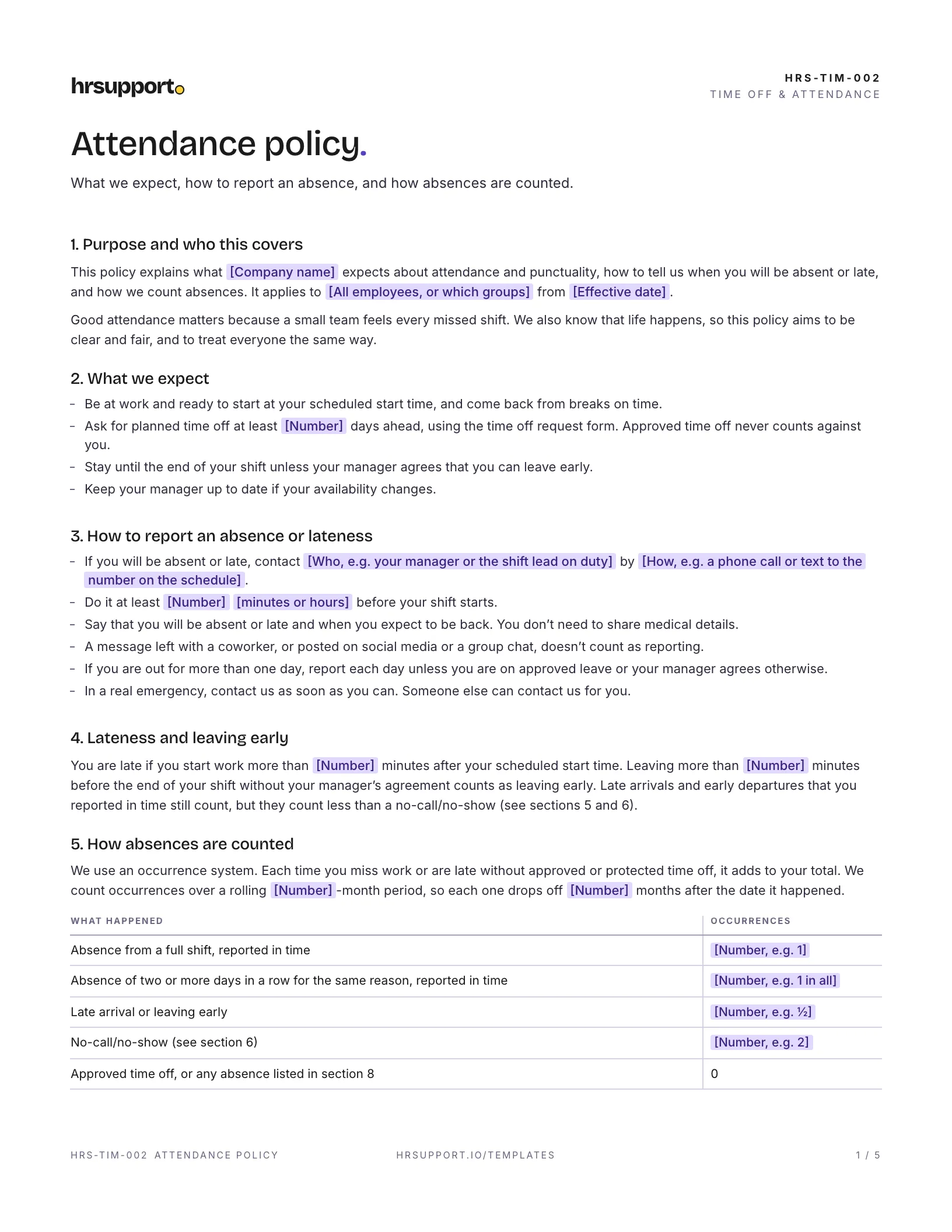 Attendance Policy TemplateCall-in rules, occurrences, no-call/no-show, discipline steps and a tracker.FreeWordPDF
Join the waitlist for early access and early-access pricing. It takes ten seconds.