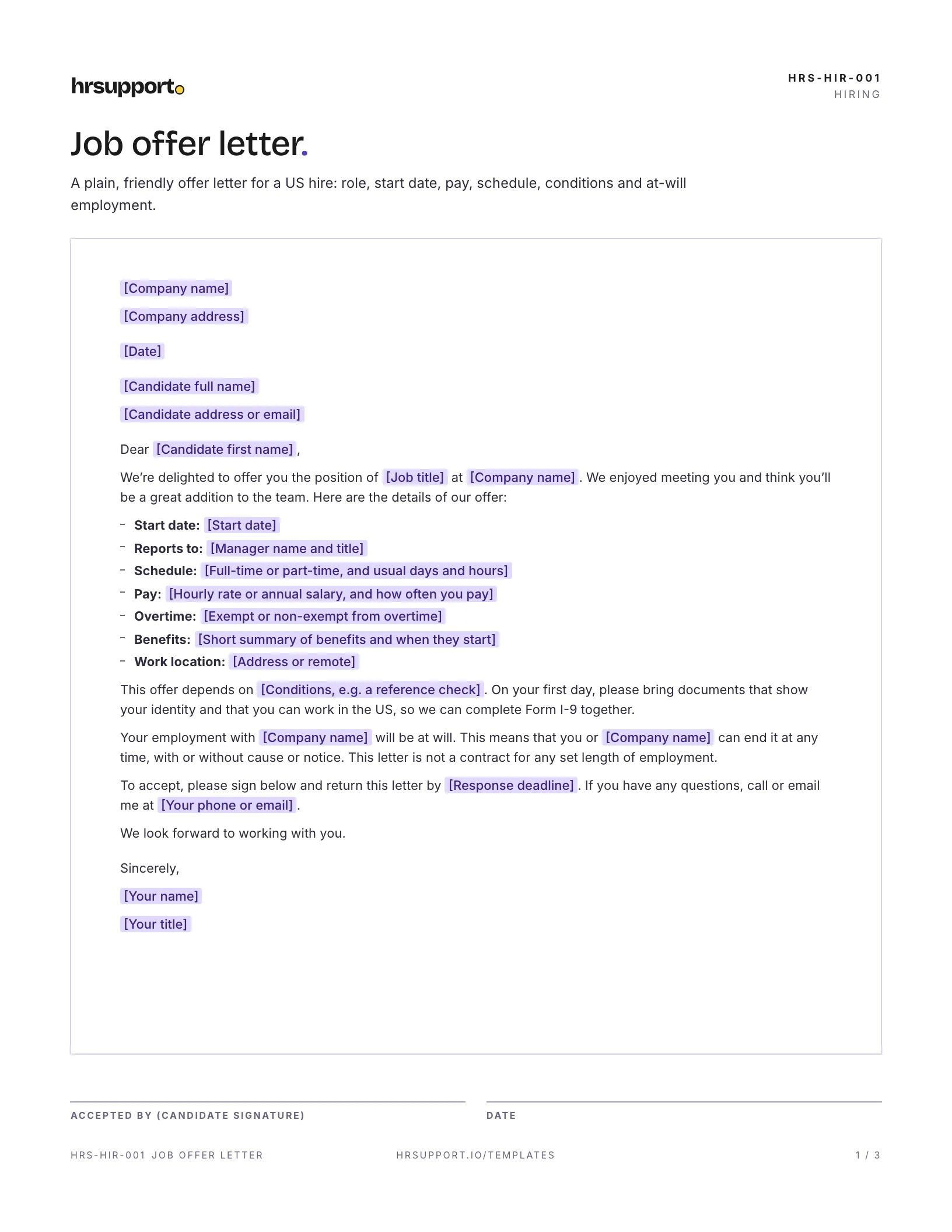
 Offer Letter TemplateRole, start date, pay, schedule and at-will wording, ready to edit in Word.Free
 Word
Word PDF
PDFConfirm that someone works or worked for you, in a short, factual letter. Includes a request and consent page, so pay is shared only when the employee says so.
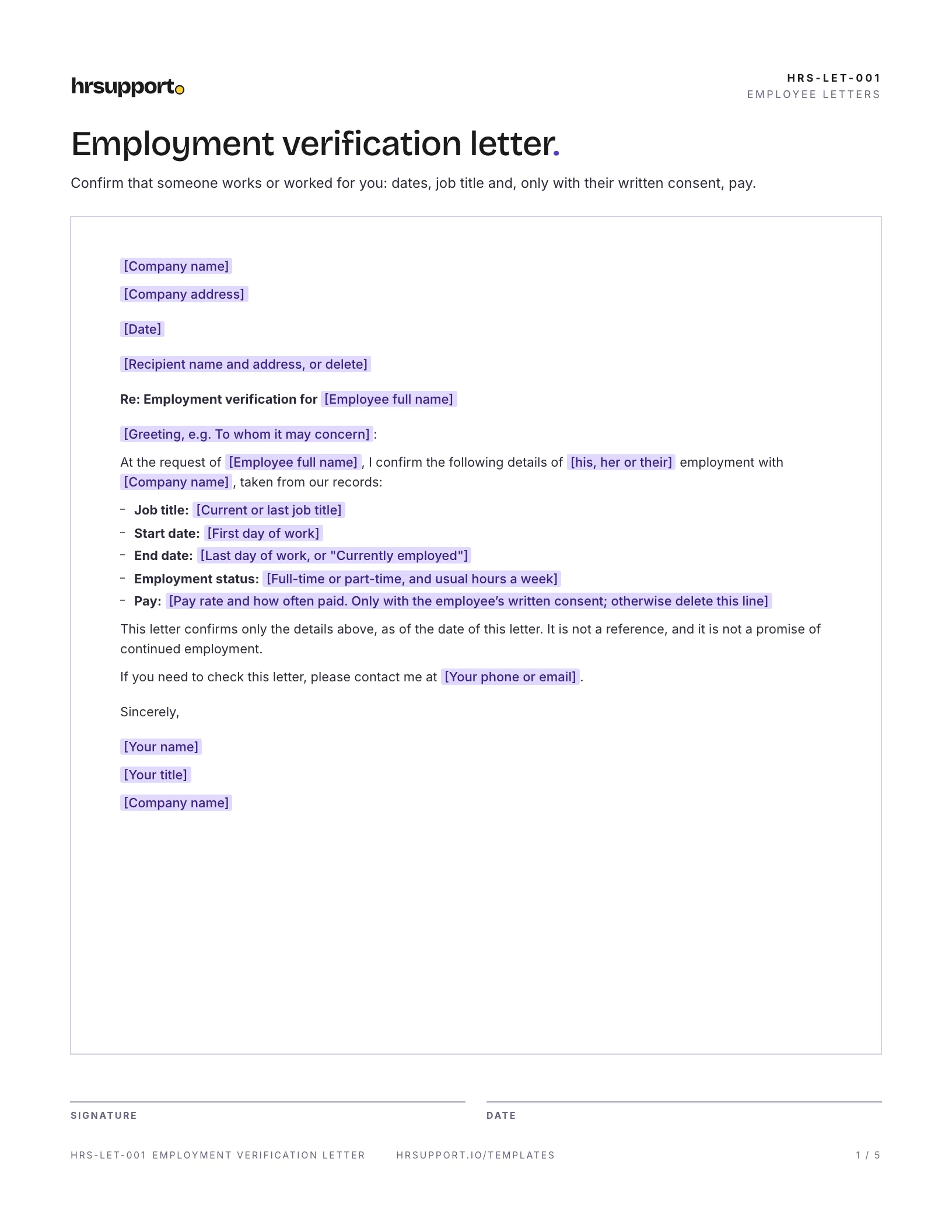
An employment verification letter confirms that someone works or worked for your business. A landlord, lender or agency asks for it, the employee asks you, and you write a short letter that confirms the facts and nothing more. This free template gives you that letter, plus a request and consent page, so you share pay details only when the employee has asked you to in writing.
A five-page PDF and a Word file you can edit, sized for US Letter paper:
The Word file has the blank letter and the consent page, ready to put on your letterhead.
The example is from a fictional dental practice in Illinois. A dental hygienist who is applying for an apartment asks for a letter. She fills in the consent page, ticks every box including pay, and asks for the letter to go to the leasing office with a copy to her. The office manager confirms her job title, start date, full-time status and hourly rate, then logs the letter. She also notes a follow-up call from the leasing office, where she confirmed the letter was genuine and shared nothing else.
Most employment verification letters go to an office, not a person, so “To whom it may concern” is the usual greeting. Add a “Re:” line with the employee’s name so the letter reaches the right file. If a lender or agency sends you its own verification form, you can fill that in instead. The same rules apply: use your records, and share pay only with consent.
People use “employer letter” for both, but they do different jobs.
If someone asks for a “letter from your employer” and doesn’t say which, ask what the reader needs. Landlords, lenders and agencies usually want verification, not a reference. Keeping the two separate also keeps the verification letter short, factual and quick to write, and you never end up giving an opinion you didn’t mean to.
If you need proof of employment, ask your manager, the owner or whoever runs payroll, in writing. An email is fine. Say:
If you have left the job, you can still ask. Some states require former employers to provide a “service letter” on written request.
Most letters are routine. Get advice before you answer a request from a former employee who left on bad terms, or one involved in a dispute or a claim against you. Do the same if someone asks you to include anything beyond the facts, such as the reason for leaving. Also check your state’s rules if a former employee asks for a service letter.
Have a question this template doesn’t answer? hrsupport.io gives HR answers for your state, with the law behind every answer.
Ready to use it? It’s free, and comes with a filled-in example.
Template questions
It's a short letter from an employer that confirms someone works or worked there. It usually states the job title, the start date, the end date (or that they are still employed) and full-time or part-time status. Landlords, lenders and some agencies ask for one. You'll also see it called a verification of employment letter, an employer verification letter or a proof of employment letter.
The employee's name, job title, start date, end date or "currently employed", and full-time or part-time status. Add pay only if the employee has agreed in writing. Close with a line saying the letter confirms only those details, then your name, title, contact details and signature. Leave out opinions about performance and the reason someone left.
Usually it's a courtesy, but some states require a "service letter" when a former employee asks in writing. Kansas, for example, requires one stating the length of employment, job classification and wage rate. Missouri requires one from corporations with seven or more employees, if the request meets the statute's conditions. Check your state's rules before you say no.
Only if the employee asks you to, in writing. Pay is personal, and the employee may not want a landlord or a new employer to see it. The template's consent page has a "Pay rate" box. If it isn't ticked, delete the pay line from the letter. If it is, give the rate and how often you pay, taken from payroll.
Use "To whom it may concern". Many employment verification letters go to an office rather than a named person, so this is normal. If the employee gives you a name and address, use those instead. Either way, add a "Re:" line with the employee's name, so the letter is easy to file at the other end.
No. Form I-9 is the federal form every US employer completes for each new hire, to check identity and the right to work in the United States. An employment verification letter is a letter you write later, at the employee's request, to confirm their job to someone else, such as a landlord or a lender.
Free HR templates
Offer Letter TemplateRole, start date, pay, schedule and at-will wording, ready to edit in Word.FreeWordPDF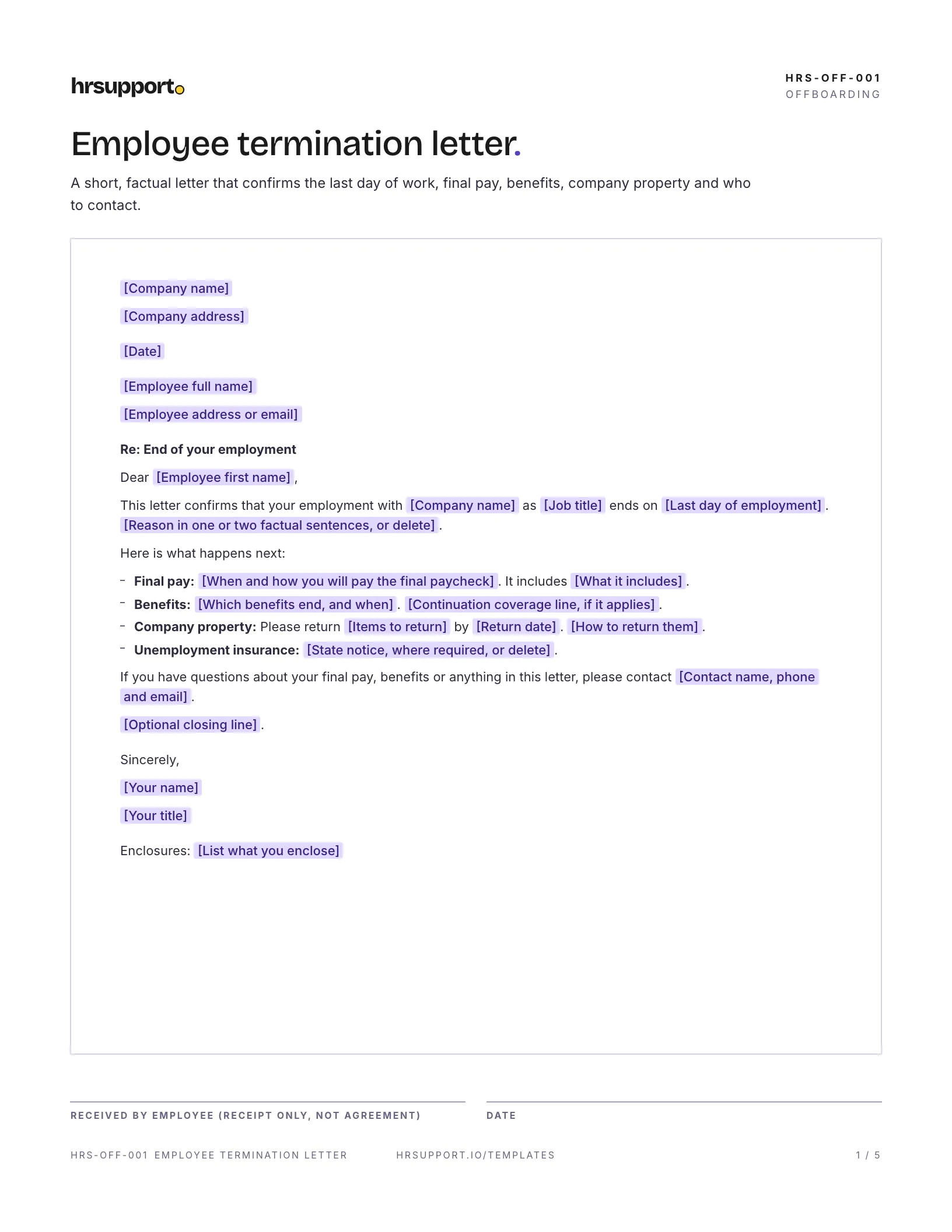 Termination Letter TemplateLast day, final pay, benefits, property and notices, with a termination record.FreeWordPDF
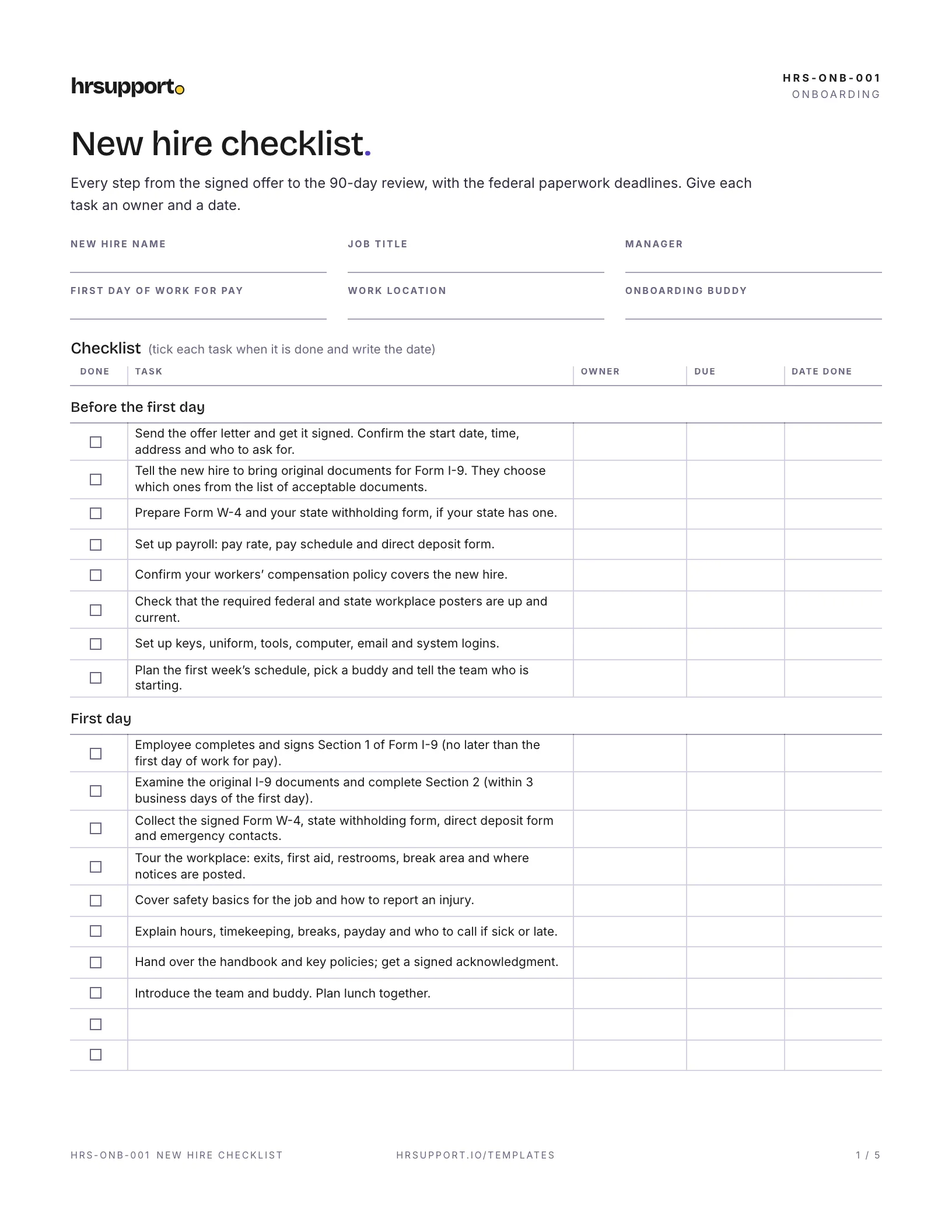 New Hire ChecklistBefore day one to the 90-day review, with the I-9, W-4 and state reporting deadlines.FreeWordPDF
Join the waitlist for early access and early-access pricing. It takes ten seconds.