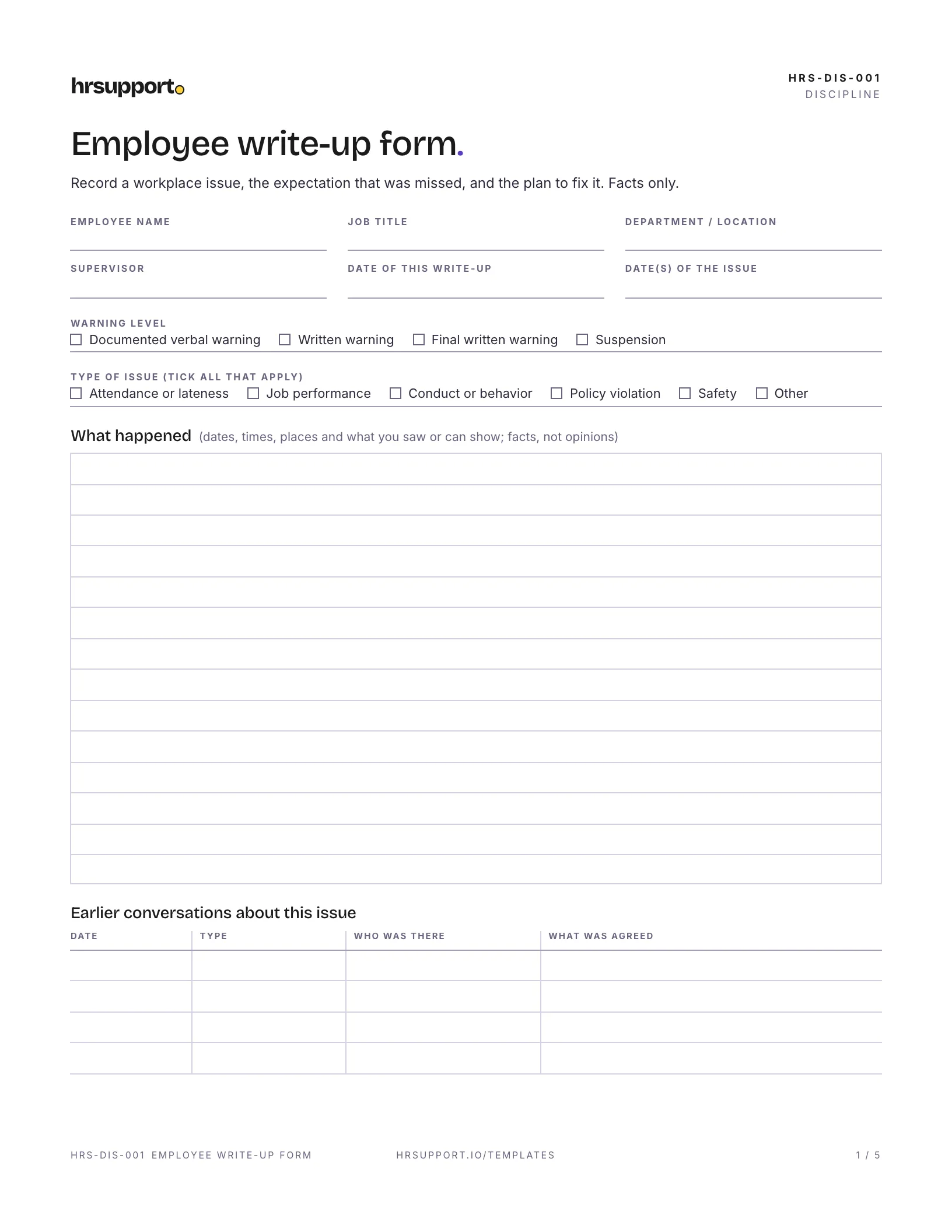
 Employee Write-Up FormVerbal, written and final warnings, with an improvement plan and signatures.Free
 Word
Word PDF
PDFA short, neutral letter that tells the employee what they need to know on their last day, plus a termination record for your files.
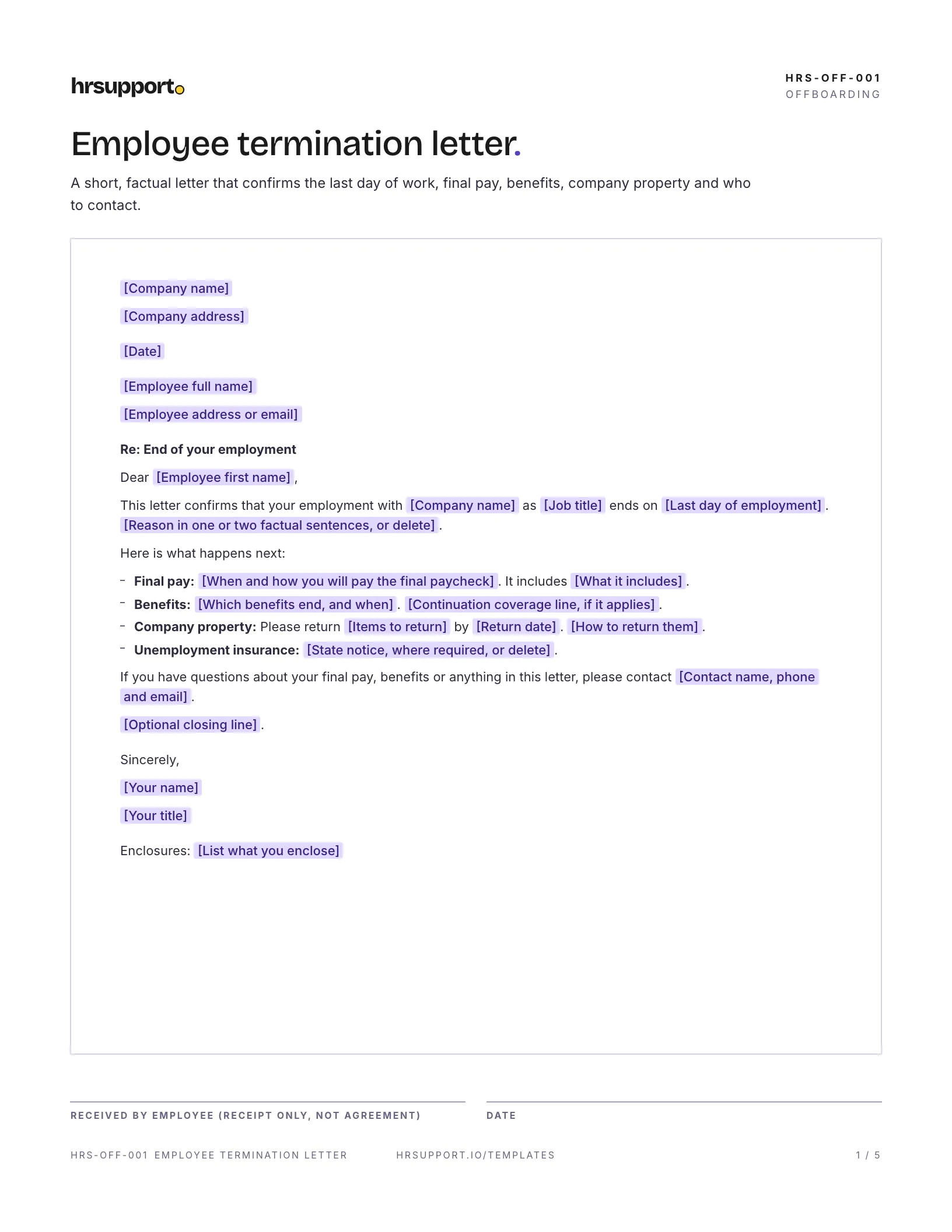
This free termination letter template gives US small businesses a short, neutral letter to hand an employee on their last day. It confirms the last day of employment and covers the practical details people need: final pay, benefits, company property, any unemployment notice your state requires, and who to contact. A second page is a termination record for your own files.
A five-page PDF, sized for US Letter paper, and an editable Word file:
Every detail you need to change is a highlighted placeholder, so you can’t miss one. The Word file starts with the letter, ready to edit and print on your letterhead.
The example is a fictional auto repair shop in Sacramento ending the employment of a service advisor after two written warnings. The letter gives the last day and a one-sentence reason that points to the warnings. It encloses the final paycheck, including unused vacation, because California requires immediate payment on discharge. It also lists the EDD notices, the date health insurance ends, the shop keys and uniforms to return, and the owner as the contact. The termination record shows each step ticked off with dates, and one item still outstanding.
Federal law doesn’t require you to pay a former employee immediately, but many states do set a deadline, and they differ widely. For example:
Check your own state’s rule before the meeting, not after. And don’t make the final paycheck wait on the return of keys or equipment. The pay deadline still applies.
Some states require written notice when you end someone’s employment. In California, you must immediately give written notice of a discharge or layoff, along with the EDD pamphlet For Your Benefit: California’s Programs for the Unemployed (DE 2320), according to the EDD employer’s guide. The EDD publishes a sample “Notice to Employee as to Change in Relationship” you can use alongside this letter. In New York, you must tell a terminated employee in writing the exact date of termination and the exact date their benefits end, within five working days (Labor Law 195). This letter has a line for each.
Federal COBRA generally applies to group health plans of employers with 20 or more employees. You must notify the plan within 30 days after the employment ends, and the plan then sends the election notice within 14 days (DOL employer’s guide). Smaller employers may be covered by a state “mini-COBRA” law instead (DOL), so ask your insurer. The letter just tells the employee when coverage ends and that a separate notice will follow.
Page two is an employee termination form for your files, not for the employee. It records the type of separation and walks you through the last day: the final-pay deadline, final paycheck, benefits, notices, property and system access. There’s room for notes on who was in the meeting and anything still outstanding. Kept with the letter, it shows you did each step and when.
Pause before you let someone go if they have recently complained about discrimination, harassment, pay or safety, asked for an accommodation, or taken or asked for protected leave. Ending employment soon after can look like retaliation, even when the reason is genuine. Get advice too if the person has a contract, belongs to a union, or your handbook promises steps you haven’t followed. A letter records a decision; it doesn’t make the decision sound.
Not sure what your state requires for final pay or notices? That’s what hrsupport.io is for: HR answers for your state, with the law behind every answer.
Ready to use it? It’s free, and comes with a filled-in example.
Template questions
Keep it short and factual. State the last day of employment, then give the practical details the employee needs. That means when and how they'll get their final paycheck, when benefits end, what company property to return and by when, any state notice about unemployment insurance, and who to contact with questions. A one-line reason is optional. Leave out opinions, and don't introduce problems you never raised before.
Whether you must explain depends on your state and your own policies, so check both. Where you have a choice, many employers keep the reason to one factual sentence, such as "This follows the written warnings of August 18 and September 22", or leave it out. Whatever you write must match your records and what you later tell the state unemployment agency. Never mention a protected trait.
It depends on the state. Some states require written notice when you end someone's employment. California, for example, requires immediate written notice of a discharge or layoff, plus the EDD pamphlet For Your Benefit (DE 2320). New York requires written notice of the exact termination date and the date benefits end within five working days. Even where it isn't required, a letter gives the employee the facts in one place.
Federal law doesn't require immediate payment, but many states set a deadline, and they vary a lot. California requires wages to be paid immediately when you discharge someone. Texas requires full payment no later than the sixth day after a discharge. Check your state labor department before the last day, and don't hold the paycheck back until property is returned.
The rules for applying are set by each state's unemployment agency. What matters for you as the employer is any notice your state requires you to give. California, for example, requires the EDD pamphlet DE 2320 when you discharge or lay someone off. If the agency asks you about the separation, your answer should match what the letter says.
Name the last day, then, if you give a reason, point to the record. For example, "This follows the written warnings of August 18 and September 22 about vehicles returned to customers without a final check." Don't restate the whole history or add new complaints. The warnings and any performance improvement plan already hold the detail; the letter just confirms the outcome and the next steps.
Free HR templates
Employee Write-Up FormVerbal, written and final warnings, with an improvement plan and signatures.FreeWordPDF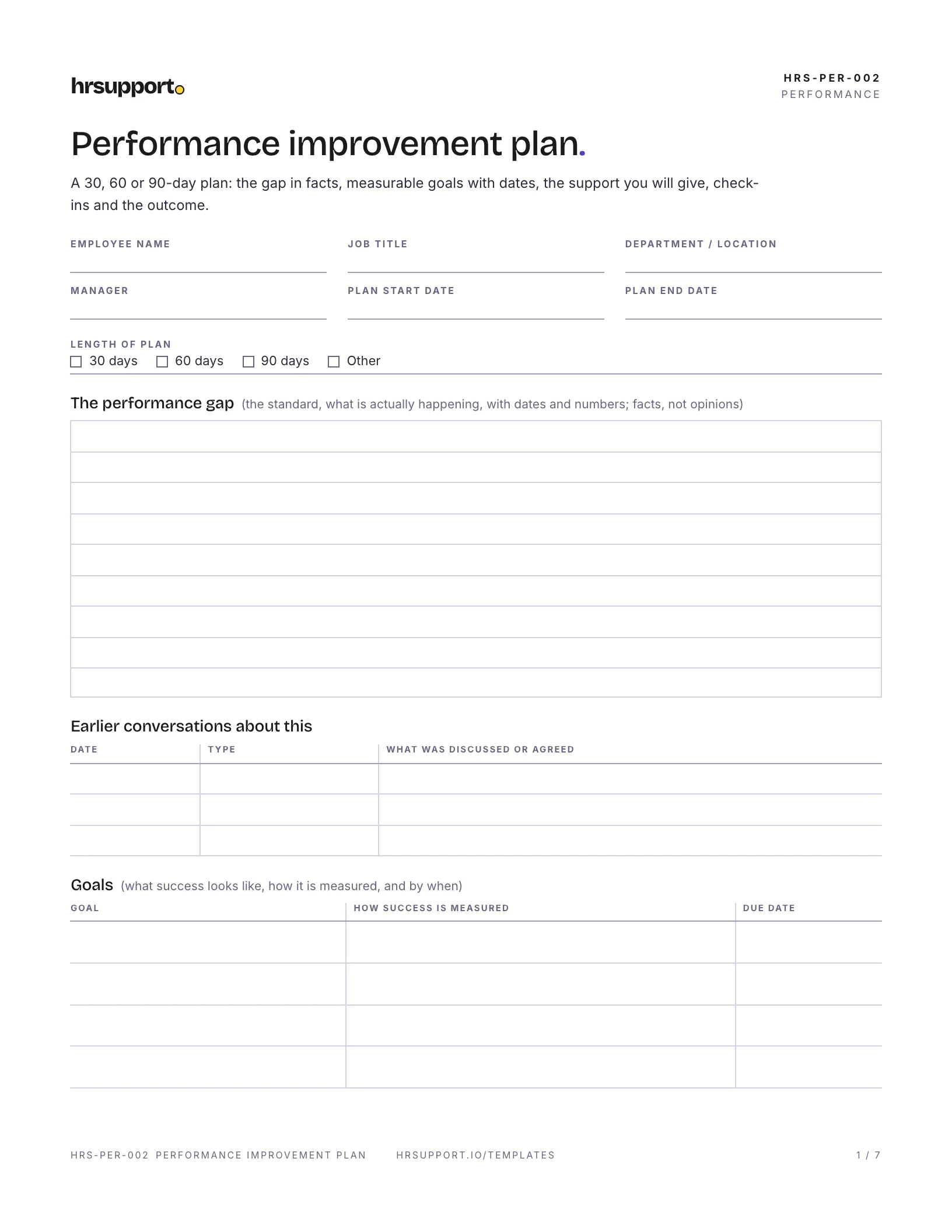 Performance Improvement Plan Template30/60/90-day PIP with measurable goals, support, check-ins and an outcome page.FreeWordPDF
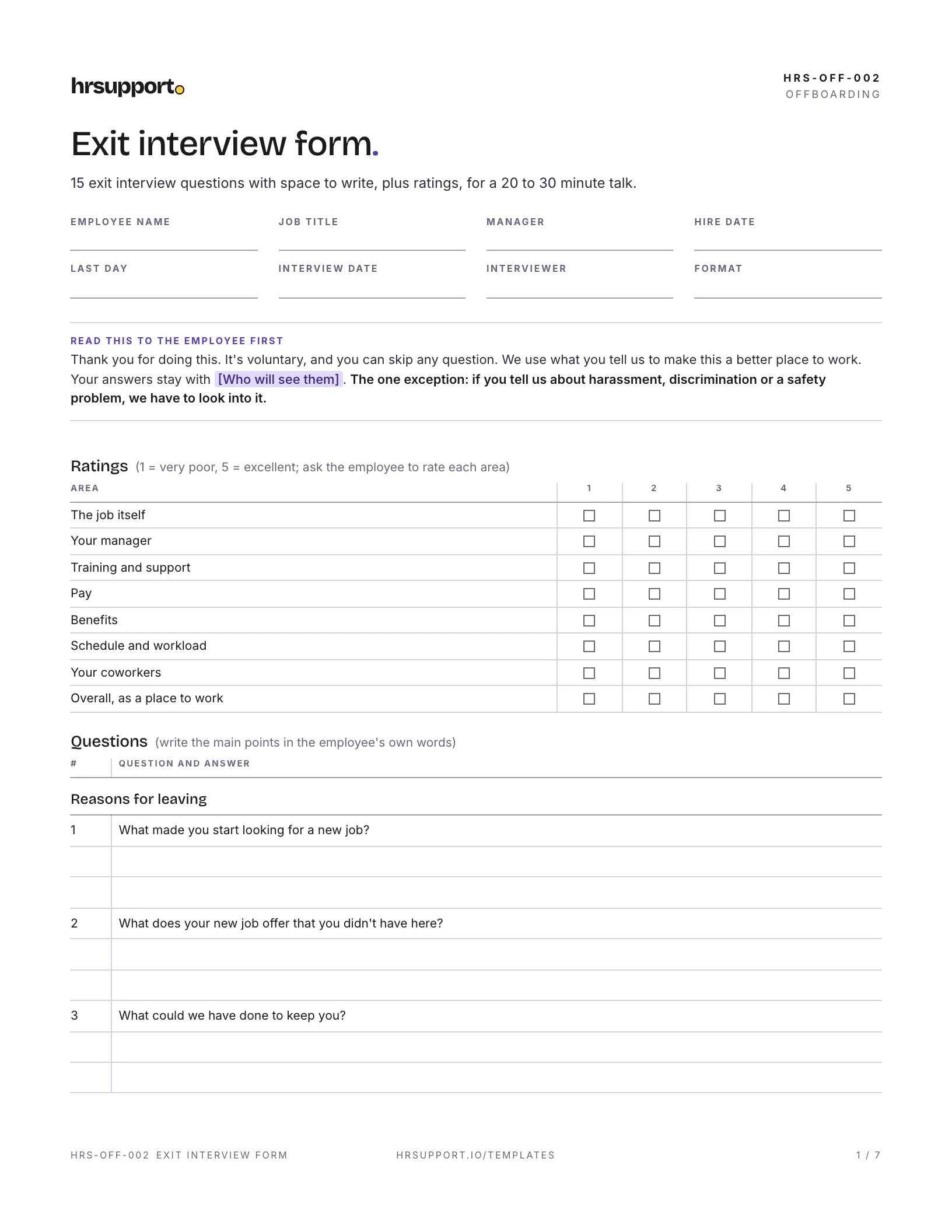 Exit Interview Questions and Form15 questions in five groups, 1–5 ratings and a follow-up box.FreeWordPDF
Join the waitlist for early access and early-access pricing. It takes ten seconds.