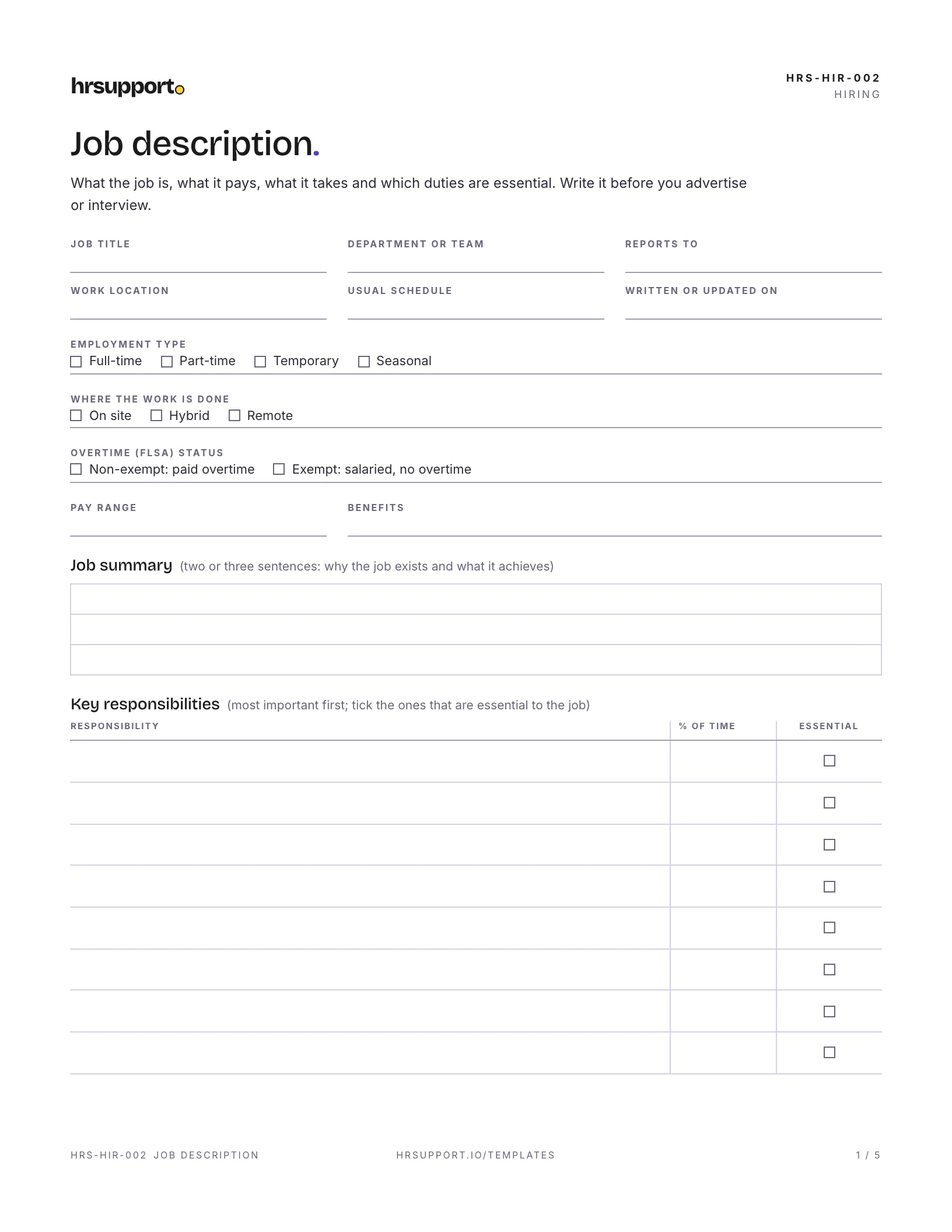
 Job Description TemplateDuties, essential functions, FLSA status, pay range, qualifications and an EEO statement.Free
 Word
 PDF
Score each candidate against the same job-related criteria and questions, with the evidence behind every score. A comparison sheet brings the scorecards together.
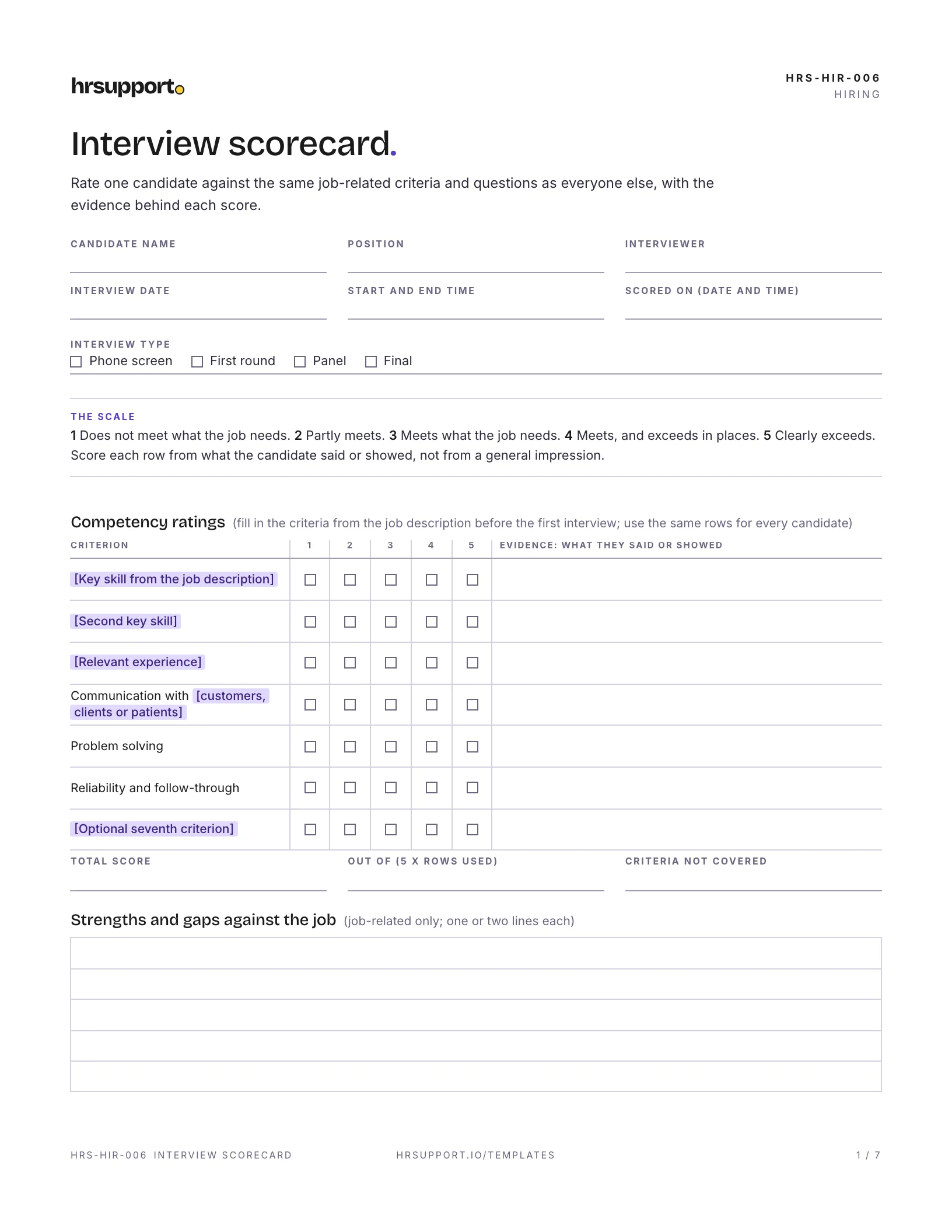
An interview scorecard template helps you judge every candidate for a job the same way: the same criteria, the same questions, the same 1 to 5 scale, and a line of evidence behind each score. This free template is built for small businesses where the owner or a manager does the interviewing. There is one scorecard per candidate for each interviewer, and a comparison sheet where the hiring manager puts the scores side by side and records the decision.
A Word file you can edit and a seven-page PDF sized for US Letter paper:
Every criterion and question you need to adapt is highlighted as a [placeholder] in the Word file.
The example is from a fictional family dental practice hiring a front desk coordinator. The office manager scores a first-round candidate on seven criteria, from scheduling and insurance verification to accuracy with records. The candidate scores 27 out of 35: strong on scheduling and patient communication, with a gap on insurance claims that the practice can train. The notes on the structured questions record what she actually said, such as how she handled a waiting room during flu season. The recommendation is yes, with a follow-up for her reference. On the comparison sheet, four candidates are scored on the same criteria, and the decision explains why the top two were close and why one was chosen.
Some businesses call this an interview evaluation form, an interview feedback form, an interview rating sheet or a candidate evaluation form. They do the same job: a written record of how a candidate did against the role. What makes any of them useful is the same:
The EEOC says it is illegal to discriminate against a job applicant because of race, color, religion, sex (including transgender status, sexual orientation, and pregnancy), national origin, age (40 or older), disability or genetic information. Employers may not ask about disability before a job offer. Keep these out of your questions and your notes. These federal laws cover employers with 15 or more employees, or 20 or more for age (EEOC), and your state’s law may cover smaller businesses.
Some states also ban questions about pay history. For example, California bars employers from seeking it “orally or in writing, personally or through an agent” (Labor Code 432.3), and New York bars requiring it as a condition to be interviewed (Labor Law 194-a).
File the scorecards and the comparison sheet with the hiring paperwork for the job. EEOC rules (29 CFR 1602.14) say employment records, including application forms and other records about hiring, must be kept for one year from the date the record was made or the personnel action, whichever is later. If a discrimination charge is filed, keep the relevant records until it is finally resolved. A scorecard full of job-related evidence is also the best answer if a rejected candidate asks why.
Hiring and not sure what you can ask in your state? hrsupport.io answers HR questions for your state, with the law behind every answer.
Ready to use it? It’s free, and comes with a filled-in example.
Template questions
A form an interviewer fills in for each candidate. It lists the criteria that matter for the job, such as key skills, experience and communication, with a rating scale and room for evidence. Everyone interviewed for the job is scored on the same criteria and asked the same questions, so you compare candidates on the job rather than on gut feeling.
Use a 1 to 5 scale with clear anchors. On this template, 1 means the candidate does not meet what the job needs, 3 means they meet it and 5 means they clearly exceed it. Score each criterion straight after the interview, from what the candidate said or showed, and write one line of evidence next to each score. Then add up the total.
Five to seven, taken from the job description. Two or three should be the key skills for the role, such as scheduling software or estimating jobs. Add relevant experience, communication with customers, problem solving and reliability. Avoid vague criteria like "culture fit", which are hard to score fairly and easy to fill with personal impressions.
Mostly the name. An interview evaluation form, interview feedback form or interview rating sheet usually does the same job. It records how a candidate did against the role. A scorecard puts more weight on numbers, with a rating for each criterion and a total, which makes it easier to compare several candidates on one sheet.
Not automatically. The scores show where each candidate stands on each criterion, but some criteria matter more than others for a given job, and references or a final interview may change the picture. Use the totals to narrow the list, then write down the job-related reasons for your final choice on the comparison sheet.
Keep them with the hiring paperwork for the job. EEOC rules (29 CFR 1602.14) say records about hiring, including application forms, must be kept for one year from the date the record was made or the hiring decision, whichever is later. If a discrimination charge is filed, keep the relevant records until it is finally resolved. Your state may require longer.
Free HR templates
Job Description TemplateDuties, essential functions, FLSA status, pay range, qualifications and an EEO statement.FreeWordPDF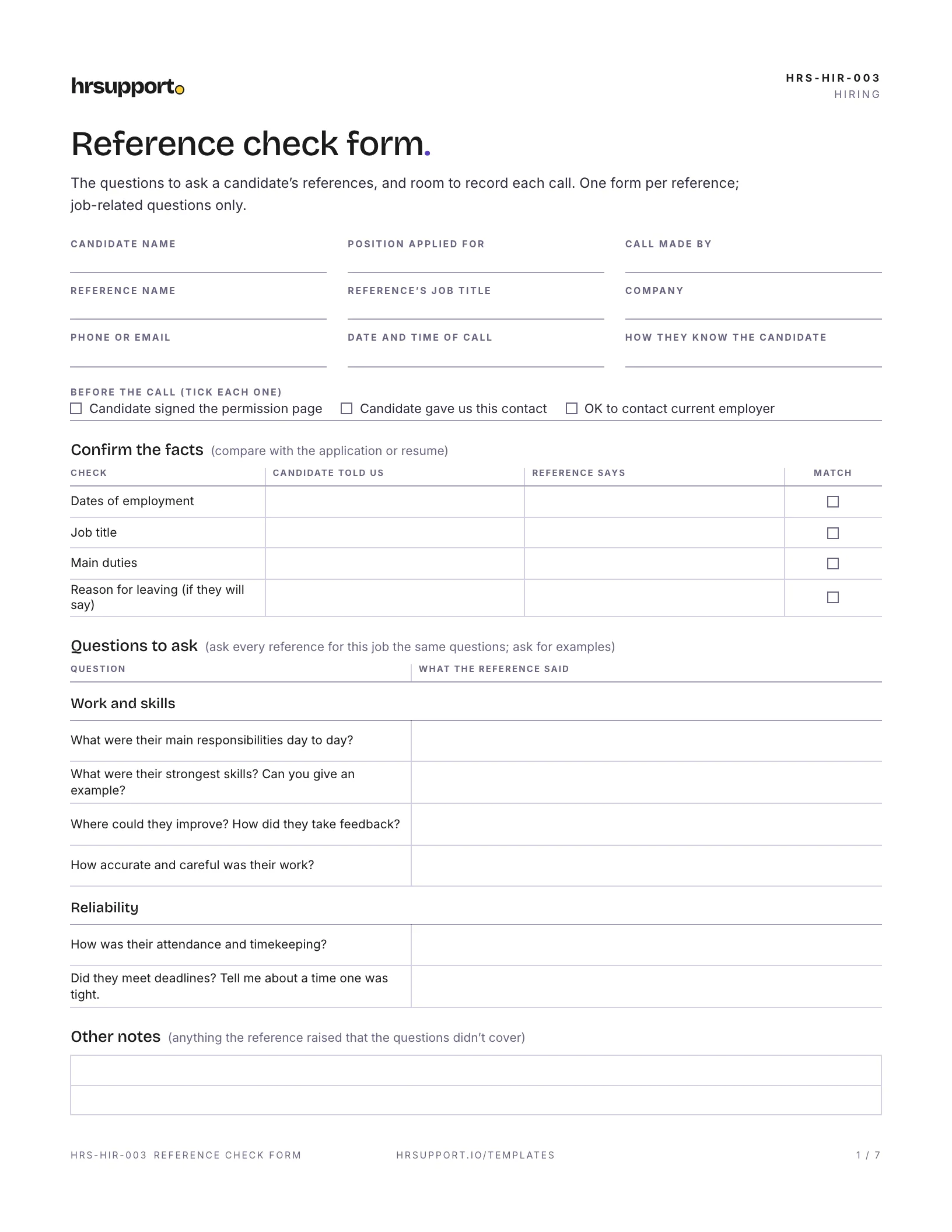 Reference Check Questions and FormJob-related questions, a form for each call, and the candidate's permission.FreeWordPDF
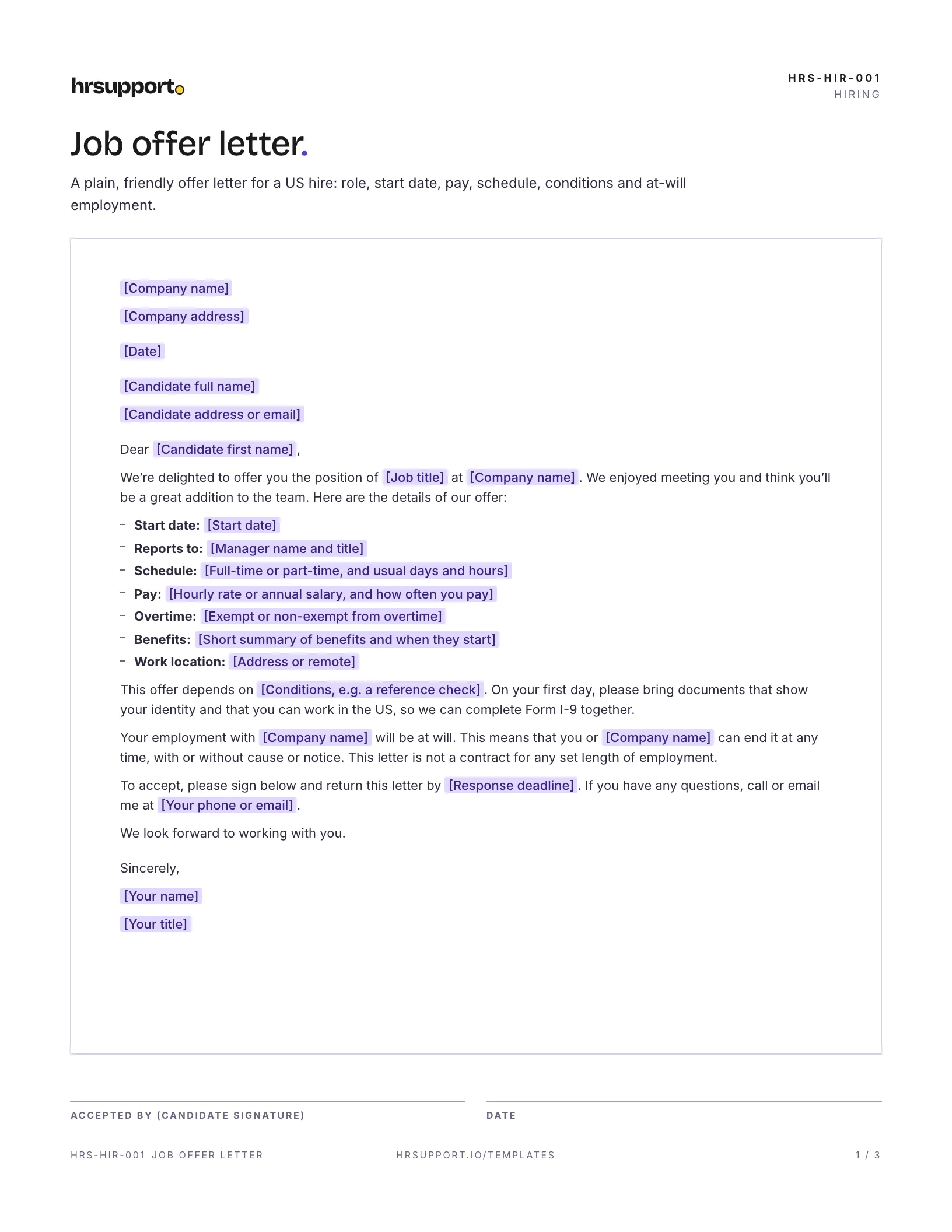 Offer Letter TemplateRole, start date, pay, schedule and at-will wording, ready to edit in Word.FreeWordPDF
Join the waitlist for early access and early-access pricing. It takes ten seconds.