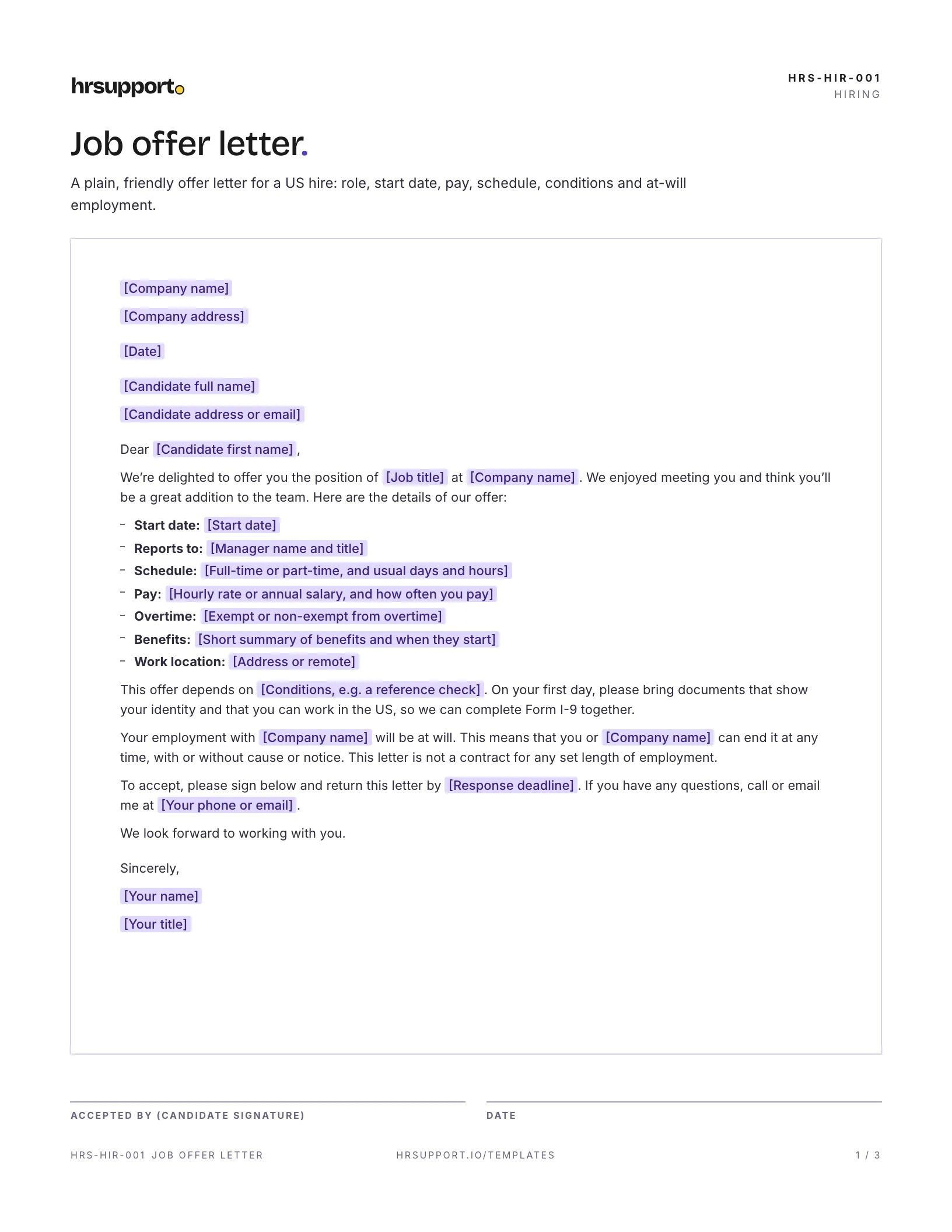
 Offer Letter TemplateRole, start date, pay, schedule and at-will wording, ready to edit in Word.Free
 Word
Word PDF
PDFConfirm a promotion in writing with the new title, start date, pay, manager and duties. A separate pay increase letter covers a raise with no change of role.
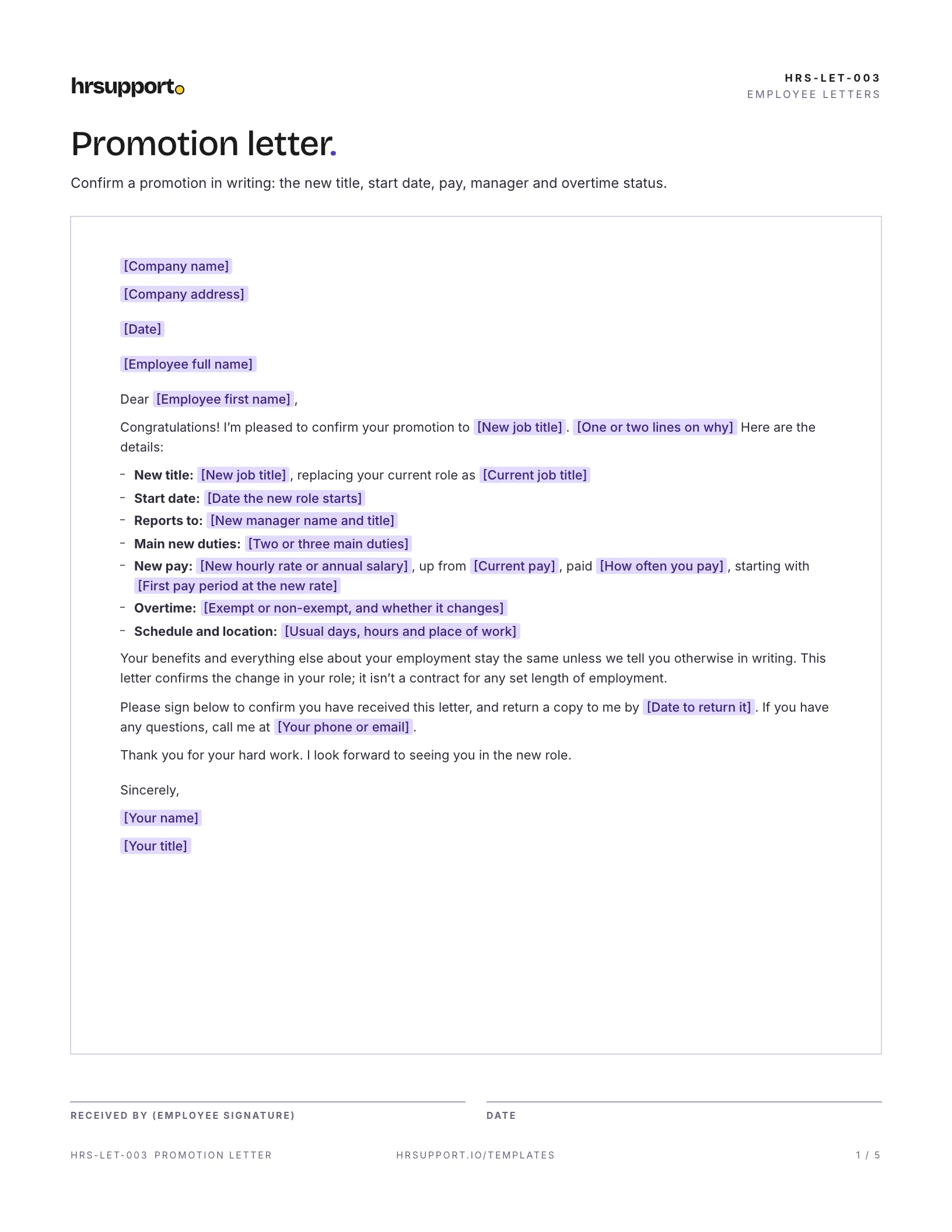
A promotion letter template puts a promotion in writing: the new title, the start date, the new pay, who the person now reports to, and what changes in their job. This free template also includes a separate pay increase letter, for a raise with no change of role. Both are short and friendly, and both ask you to check one thing many small businesses miss: whether the new job is still eligible for overtime.
A five-page PDF and a Word file you can edit, sized for US Letter paper:
Every detail to change is highlighted as a [placeholder] in the Word file.
The example is from a fictional plumbing and heating company in Denver. A dispatcher is promoted to dispatch supervisor from Monday, November 2, 2026. The letter lists her new manager and three new duties: leading two dispatchers, building the weekly on-call rota and handling customer escalations. Her pay goes from $22.00 to $26.50 an hour, paid every two weeks, from the pay period that begins on her start date. The job stays non-exempt, so the letter says she will still be paid overtime for hours over 40 in a workweek. She signs it two days later.
The pay increase example is for a service technician after his annual review: $31.00 to $32.50 an hour from the pay period that begins Monday, January 4, 2027, with his title, duties and overtime status unchanged.
A promotion is the moment overtime status most often goes wrong. An owner promotes an hourly employee to supervisor, puts them on a salary and stops paying overtime. But a title or a salary alone doesn’t make someone exempt. The US Department of Labor says the job’s duties and salary must meet all the requirements: a salary basis test, a salary level test and a duties test, and job titles don’t count (DOL Fact Sheet #17A). A supervisor who mostly does the same hands-on work as before may still be non-exempt.
Unless exempt, employees must be paid overtime for hours over 40 in a workweek, at least time and one-half their regular rate (DOL: Overtime pay). So if a promotion moves someone from hourly to salaried, check the duties and salary tests on dol.gov before you treat the job as exempt, and say clearly in the letter which it is. If you’re unsure, keep paying overtime until you’ve checked.
A raise with no change of role needs only a short letter: the reason, the current pay, the new pay and when it starts. The second page of the template does exactly that. Some states require written notice of a pay change. For example, New York requires written notice at least seven calendar days before the change, unless it is shown on the wage statement (Labor Law 195). California requires written notice to non-exempt employees within seven calendar days after a change, unless it is shown on a timely wage statement or another written notice required by law (Labor Code 2810.5). A letter covers it in any state.
If the promotion follows a strong year, record it in their performance review too. For a new hire rather than a promotion, use the offer letter.
Not sure whether a promoted employee is still owed overtime? hrsupport.io answers HR questions for your state, with the law behind every answer.
Ready to use it? It’s free, and comes with a filled-in example.
Template questions
The new job title and the old one, the date the new role starts, who the employee will report to, the main new duties, the new pay with the current pay for comparison, how often you pay and when the new rate starts, whether the job is exempt or non-exempt from overtime, and the schedule and location. Close with thanks and a line for the employee to sign.
Not by itself. The US Department of Labor says job titles don't decide exempt status. The job's duties and salary must meet all the requirements, including a salary basis test, a salary level test and a duties test. If a promotion moves someone from hourly to salaried, or into a supervisor role, check the tests on dol.gov before you stop paying overtime.
Keep it short and specific. Say why the pay is going up, such as an annual review, then give the current pay, the new pay, how often you pay and the date or pay period the new rate starts. Confirm that the title, duties and overtime status stay the same, and thank them for something specific. The pay increase letter in this template follows that order.
It depends on your state. For example, New York requires written notice of a change in pay at least seven calendar days before it happens, unless the change is shown on the wage statement. California requires written notice to non-exempt employees within seven calendar days after a change, unless it appears on a timely wage statement or another notice required by law. A letter is good practice everywhere.
Only if you really use one, and be careful with the wording. A trial period in the new role can make sense, but say what happens at the end of it, such as a review with the manager. Avoid wording that suggests the job is guaranteed once the trial ends. Keep promises about future raises out of the letter, too.
It's a good idea. The signature confirms they received the letter and know the new pay, start date and duties. It doesn't need to say they agree with everything. Give them a copy, keep the signed original in their personnel file, and update your payroll records and their job description.
Free HR templates
Offer Letter TemplateRole, start date, pay, schedule and at-will wording, ready to edit in Word.FreeWordPDF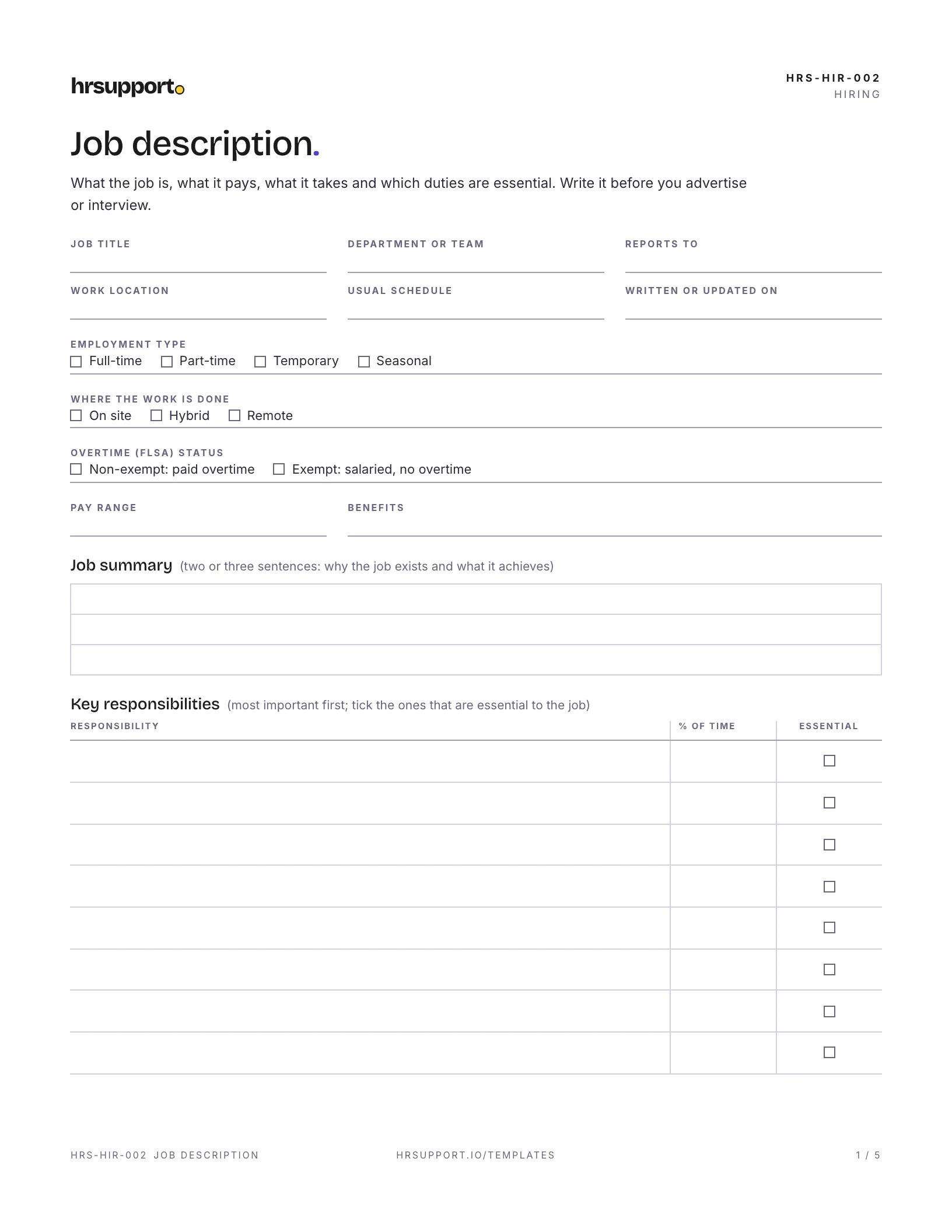 Job Description TemplateDuties, essential functions, FLSA status, pay range, qualifications and an EEO statement.FreeWordPDF
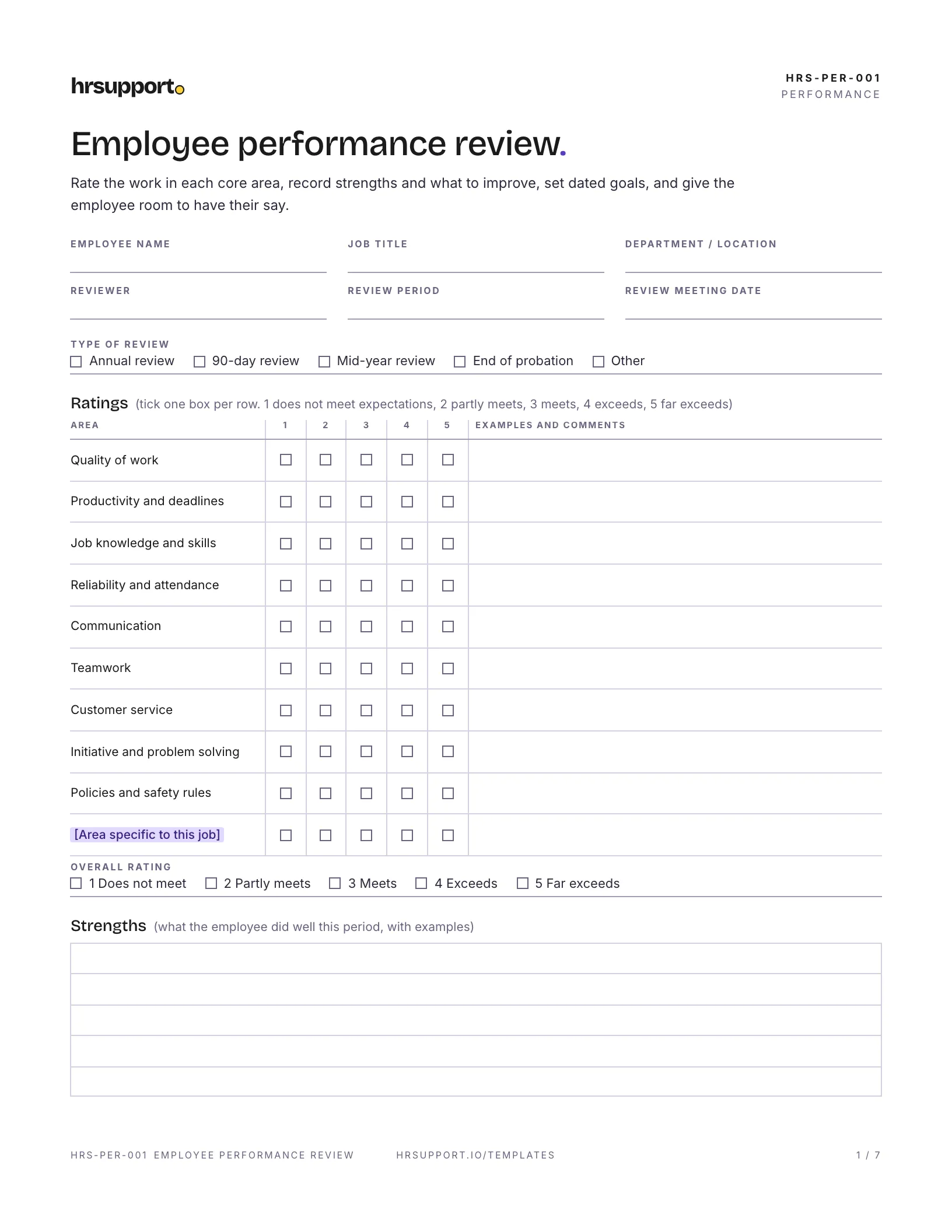 Performance Review TemplateAnnual or 90-day review with 1–5 ratings, goals, self-assessment and signatures.FreeWordPDF
Join the waitlist for early access and early-access pricing. It takes ten seconds.