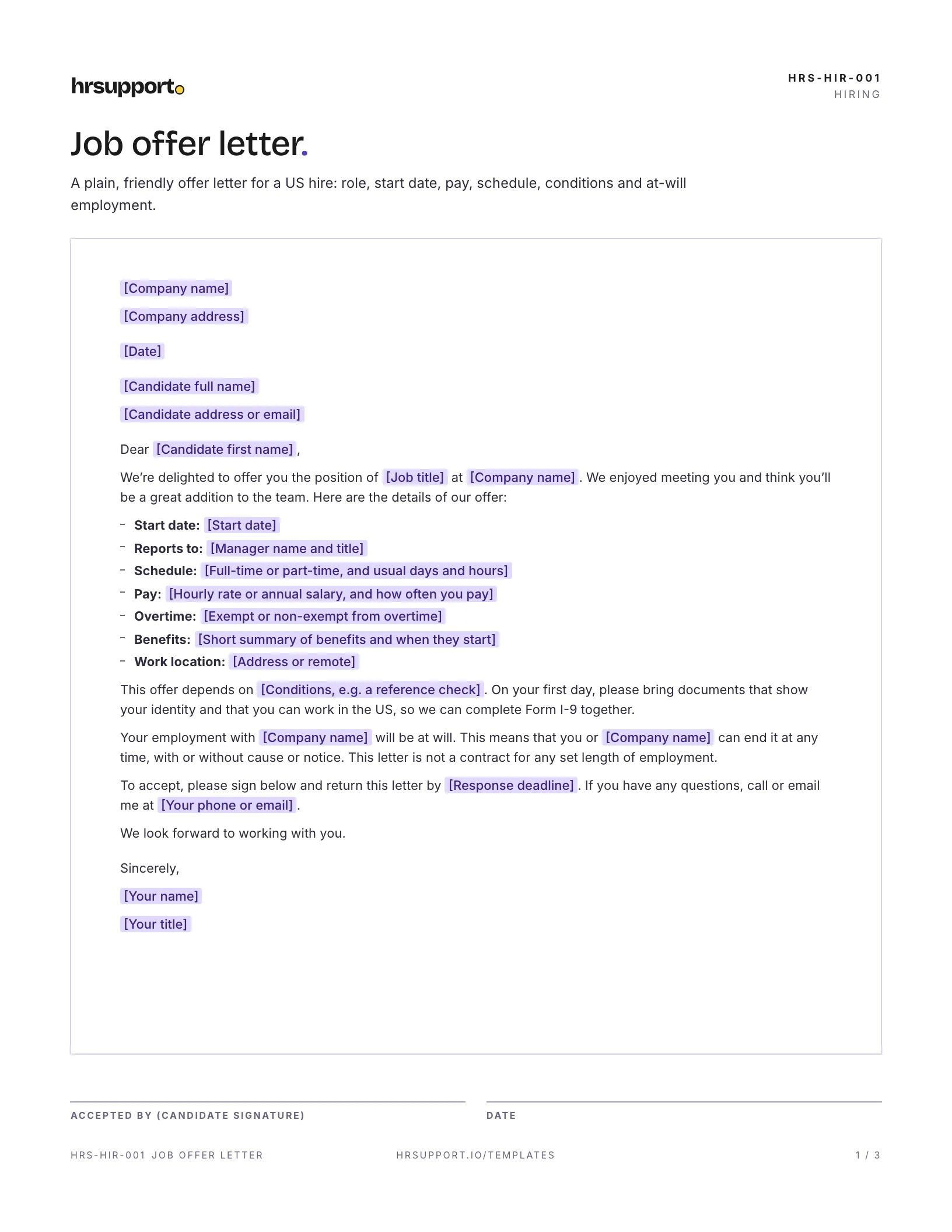
 Offer Letter TemplateRole, start date, pay, schedule and at-will wording, ready to edit in Word.Free
 Word
Word PDF
PDFWelcome a new hire before day one and tell them exactly where to go, when, who to ask for and what to bring. A letter, an email version and a team introduction.
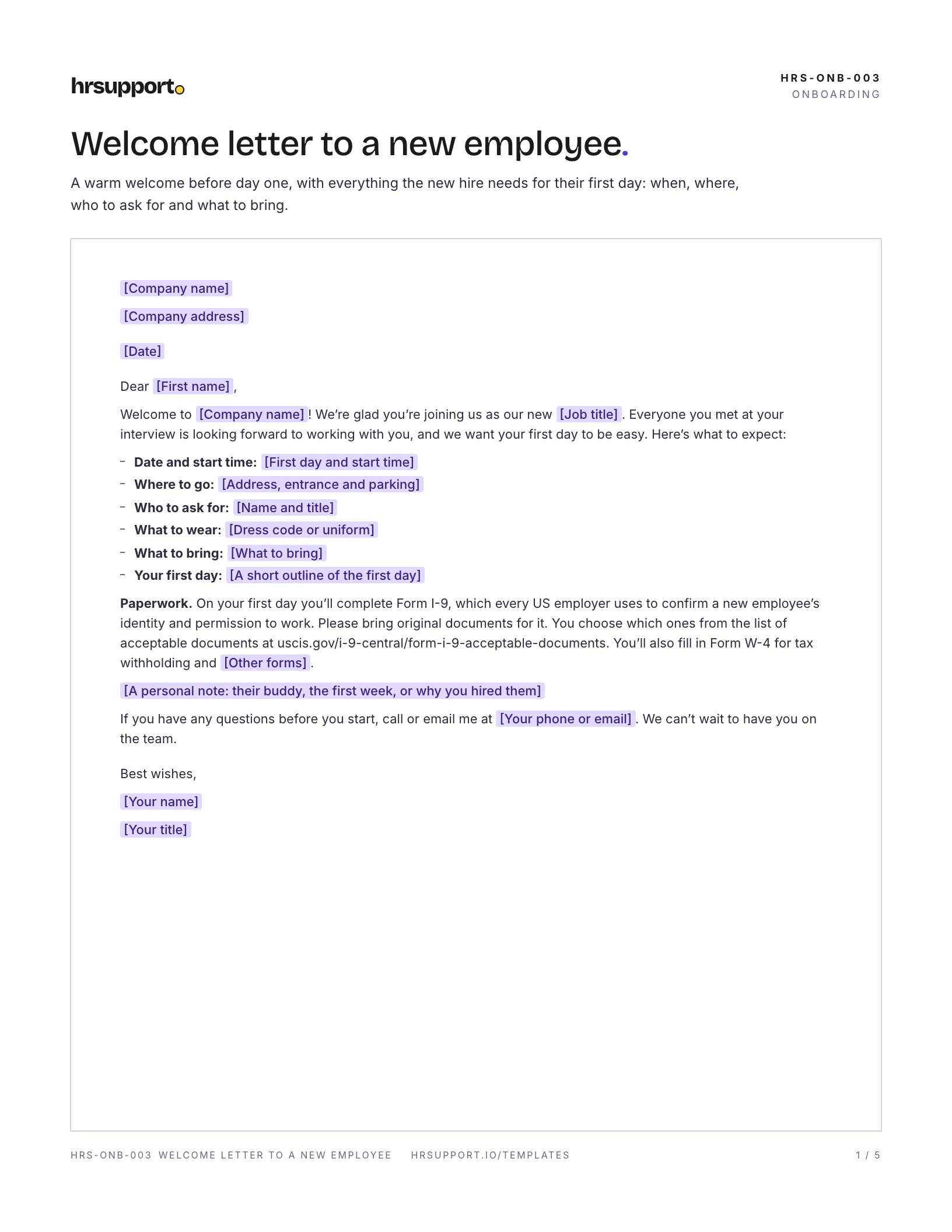
This free welcome letter to a new employee tells your new hire everything they need for their first day: when to arrive, where to go, who to ask for, what to wear and what to bring. It comes with a short welcome email with the same details, and an optional email introducing the new hire to the rest of the team. Edit it in Word, or copy the email text into your own inbox.
A five-page PDF, sized for US Letter paper, and an editable Word file:
Leave out pay, benefits and other terms. They belong in the signed offer letter, and a second version in the welcome letter only invites confusion.
The example in the download is from the practice manager of a fictional animal hospital in Wisconsin to a new veterinary assistant starting on a Monday. It gives the 7:30 a.m. start, the staff entrance and parking, a contact, what to wear (scrubs provided), lunch and the Form I-9 documents. It outlines the first morning and names the senior assistant who will be their buddy for the first two weeks. The welcome email repeats the same details in a few lines, copying the buddy, and the team email introduces the new hire to everyone else.
The second page is a welcome email to a new employee, for when a letter feels too formal or there isn’t time to mail one. It’s short on purpose: a subject line that says what it is, the first day and start time, where to go, who to ask for, what to wear and what to bring. Use it as your employee onboarding email template, and add one line about anything specific to the job, such as a login to set up before day one.
Below it is an optional email introducing the new hire to the team. Send it on or just before the first day, so people know who to say hello to. Keep it to work details unless the new hire has said they’re happy for you to share more.
Every US employer must complete Form I-9 for every person they hire (USCIS). The new employee completes Section 1 no later than their first day of employment, and can do it any time after accepting the offer (USCIS). You can ask them to bring documents, but you cannot specify which ones. The employee chooses from the Lists of Acceptable Documents, and you must accept documents that reasonably appear to be genuine and relate to the person (USCIS Handbook for Employers). That’s why the template links to the list instead of saying “bring your passport” or “bring your driver’s license and Social Security card”.
Getting ready for your next hire and not sure what your state requires on day one? That’s what hrsupport.io is for: HR answers for your state, with the law behind every answer.
Ready to use it? It’s free, and comes with a filled-in example.
Template questions
The first day and start time, the address and which door to use, where to park, who to ask for, what to wear and what to bring. Add a short outline of the first day and a contact for questions. A line on Form I-9 helps too, as long as it lets the employee choose their own documents. Keep pay and other terms in the offer letter.
Three to five working days before the start date works well. It's close enough that the details are fresh, and early enough for the new hire to sort out childcare, transport or a uniform. If the offer was accepted only a day or two before the start, send the email version the same day.
The offer letter sets out the terms of the job, such as pay, schedule and conditions, and the candidate signs to accept it. The welcome letter comes after that. It's friendlier and practical, covering where to go, when, and what to bring. Don't restate pay or terms in it, so there is only one record of what you agreed.
No. You can ask them to bring original documents for Form I-9, but USCIS says you cannot specify which ones. The employee chooses from the Lists of Acceptable Documents, and you must accept documents that reasonably appear to be genuine and relate to them. The template points them to the USCIS list instead of naming documents.
Either works, and the template includes both. Most small businesses send the email, because it arrives at once and the new hire can reply with questions. A printed letter suits a mailed welcome pack, or a hire you'll see in person before the start date. What matters is that the first-day details are clear and match the offer.
Send a short email to the team on or just before the first day. Give their name, job, start date and one or two lines on their experience and what they'll work on, and ask everyone to say hello. Share only work details unless the new hire has agreed to more. The template includes a team introduction email you can adapt.
Free HR templates
Offer Letter TemplateRole, start date, pay, schedule and at-will wording, ready to edit in Word.FreeWordPDF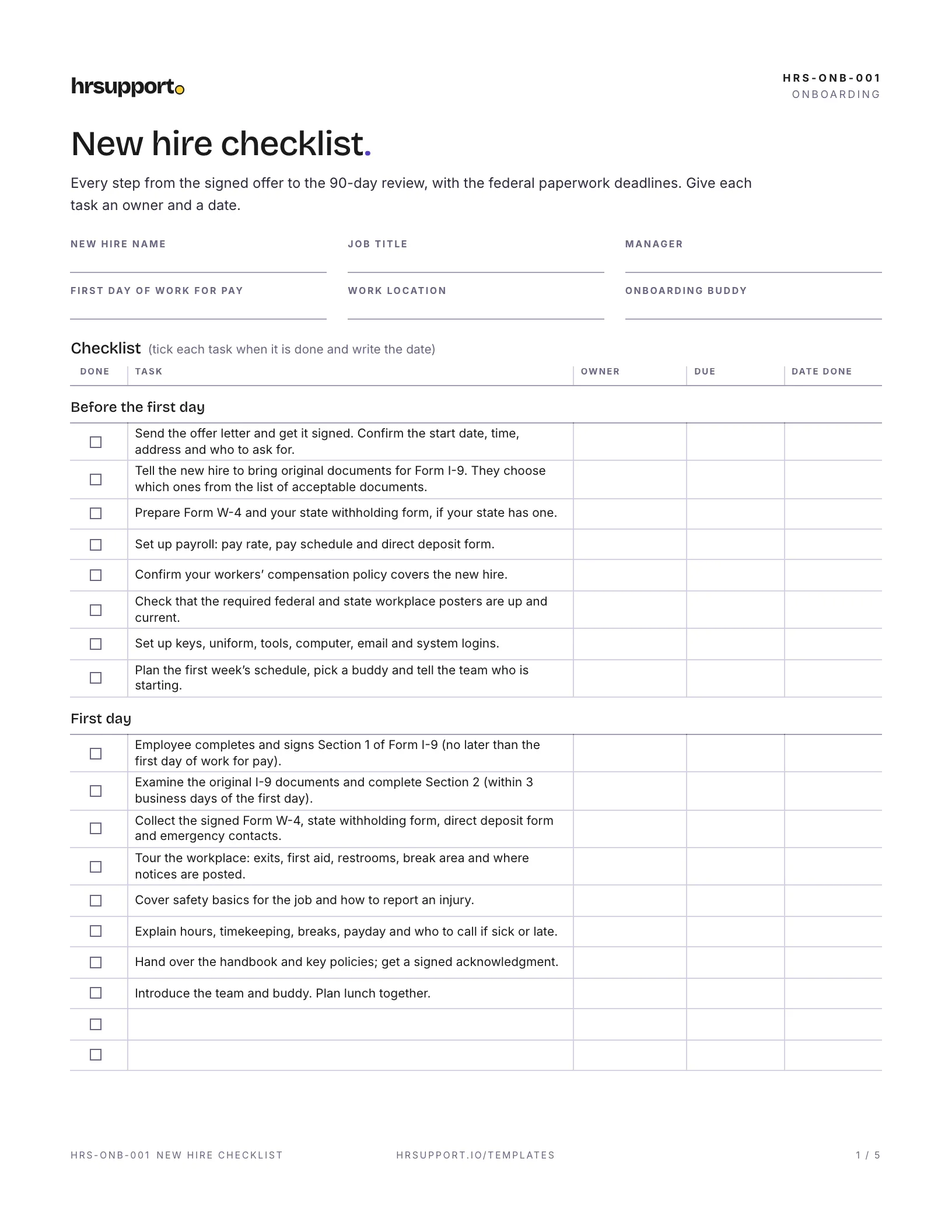 New Hire ChecklistBefore day one to the 90-day review, with the I-9, W-4 and state reporting deadlines.FreeWordPDF
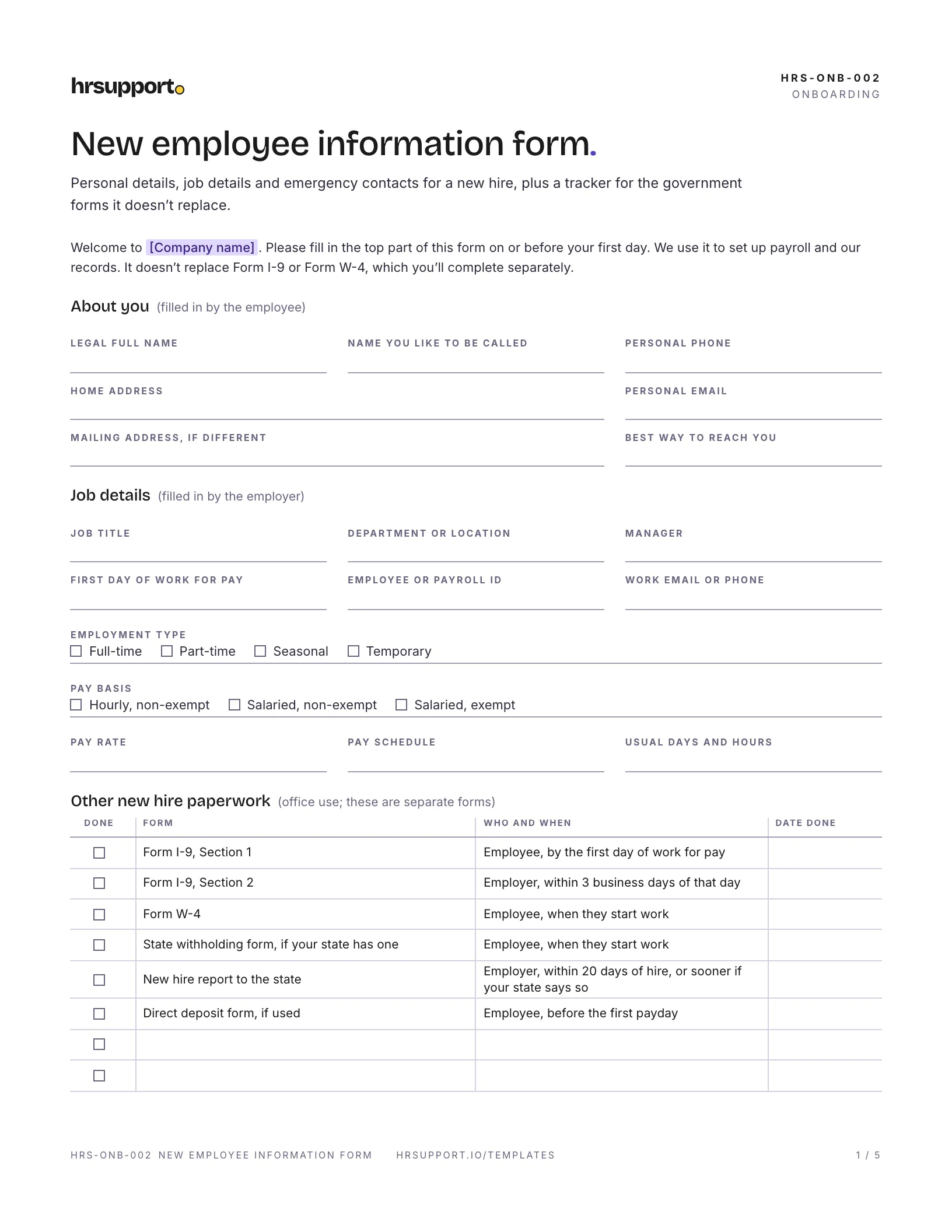 New Employee Information FormPersonal and job details, emergency contacts and a tracker for I-9, W-4 and state forms.FreeWordPDF
Join the waitlist for early access and early-access pricing. It takes ten seconds.