 Employee Handbook TemplateTwenty-nine short policies and an acknowledgment page, ready to fill in.Free
 Word
 PDF
A short, fair dress code you can set by role or by day, from business casual to uniforms and safety gear. Fill in your standards, list the PPE, and give everyone a clear way to ask for an exception.
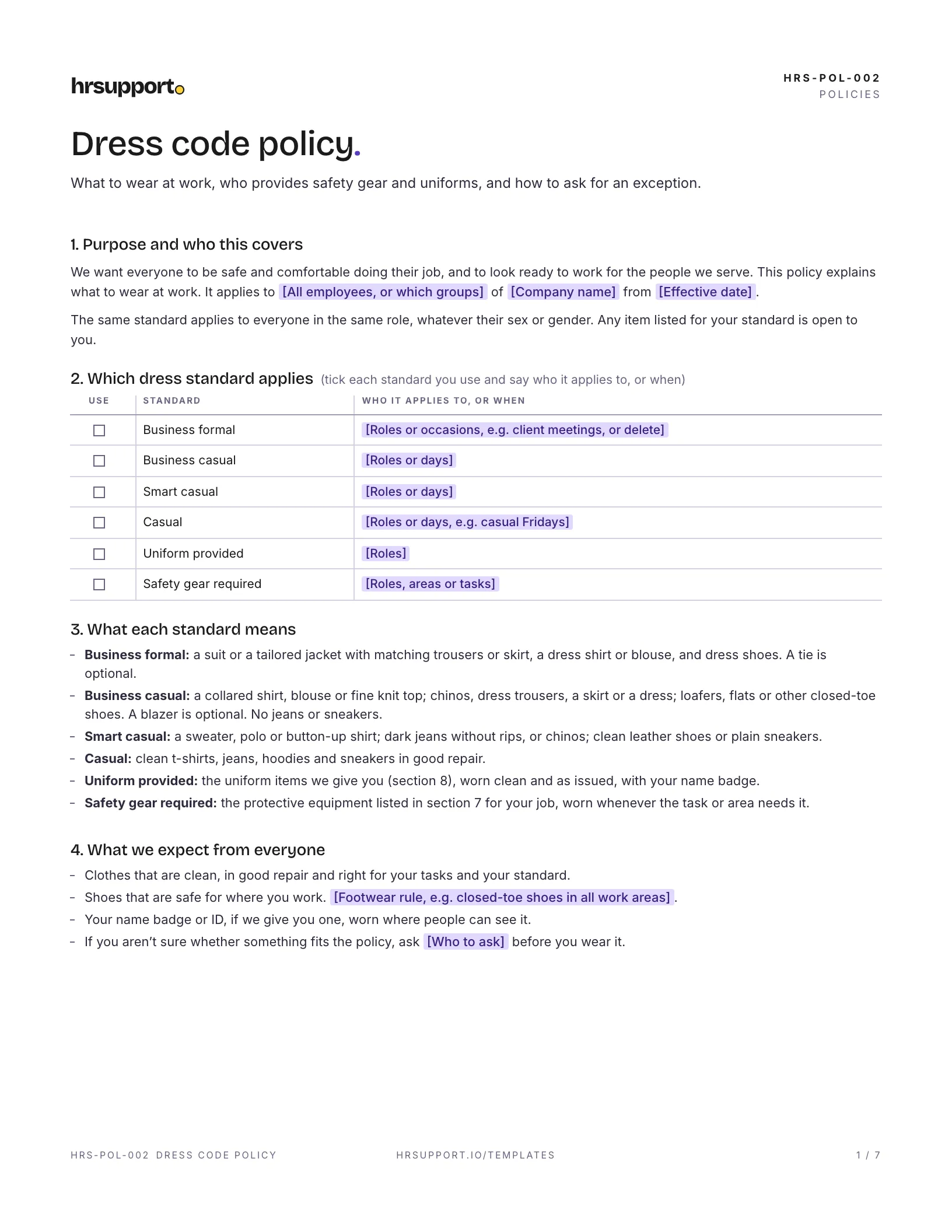
The six standards in the template, with the kind of clothes each one means.
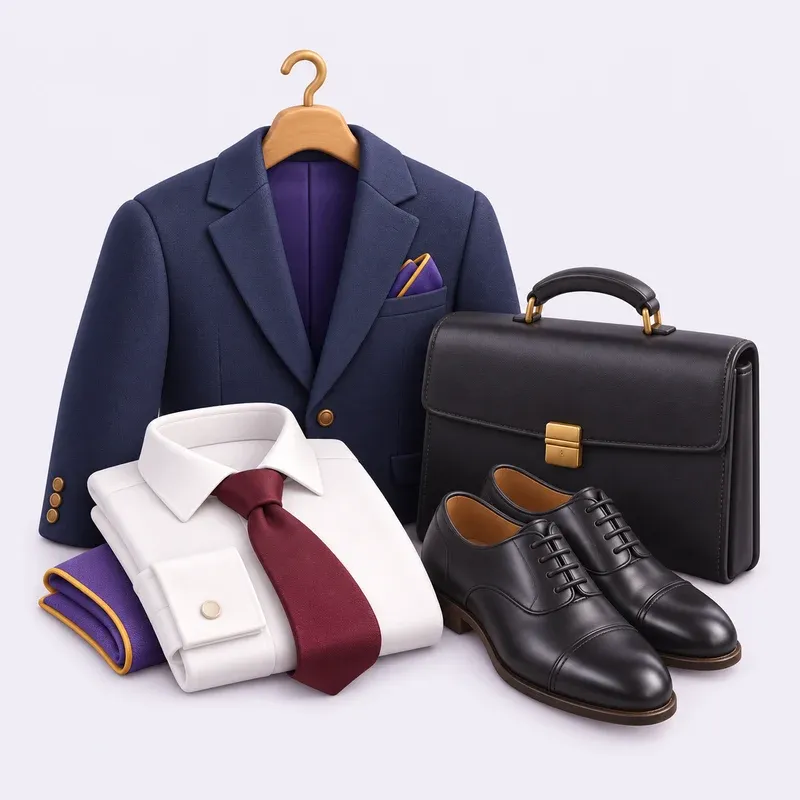
The most formal standard, for client-facing roles or occasions such as meetings with investors or the bank. A suit or tailored jacket with matching trousers or skirt.
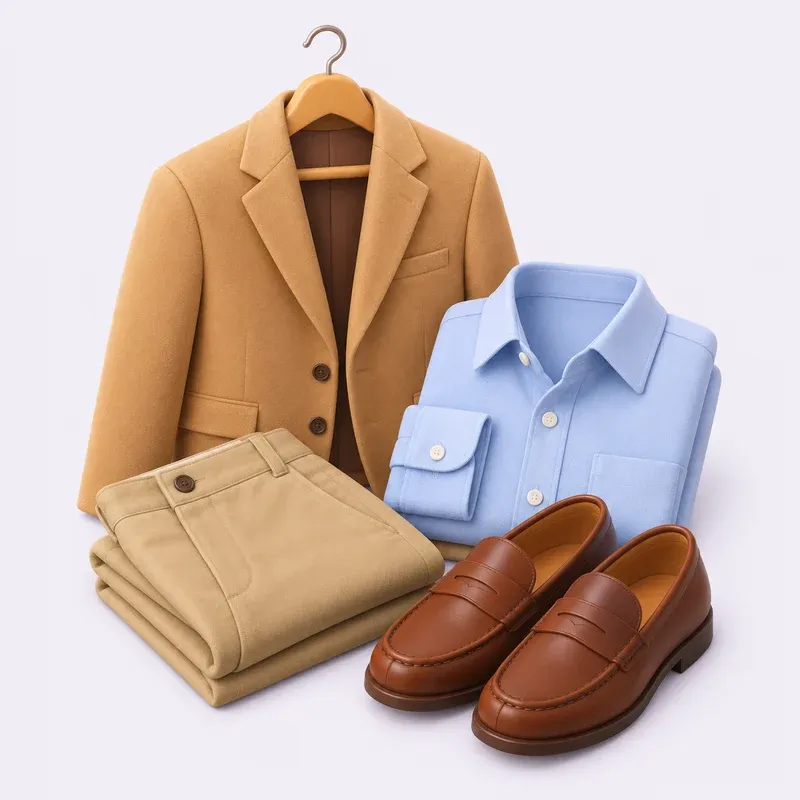
The usual office standard. Smart, but without a suit or tie.
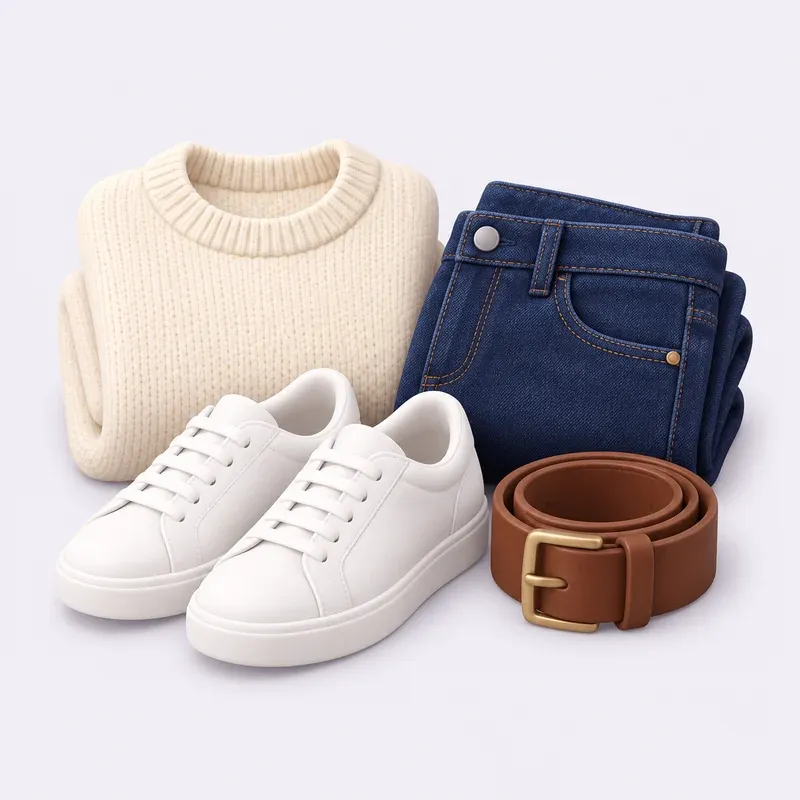
Relaxed but put together. Good for creative offices, showrooms and casual client visits.
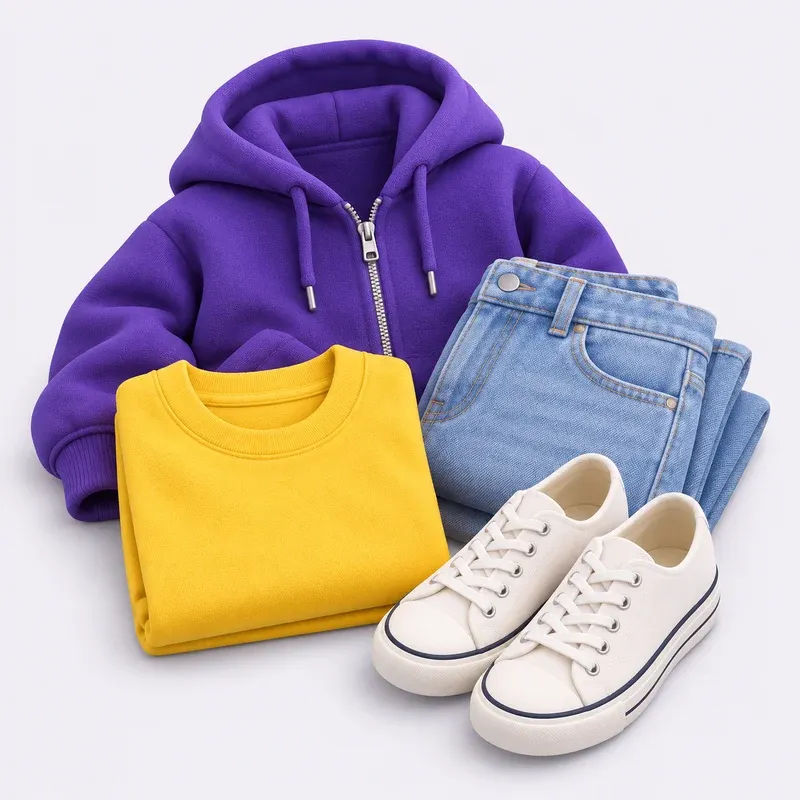
Everyday clothes in good repair, for back-office teams or casual Fridays.
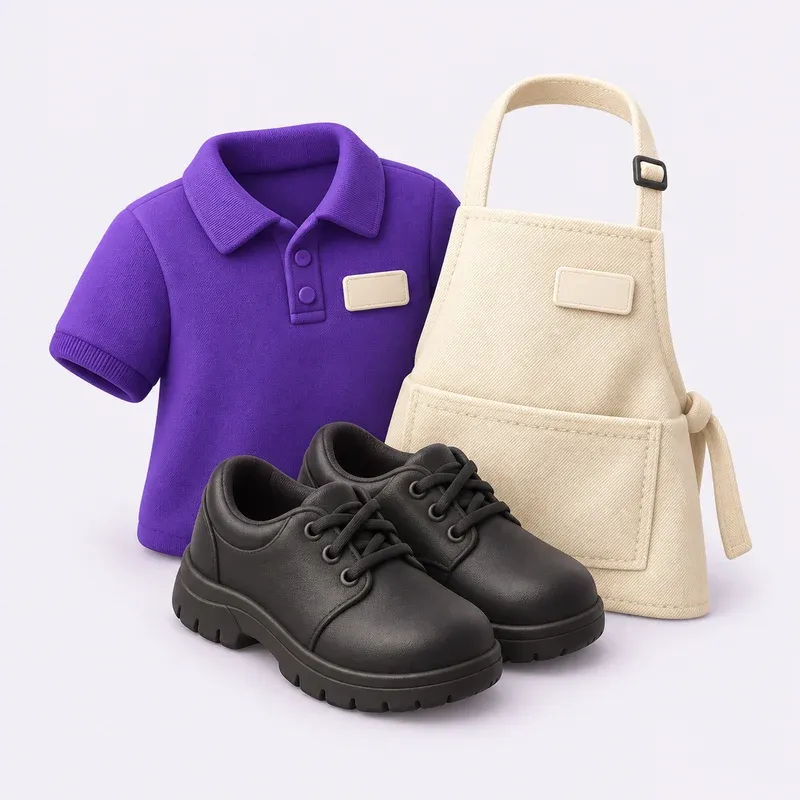
Items the business provides, so customers can spot staff. Common in retail, restaurants and hospitality.
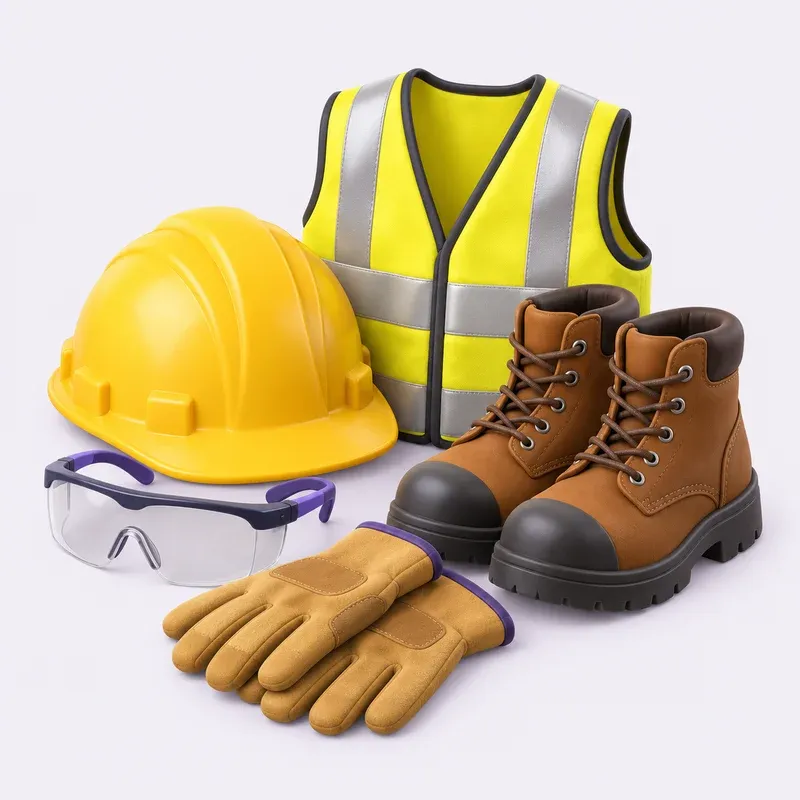
Protective equipment worn wherever the job or area needs it, such as a yard, warehouse or building site. The employer provides required PPE, with a few exceptions.
A dress code policy tells employees what to wear at work, and it saves you from awkward one-off conversations. This free dress code policy template is written for US small businesses with a mix of roles. You tick the standard for each job or day, from business formal to uniforms and safety gear, and the policy explains what each one means. It also covers protective equipment and who pays for it, uniforms, grooming, and how to ask for an exception for religion, disability, pregnancy or a medical need.
A seven-page PDF and a Word file you can edit, sized for US Letter paper:
You can use it on its own or as the dress section of your employee handbook.
The example is a fictional hardware and garden store in Ohio. Office staff wear business casual from Monday to Thursday and casual clothes on Fridays. Sales floor and checkout staff wear a store polo and apron, provided free. The garden yard, delivery and forklift crew wear safety gear, listed by task in the PPE table, and get a yearly allowance toward safety-toe boots. A yard associate asks to wear a knit cap under the hard hat in winter, and the manager records it in the exceptions table before both sign.
These are the dress standards people search for most, and they overlap. Business casual is a step down from a suit: collared shirts, blouses, chinos and closed-toe shoes, with no jeans. Smart casual allows dark jeans and clean sneakers, worn with a neat sweater or button-up. Casual means everyday clothes in good repair. The picture examples below show each one, and the template lets you describe them your own way.
Under OSHA’s rule, employers must provide required protective equipment at no cost to employees. The exceptions include non-specialty safety-toe shoes and prescription safety glasses that employees may wear off the job, and everyday or weather clothing (29 CFR 1910.132). The template’s PPE table helps you list what each job needs.
The federal wage law doesn’t require uniforms. If you require one, the Department of Labor treats its cost and upkeep as your business expense. Employees who pay for them can’t end up below minimum wage or lose overtime pay because of it (DOL Fact Sheet #16).
Employers with 15 or more employees must make an exception to a dress or grooming rule for an employee’s religious practice, unless it would cause undue hardship. Customer preference is no reason to refuse (EEOC). The same goes for disability (EEOC) and pregnancy, where the PWFA lists changing a uniform or dress code as an example (EEOC). Some states also protect hair texture and protective hairstyles. For example, California (Government Code 12926) and Washington (RCW 49.60.040) do.
If someone keeps breaking the dress code after a private conversation, record it on an employee write-up form.
Get advice before you discipline someone over clothing, hair or grooming that may be linked to their religion, race, national origin, sex, gender identity, a disability or pregnancy. Do the same if your rules differ by sex, or if the person recently asked for an exception.
Not sure what your state requires? hrsupport.io gives HR answers for your state, with the law behind every answer.
Ready to use it? It’s free, and comes with a filled-in example.
Template questions
Which standard applies to which jobs or days, what each standard means in plain words, and a short list of what isn't appropriate. Add any safety gear each job needs and who pays for it, your uniform rules, how to ask for an exception, and what happens if someone doesn't follow it. Keep every rule tied to the job, and ask employees to sign that they received it.
Business casual sits between a suit and everyday clothes. Think collared shirts, blouses or fine knit tops, chinos or dress trousers, a skirt or dress, and closed-toe shoes such as loafers or flats. A blazer is optional and ties usually aren't needed. Most businesses rule out jeans, t-shirts and sneakers. Because people read it differently, list a few examples in your policy.
The federal minimum wage law doesn't require uniforms, but if you require one, the US Department of Labor treats its cost and upkeep as your business expense. If employees pay for them, their pay can't drop below the minimum wage or cut into overtime pay. The simplest approach, used in this template, is to provide required uniforms free and not deduct anything for them.
Under OSHA's rule, employers must provide required PPE at no cost to employees, with some exceptions. You generally don't have to pay for non-specialty safety-toe shoes or prescription safety glasses if employees may wear them off the job, or for everyday clothing and weather gear. You must pay for replacements, unless the item was lost or damaged on purpose. Many employers offer a boot allowance anyway.
Rules on visible tattoos and piercings are generally your choice, but you must consider an exception if one is part of an employee's religious practice. Hairstyles need more care. Some states treat hair texture and protective hairstyles, such as braids, locs and twists, as part of race. For example, California and Washington do. Safety rules, like tying long hair back near machinery, are fine for everyone.
It's safest not to. Title VII bars treating employees unfavorably because of sex, and some states, for example California, require employers to let employees dress consistently with their gender identity or expression. One list of acceptable clothes for each role, open to everyone in it, keeps things simple and fair. This template is written that way.
Free HR templates
Employee Handbook TemplateTwenty-nine short policies and an acknowledgment page, ready to fill in.FreeWordPDF Cell Phone Policy TemplatePersonal use by role, driving, photos, company and personal phones, after-hours messages.FreeWordPDF
 Employee Write-Up FormVerbal, written and final warnings, with an improvement plan and signatures.FreeWordPDF
Join the waitlist for early access and early-access pricing. It takes ten seconds.