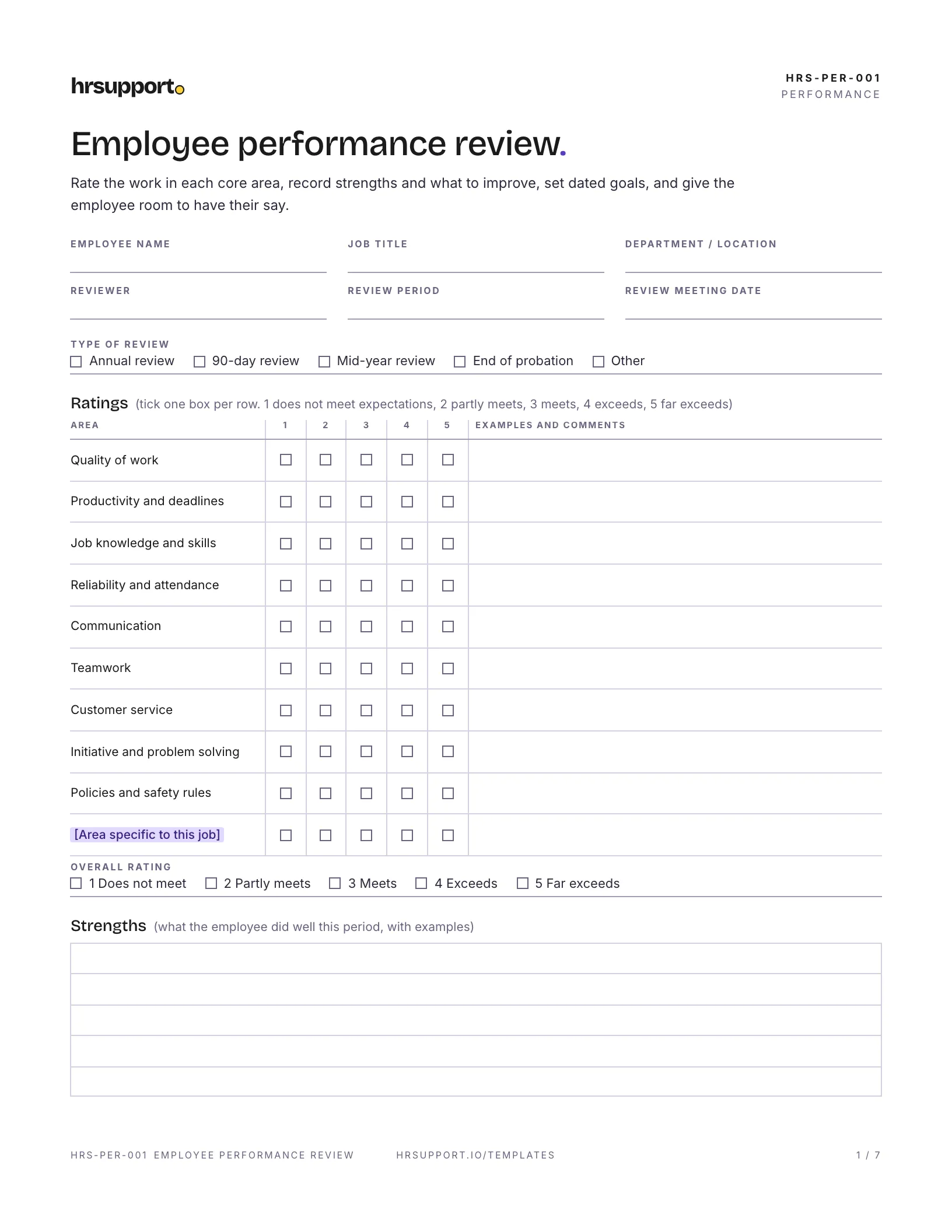
 Performance Review TemplateAnnual or 90-day review with 1–5 ratings, goals, self-assessment and signatures.Free
 Word
Word PDF
PDFA clear 30, 60 or 90-day plan to help an employee get back on track, with measurable goals, real support, regular check-ins and a recorded outcome.
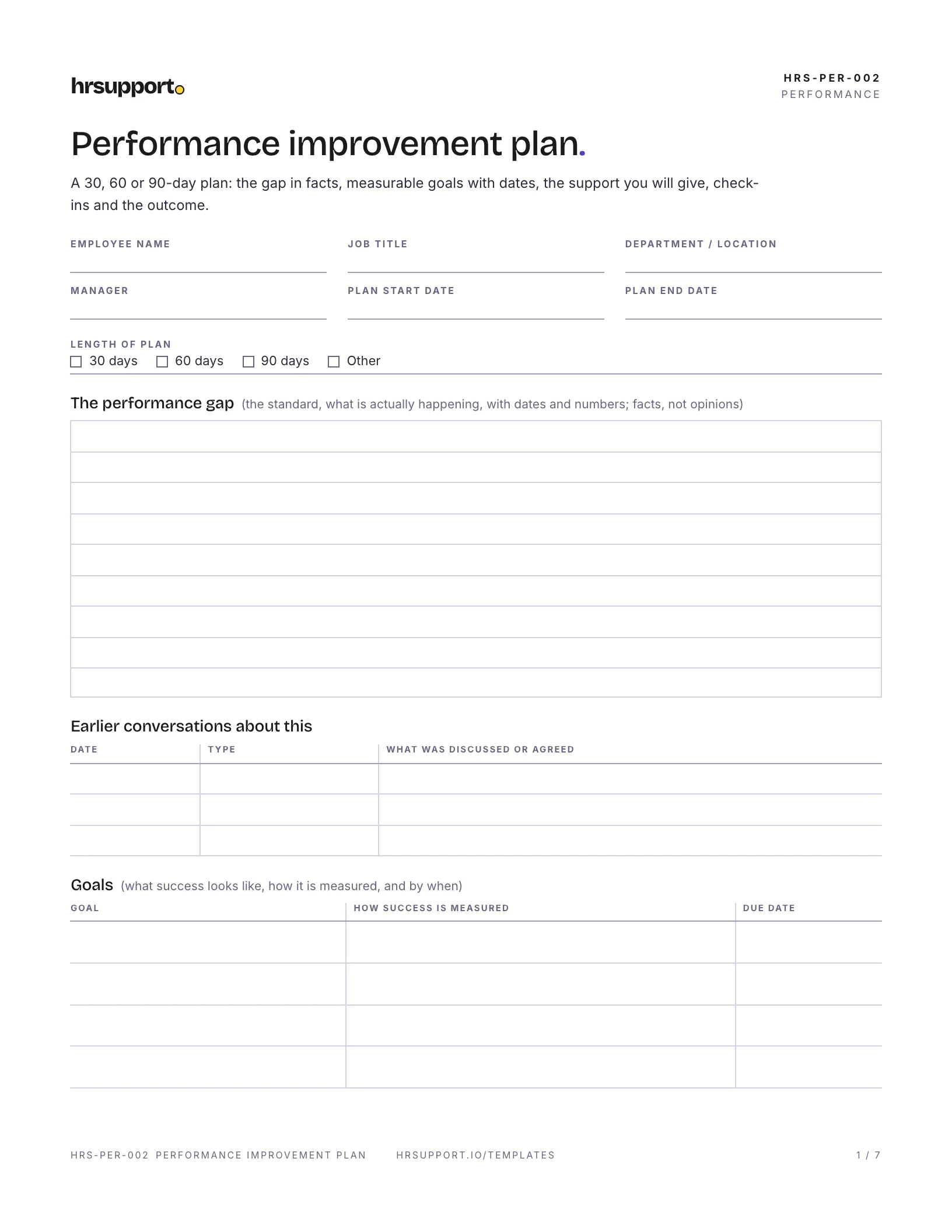
A free performance improvement plan template for US small businesses. Use it to set out a 30, 60 or 90-day PIP when an employee’s work isn’t meeting the standard and earlier conversations haven’t fixed it. It records the gap in facts, sets measurable goals with dates, lists the support you’ll give and the check-in schedule, and ends with an outcome page.
A performance improvement plan (PIP) is a written, time-limited plan for an employee whose work isn’t meeting the standard. It names the gap, sets measurable goals and a deadline, and commits the employer to specific support and regular check-ins. It sits between informal coaching and final steps such as a final warning or termination. A good PIP is honest about the problem and gives the employee a real chance to fix it.
A seven-page PDF and an editable Word file, sized for US Letter paper:
Page one records the employee, manager, plan dates and length, then the performance gap, earlier conversations and a goals table. Each goal has a success measure and a due date. Page two lists the support you’ll give, a check-in schedule with “on track” and “not yet” tick boxes, and what happens if the goals aren’t met. It ends with the employee’s comments and signatures. Page three is for the final meeting: the result against each goal, the outcome (successful, extended or not met), a summary and signatures.
The Word version has editable placeholders, such as the consequence if the goals aren’t met, so you can match your own policy.
The example is a 60-day plan for a fulfillment associate at a fictional online tea shop. The gap is measured: a 3.4% picking error rate and 15 orders packed an hour, against a standard of under 1% and 22 an hour. The plan records two earlier conversations, three goals with measures and dates, and support such as shadow shifts and a new station layout. The check-ins show steady progress every two weeks. On the outcome page, all three goals are met and the plan is closed, with weekly reports continuing for a month.
The form works for any length. Tick the length and write the end date at the top.
If the employee has made real progress but isn’t quite there, you can extend the plan with a new end date. Tick “extended” on the outcome page and write the new date.
Get advice first if the employee has recently complained about discrimination or harassment, asked for an accommodation, or taken leave; action soon after can look like retaliation. If you’re covered by the FMLA, you can’t use FMLA leave as a negative factor in discipline. If an employee asks for an accommodation once on a PIP, EEOC guidance says you don’t have to cancel the plan or excuse past performance. But you should discuss the request promptly, and may want to pause the plan while you do. If the plan ends in a termination, check your state’s final-pay deadline; in California, for example, wages are due immediately at discharge.
Not sure if a PIP is the right step, or what your state requires? That’s what hrsupport.io is for: HR answers for your state, with the law behind every answer.
Ready to use it? It’s free, and comes with a filled-in example.
Template questions
A performance improvement plan, or PIP, is a written plan that sets out where an employee's work falls short, what must change, how it will be measured, the help the employer will give, and the deadline. It usually runs 30, 60 or 90 days, with regular check-ins, and ends with a recorded outcome. Used well, it gives the employee a fair chance to improve.
Long enough to show real change. 30 days suits a simple, measurable issue such as lateness or accuracy. 60 days is common for most roles. 90 days fits work with a longer cycle, such as sales or projects. Pick the length before you start, write the end date on the plan, and hold check-ins at least every two weeks.
The employee and manager, the plan dates, the performance gap in facts and numbers, earlier conversations, two to four measurable goals with due dates, the support you'll give, a check-in schedule, and what happens if the goals aren't met. Add the employee's comments, signatures, and an outcome section to complete at the end. This template has all of these.
Yes. Signing usually only confirms they received the plan, not that they agree, and the form says so. If they still refuse, write "employee declined to sign", date it, and have a witness sign. The plan still applies. Give them a copy either way, and invite them to add their side in the comments box or a separate statement.
It shouldn't. A PIP is meant to give someone a real chance to improve, with clear goals and support, and many plans end successfully. If you've already decided to let someone go, a PIP isn't the honest tool, and an employee who senses that is less likely to improve. Write goals that are reachable in the time given.
Federal law doesn't require one, and most US employment is at will. But your own handbook may promise steps, and in Montana, for example, materially breaking your own written personnel policy can make a discharge wrongful (Montana Code 39-2-904). A documented plan is also strong evidence that a decision was fair. Check your policy and state rules first.
Free HR templates
Performance Review TemplateAnnual or 90-day review with 1–5 ratings, goals, self-assessment and signatures.FreeWordPDF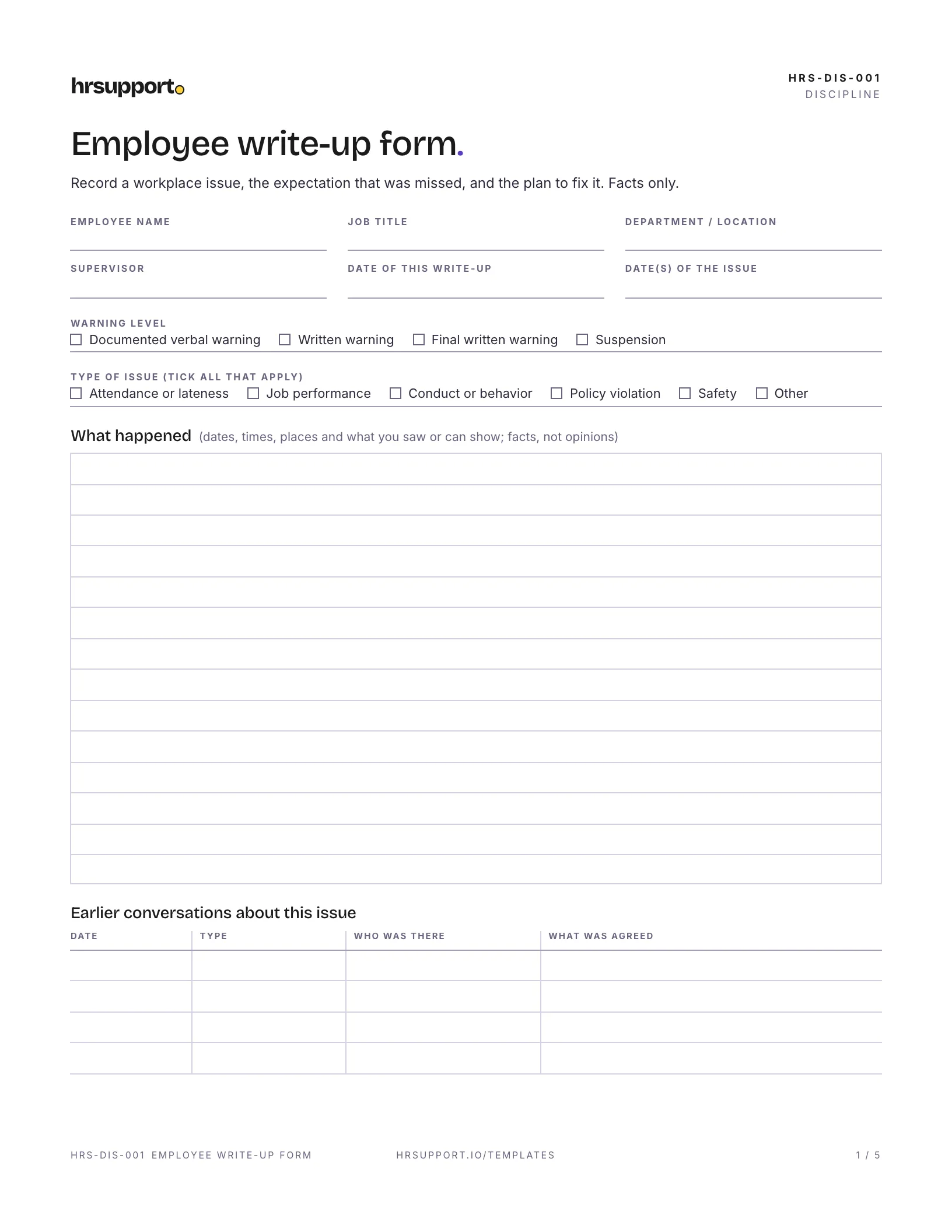 Employee Write-Up FormVerbal, written and final warnings, with an improvement plan and signatures.FreeWordPDF
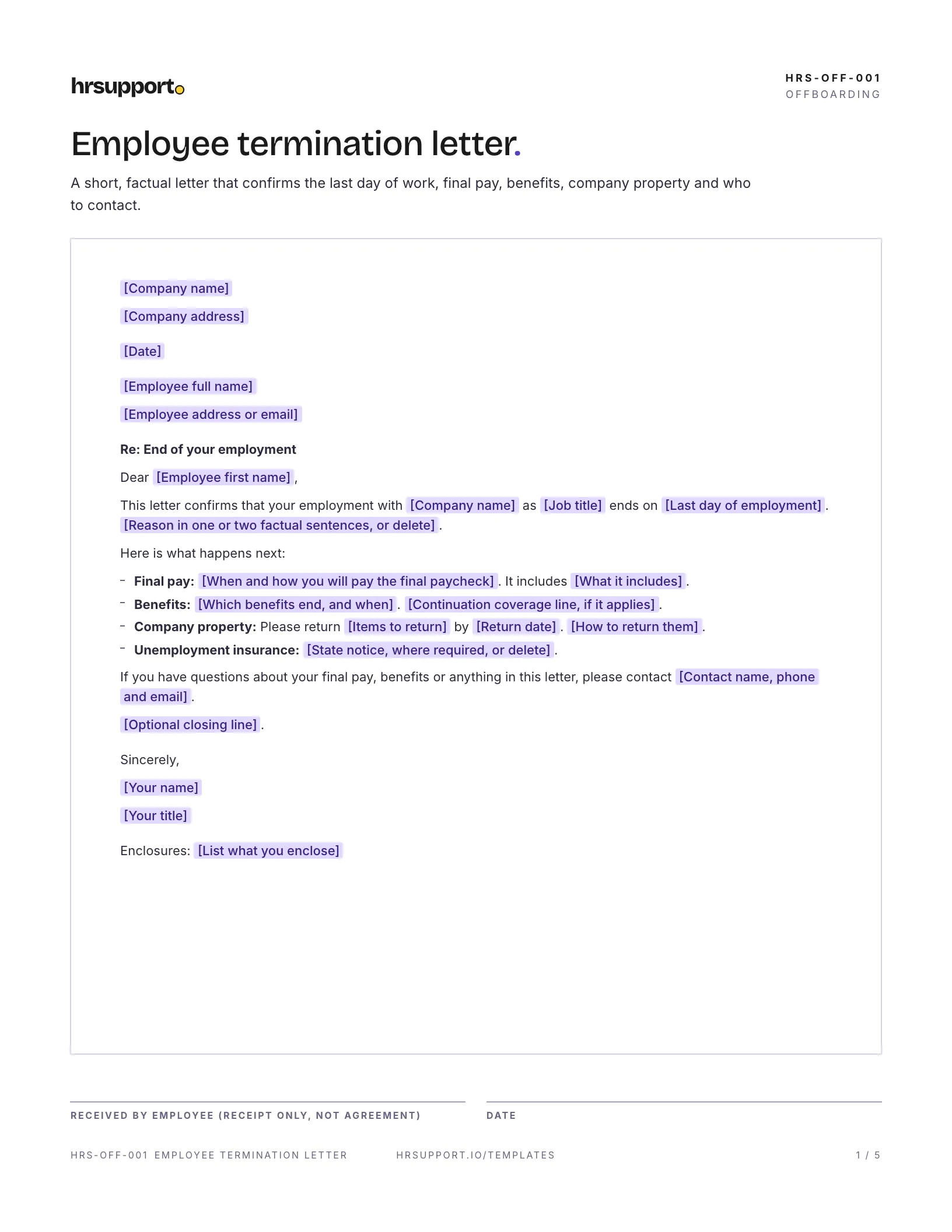 Termination Letter TemplateLast day, final pay, benefits, property and notices, with a termination record.FreeWordPDF
Join the waitlist for early access and early-access pricing. It takes ten seconds.