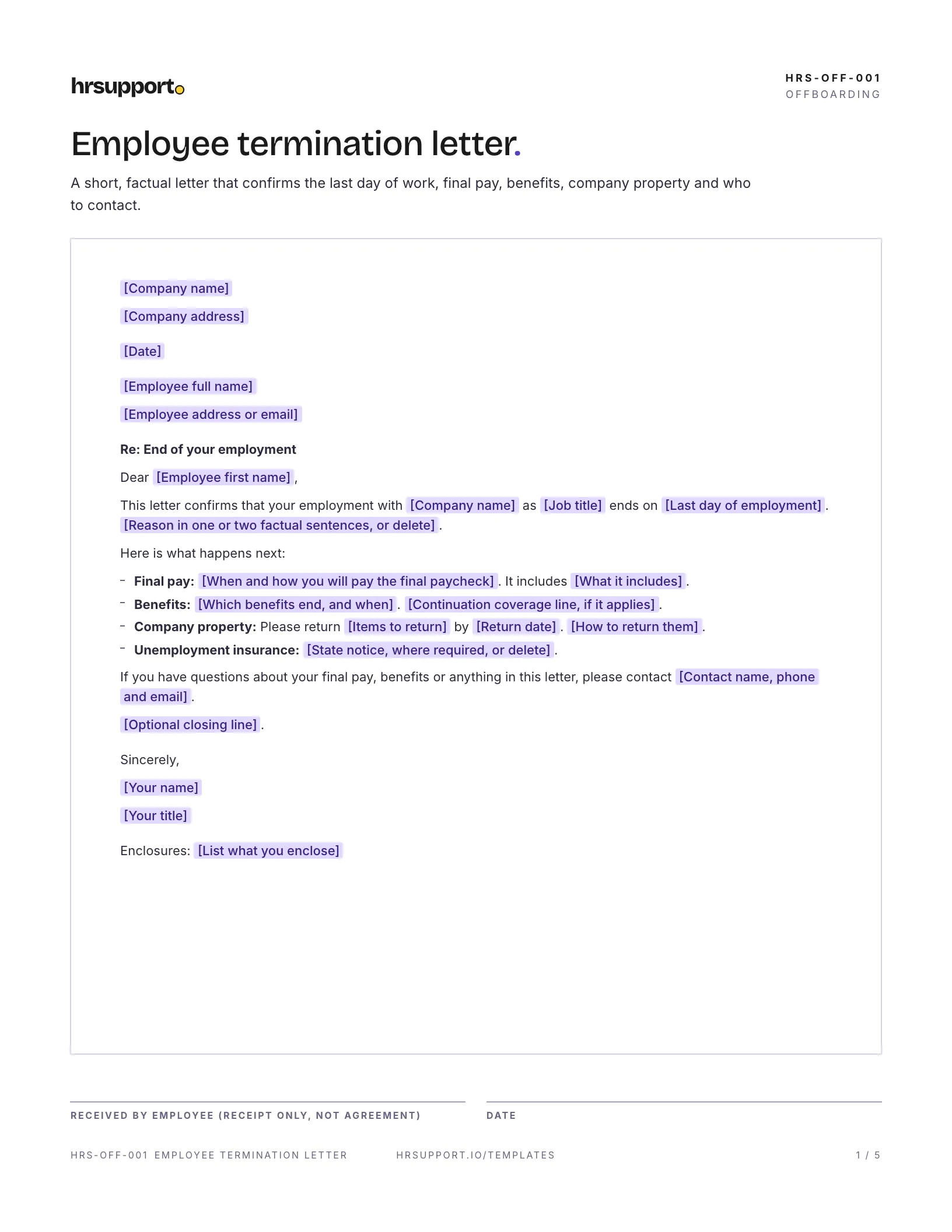
 Termination Letter TemplateLast day, final pay, benefits, property and notices, with a termination record.Free
 Word
Word PDF
PDFThe questions worth asking when someone leaves, why each one matters, and a printable form to write the answers on.
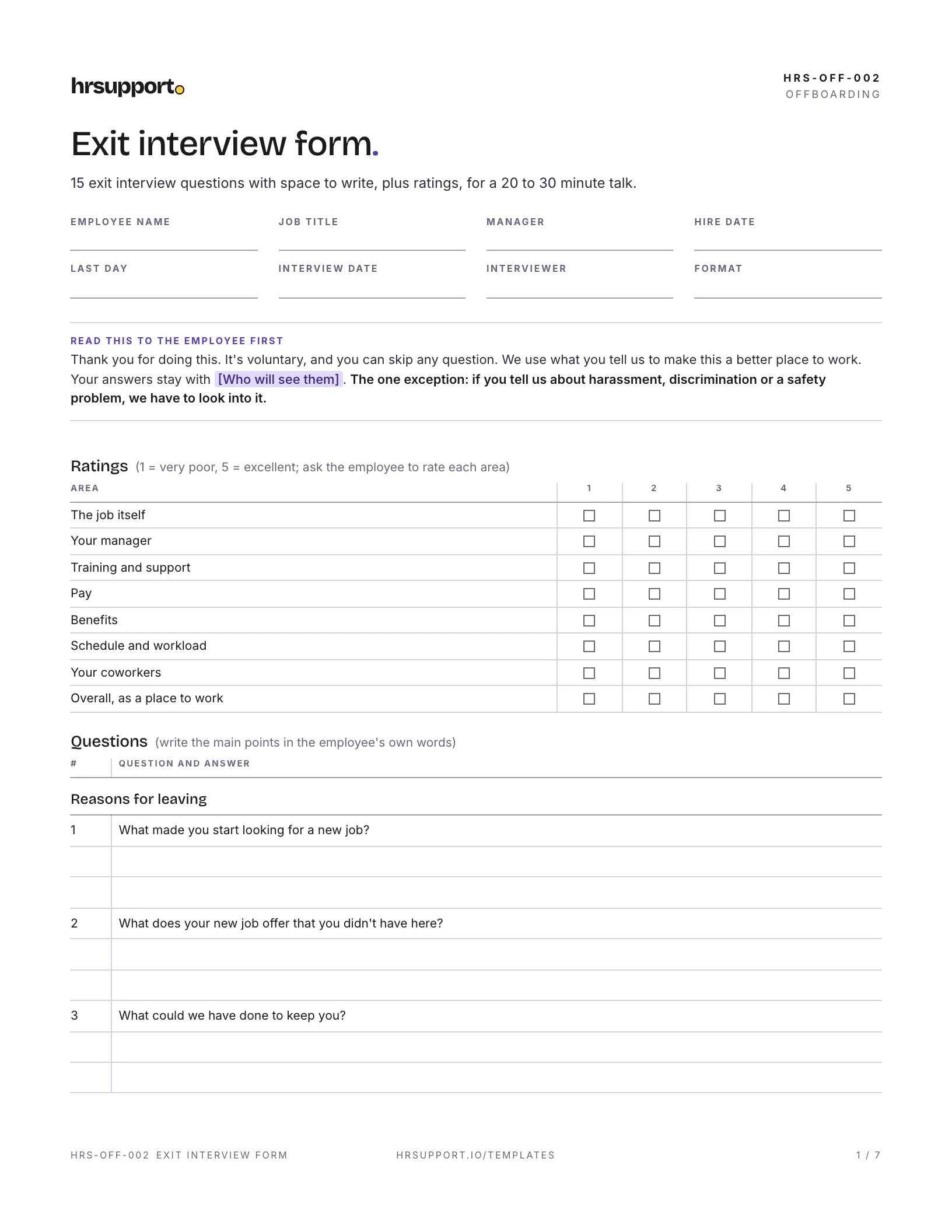
Good exit interview questions tell you why people leave, while you can still do something about it. Below are 15 questions to ask, grouped by topic, with a line on why each one matters. They’re all on a free printable exit interview form, with space to write, 1–5 ratings and a completed example.
A seven-page PDF, sized for US Letter paper, and an editable Word file:
An exit interview is a short, private conversation with an employee who is leaving, usually in their last week. The aim is to find out why they’re going and what it was like to work for you. People who are leaving often say what current staff won’t. One interview is an opinion; the same answer from several people is a pattern you can fix.
Reasons for leaving
The job and your manager
Pay, benefits and schedule
Culture and the team
Looking ahead
The form also asks the employee to rate eight areas from 1 (very poor) to 5 (excellent): the job itself, their manager, training and support, pay, benefits, schedule and workload, coworkers, and the business overall. Ratings take a minute and are easy to compare across several departures, which open answers are not.
The example in the download is an exit interview with a veterinary technician at a fictional clinic who is leaving for a hospital job with higher pay and fixed shifts. Her ratings are good for the job, her manager and coworkers, and low for pay and schedule. The answers point to one theme: rotating weekends changed at short notice. The follow-up box records that she’s the third technician this year to mention it, with a date for the owner to look at fixed weekend teams and a pay check before the next budget.
An exit interview may be the first time you hear about a problem. Don’t file it away. The EEOC says an employer is liable for harassment by coworkers or non-employees it controls if it knew, or should have known, and failed to take prompt and appropriate corrective action. Treat it as a complaint: write down what was said, look into it, and get advice if it’s serious. Never treat the person worse for raising it, which can be retaliation. That’s why the form’s opening script doesn’t promise total confidentiality.
File the form with the employee’s records and share only the themes with managers, not names. Every few departures, read the forms together and look for the same answer coming up twice. Then act on it, and check the follow-up dates you wrote down. An exit interview you never act on isn’t worth holding.
Want help reading what your exit interviews are telling you? That’s what hrsupport.io is for: HR answers for your state, with the law behind every answer.
Ready to use it? It’s free, and comes with a filled-in example.
Template questions
The most useful ones are open and specific. Ask what made them start looking, what the new job offers that yours didn't, and what could have kept them. Then ask about their manager, training, pay and schedule, and whether they saw anything that worried them. Finish with whether they'd come back or recommend you. Fifteen questions is plenty; in a short interview, pick the five that matter most.
To learn why people leave while it's still useful. A departing employee often says what current staff won't, about pay, schedules, a manager or how work is organized. One interview is an opinion. The same answer from two or three people is a pattern you can act on, before more people leave for the same reason.
Ideally someone other than the employee's direct manager, such as the owner, an office manager or a manager from another team. People speak more freely when they aren't talking to the person they are describing. In a very small business that may not be possible; then say clearly that you want honest answers and won't hold them against anyone.
In the last week of work, not the last hour. Too early, and the employee may hold back while they still need a reference or a good final few weeks. On the last afternoon, they're busy handing over and saying goodbye. Book 20 to 30 minutes, in private, and tell them in advance what it's for.
Yes. Making it voluntary, and letting people skip any question, gets you more honest answers than making it a condition of leaving. Most people are happy to talk if you ask politely and explain why. If they decline, offer the form to fill in on their own, or a quick call after they've gone.
Say who will see the answers, and keep to it. Share themes with managers, not quotes with names. But don't promise total confidentiality. If the employee tells you about harassment, discrimination or a safety problem, you need to look into it. The EEOC says an employer is liable for coworker harassment it knew or should have known about and failed to correct.
Free HR templates
Termination Letter TemplateLast day, final pay, benefits, property and notices, with a termination record.FreeWordPDF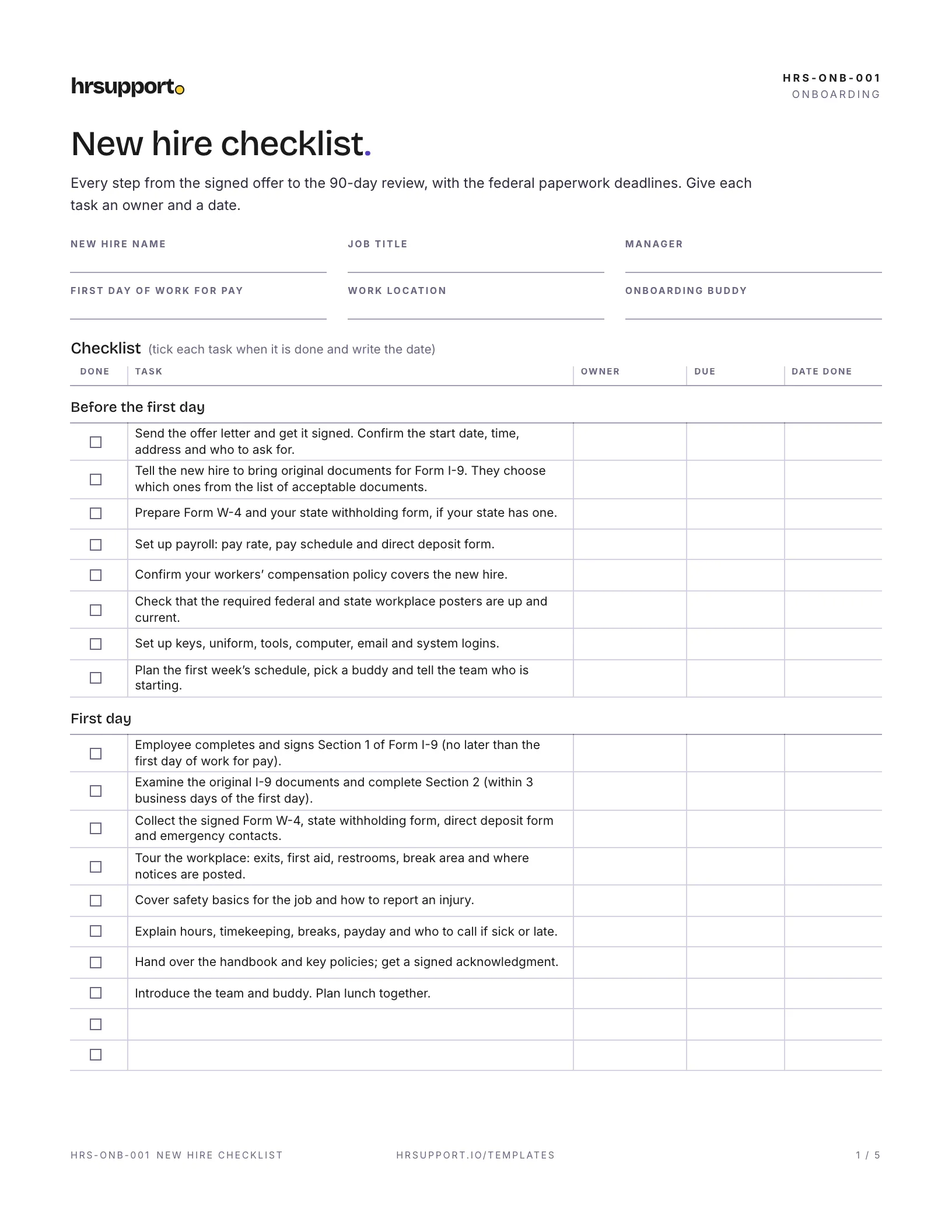 New Hire ChecklistBefore day one to the 90-day review, with the I-9, W-4 and state reporting deadlines.FreeWordPDF
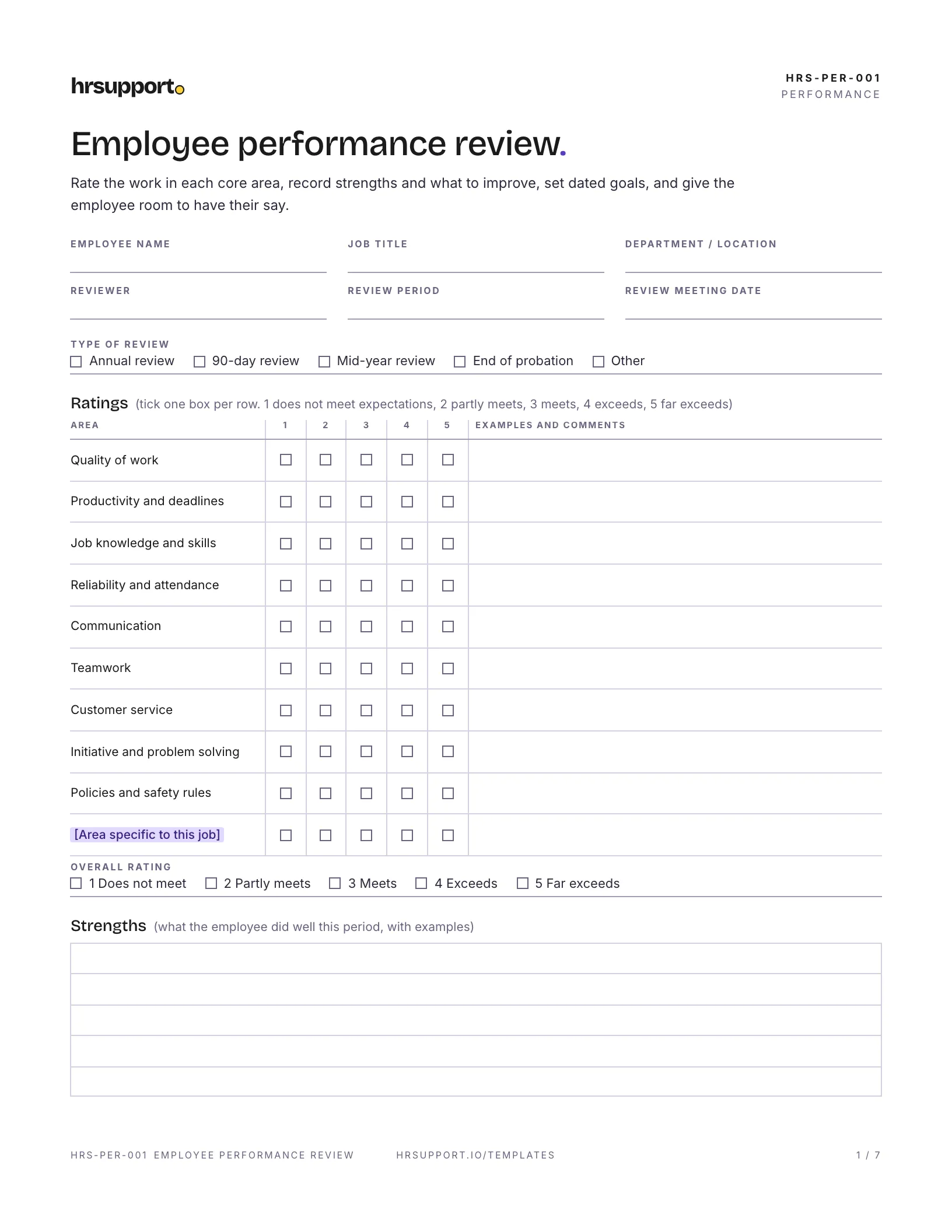 Performance Review TemplateAnnual or 90-day review with 1–5 ratings, goals, self-assessment and signatures.FreeWordPDF
Join the waitlist for early access and early-access pricing. It takes ten seconds.