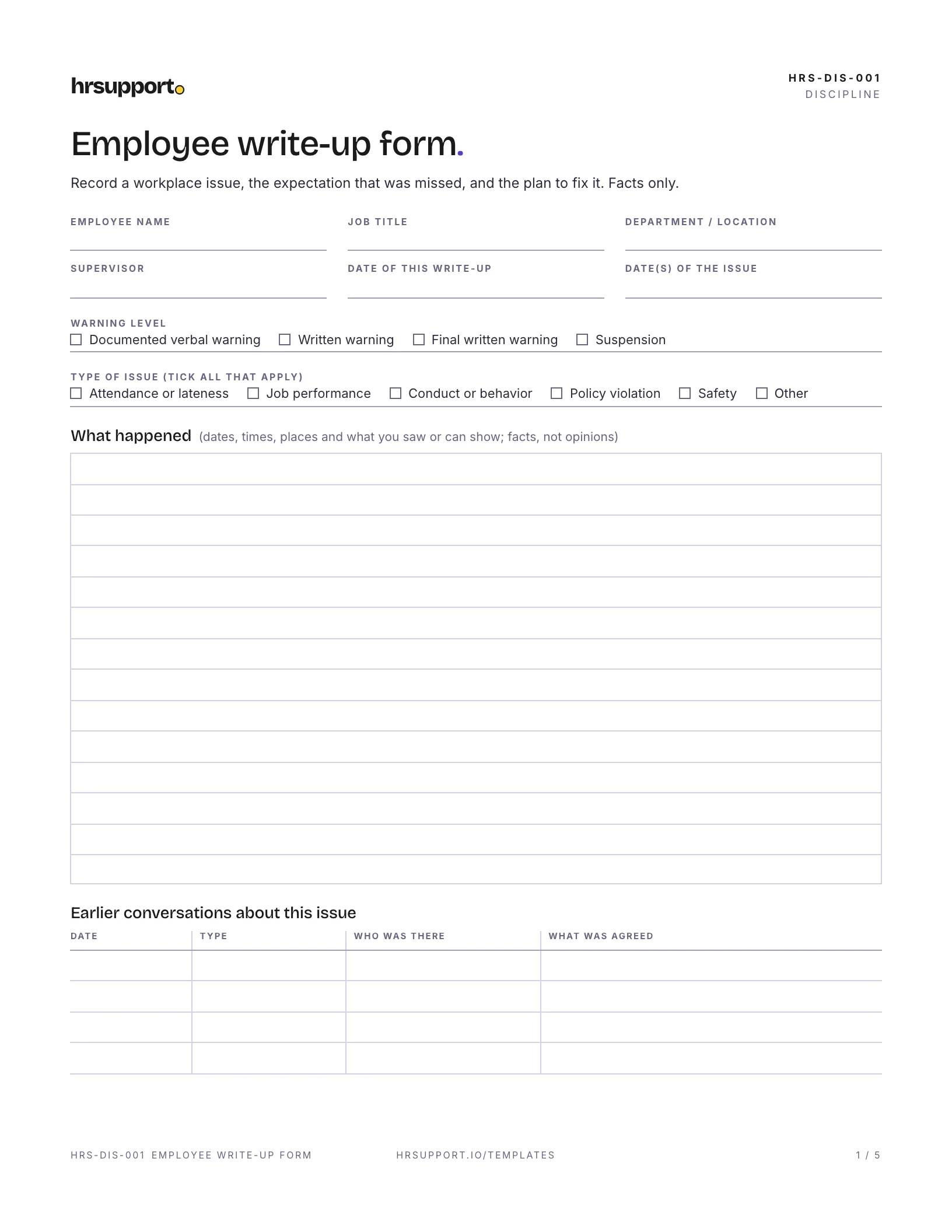
 Employee Write-Up FormVerbal, written and final warnings, with an improvement plan and signatures.Free
 Word
 PDF
A formal written reprimand in letter form. State the facts and the rule that was broken, say what must change and by when, and give the employee the right to respond.
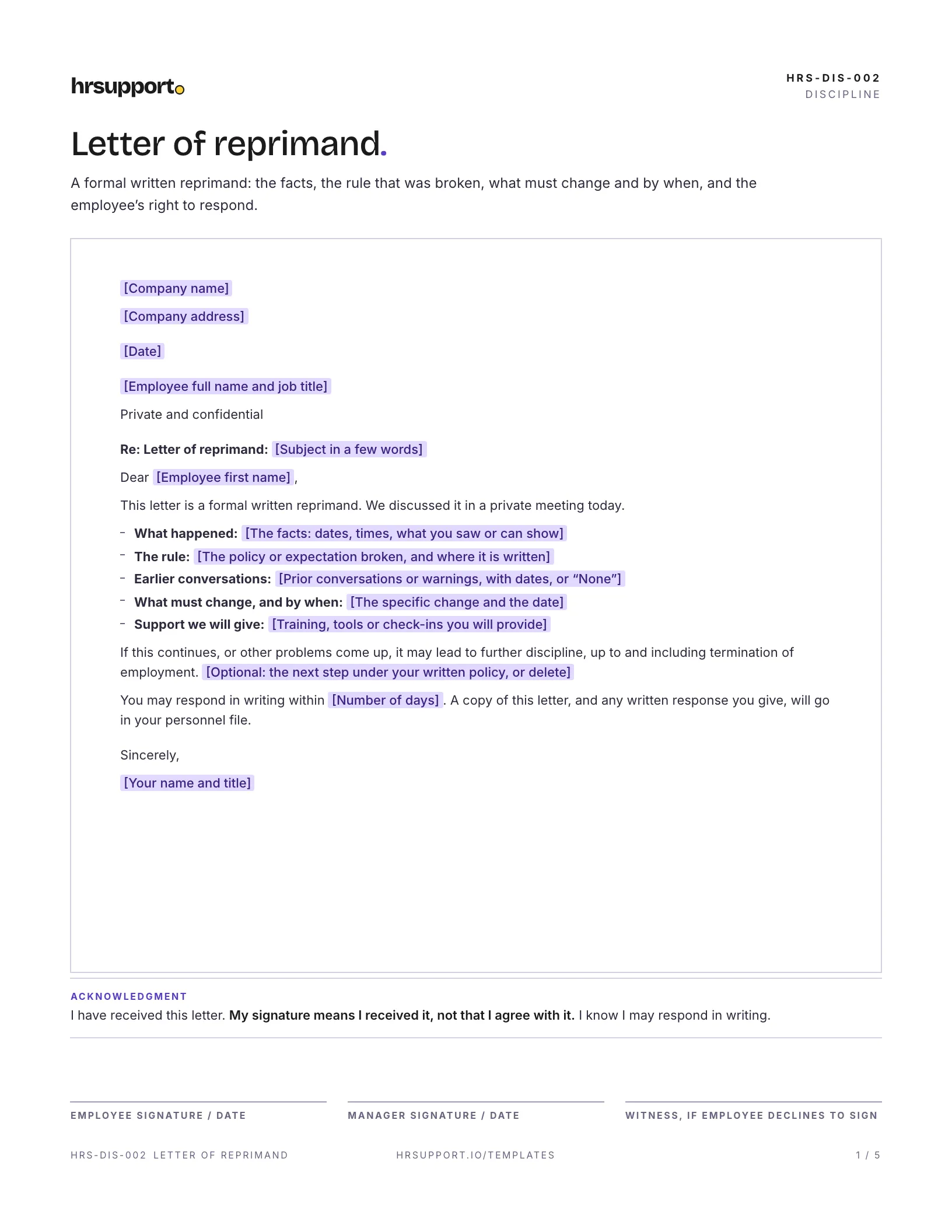
A letter of reprimand is a formal written warning to an employee about a specific problem: what happened, the rule that was broken, what must change and by when, and what may happen if it doesn’t. This free letter of reprimand template gives you a full letter for US small businesses, plus three short versions for attendance, conduct and performance. It keeps you to facts, gives the employee the right to respond in writing, and ends with an acknowledgment that says signing means “received”, not “agreed”.
A Word file you can edit and a five-page PDF sized for US Letter paper:
Every detail to change is highlighted as a [placeholder] in the Word file.
The example is from a fictional veterinary clinic. A veterinary technician left the controlled drug cabinet unlocked after two shifts, nine days apart, and was the last person to sign the drug log both times. The letter quotes the clinic’s procedures manual, records the conversation after the first incident, and asks her to lock the cabinet after every use and initial a new lock check on the end-of-shift checklist. The manager will review the checklist every Friday for six weeks and has booked a refresher with one of the vets. The letter says the next step under the clinic’s policy would normally be a final written warning, and gives her five working days to respond.
The three short examples cover a kennel attendant who clocked in late three times, a receptionist who called a coworker “useless” in front of clients, and a billing assistant whose invoices had errors.
They do the same job in different shapes. Use the letter when you want a formal, personal record of one clear issue, such as a serious conduct problem or a repeat of something you’ve already discussed. It reads as more serious, and it’s easy to hand over in a meeting.
Use the employee write-up form when you want a structured record with tick boxes for the warning level and issue type, a table of earlier conversations, and an improvement plan with check-in dates. Many owners use the form for everyday warnings and the letter when something needs to stand out. Whichever you choose, use it the same way for everyone.
A written reprimand usually comes after a verbal warning hasn’t worked, or straight away for a more serious issue. If it doesn’t fix the problem, the next step might be a final written warning or, for a skills problem that needs weeks of coaching, a performance improvement plan. If your handbook promises a set of steps, follow them. If a termination does follow, a short, factual termination letter can refer back to the reprimand.
The EEOC says it’s unlawful to retaliate against employees for asserting their rights, such as talking to a manager about discrimination, answering questions in a harassment investigation, or asking for a disability or religious accommodation, and it lists a reprimand as an example of retaliation (EEOC: Retaliation). You can still discipline for genuine reasons that aren’t retaliatory or discriminatory.
Employees can also talk with coworkers about pay, benefits and working conditions. The NLRB says an employer can’t discipline them for this protected concerted activity (NLRB: Concerted activity). If you’re covered by the FMLA, you can’t use FMLA leave as a negative factor in discipline or count it under a no-fault attendance policy (29 CFR 825.220).
Get advice before you send a reprimand to someone who has recently complained about discrimination, harassment, pay or safety, asked for an accommodation, or taken protected leave. Do the same if the letter could lead to a termination, or if your handbook promises steps you haven’t followed.
Not sure whether a reprimand is the right move, or what your state requires? hrsupport.io answers HR questions for your state, with the law behind every answer.
Ready to use it? It’s free, and comes with a filled-in example.
Template questions
A letter of reprimand is a formal written warning from an employer to an employee about a specific problem, such as lateness, conduct or poor work. It records what happened, the rule that was broken, what must change and what may happen if it doesn't. It goes in the personnel file. This template is for private employers; federal agencies and the military have their own reprimand rules.
The date, the employee's name and a subject line. Then the facts, with dates and times, the rule or expectation that was broken and where it is written, any earlier conversations, what must change and by when, and the support you'll give. Close with the consequences if it continues, the employee's right to respond in writing, and an acknowledgment for them to sign.
In most small businesses, yes. Both are formal written records of a problem and the change you expect. Some employers call the letter version a reprimand and the form version a write-up or written warning. What matters is that your handbook uses the terms consistently, and that you follow any steps it promises, such as a verbal, written and final warning.
No one can be forced to sign, and the letter still counts if they don't. The signature only confirms they received it, not that they agree, and the template says so in plain words. If they still refuse, write "employee declined to sign" with the date, and have a witness, such as another manager, sign the letter.
Yes, and you should invite it. The template gives the employee a set number of days to respond in writing. Attach any response to the letter in their personnel file. A written response, sometimes called a rebuttal, shows the employee was heard, and it may point to facts you missed. Read it before you decide on any next step.
Federal law sets a minimum, not a maximum. EEOC rules (29 CFR 1602.14) require covered employers to keep personnel records, including discipline, for at least one year from when they were made, and longer if a discrimination charge is filed. Many employers keep them for the length of employment and several years after. State rules can be longer.
Free HR templates
Employee Write-Up FormVerbal, written and final warnings, with an improvement plan and signatures.FreeWordPDF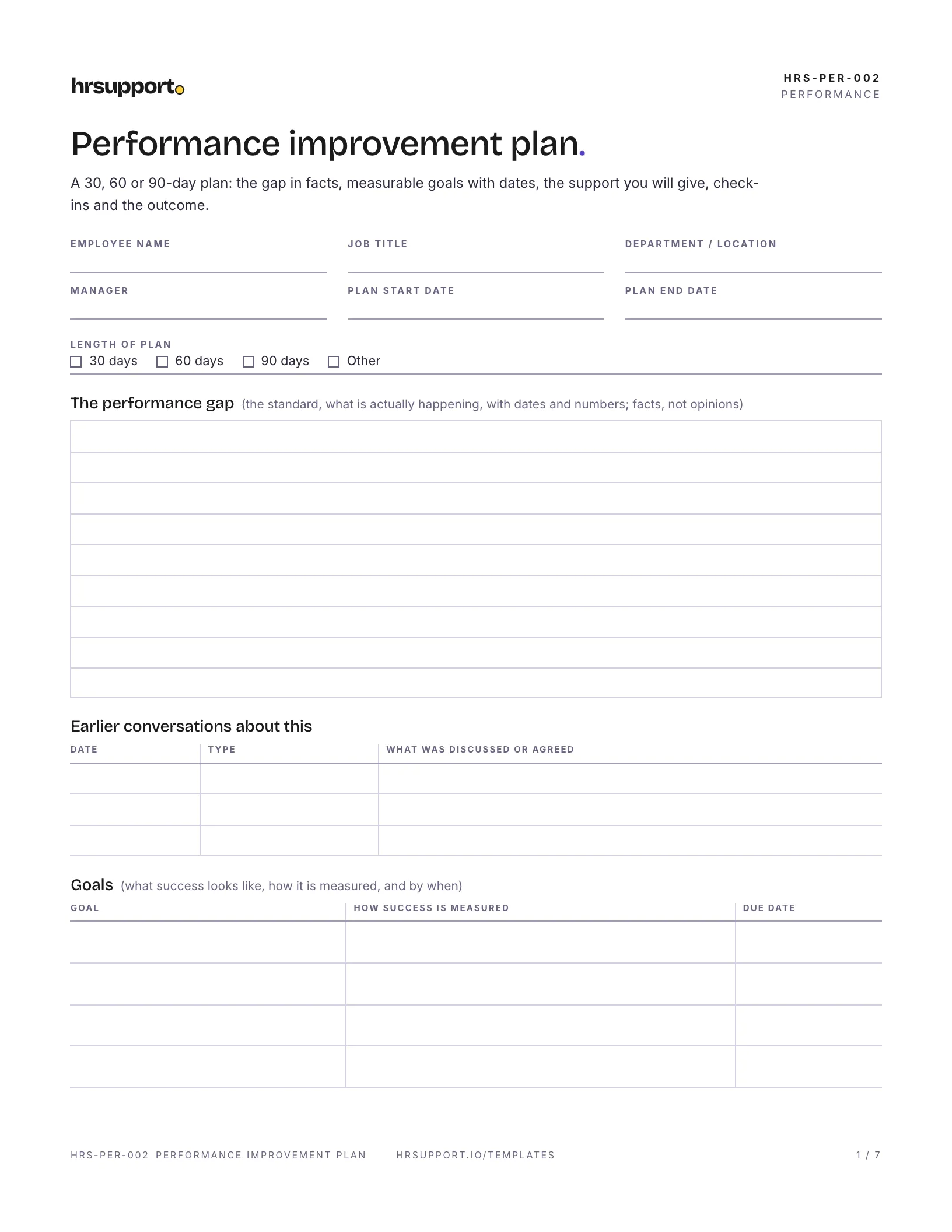 Performance Improvement Plan Template30/60/90-day PIP with measurable goals, support, check-ins and an outcome page.FreeWordPDF
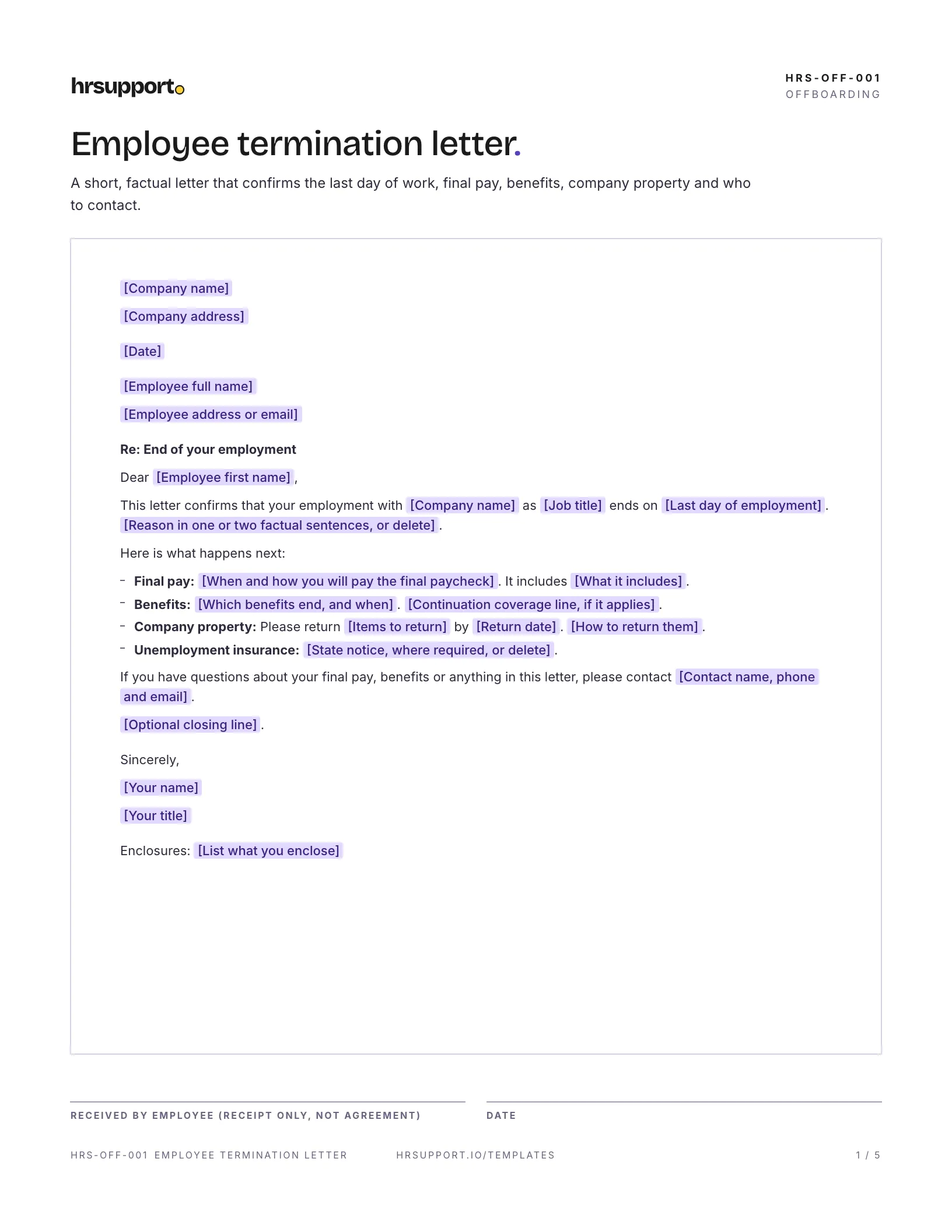 Termination Letter TemplateLast day, final pay, benefits, property and notices, with a termination record.FreeWordPDF
Join the waitlist for early access and early-access pricing. It takes ten seconds.