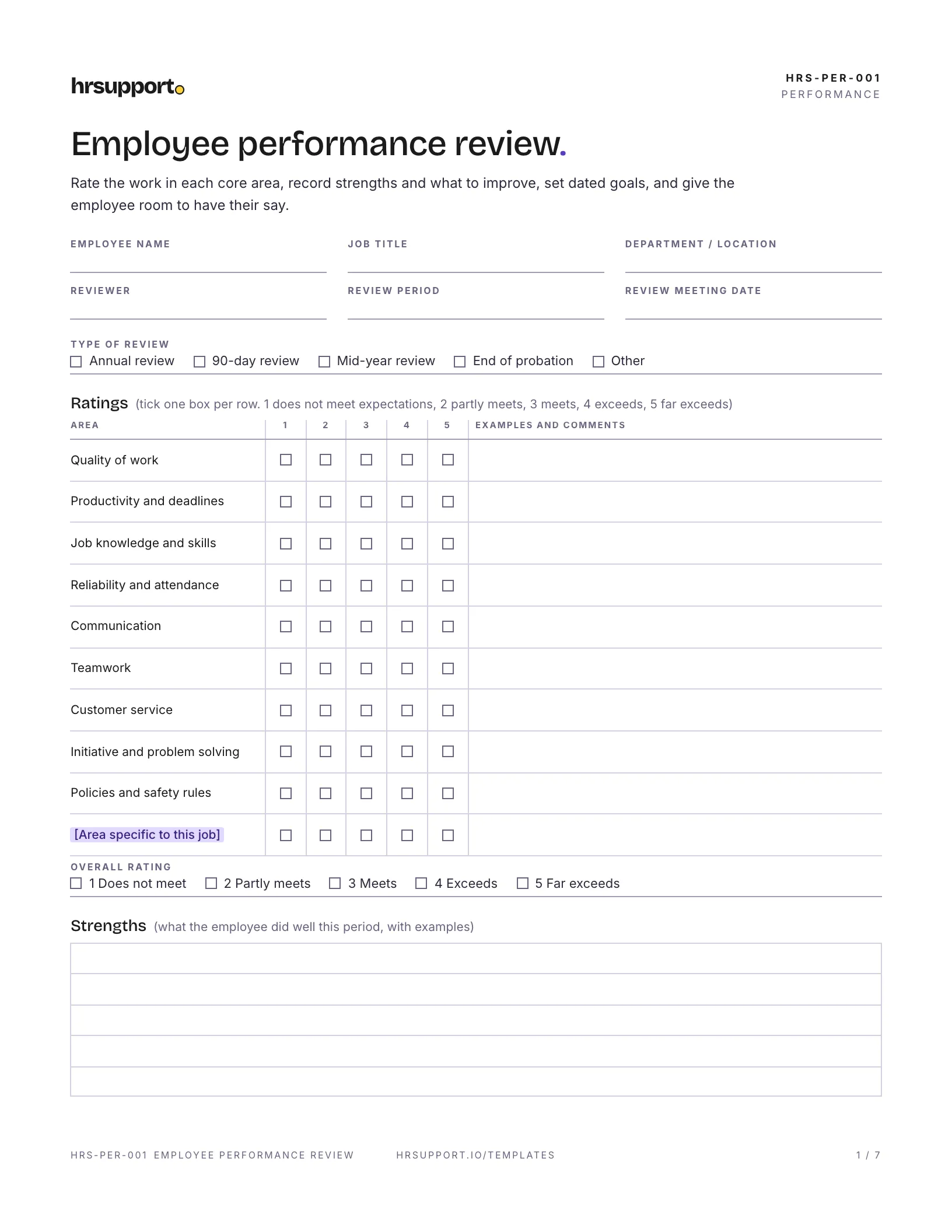
 Performance Review TemplateAnnual or 90-day review with 1–5 ratings, goals, self-assessment and signatures.Free
 Word
Word PDF
PDFA simple agenda and notes sheet for regular check-ins between a manager and an employee, with a page of good questions to ask.
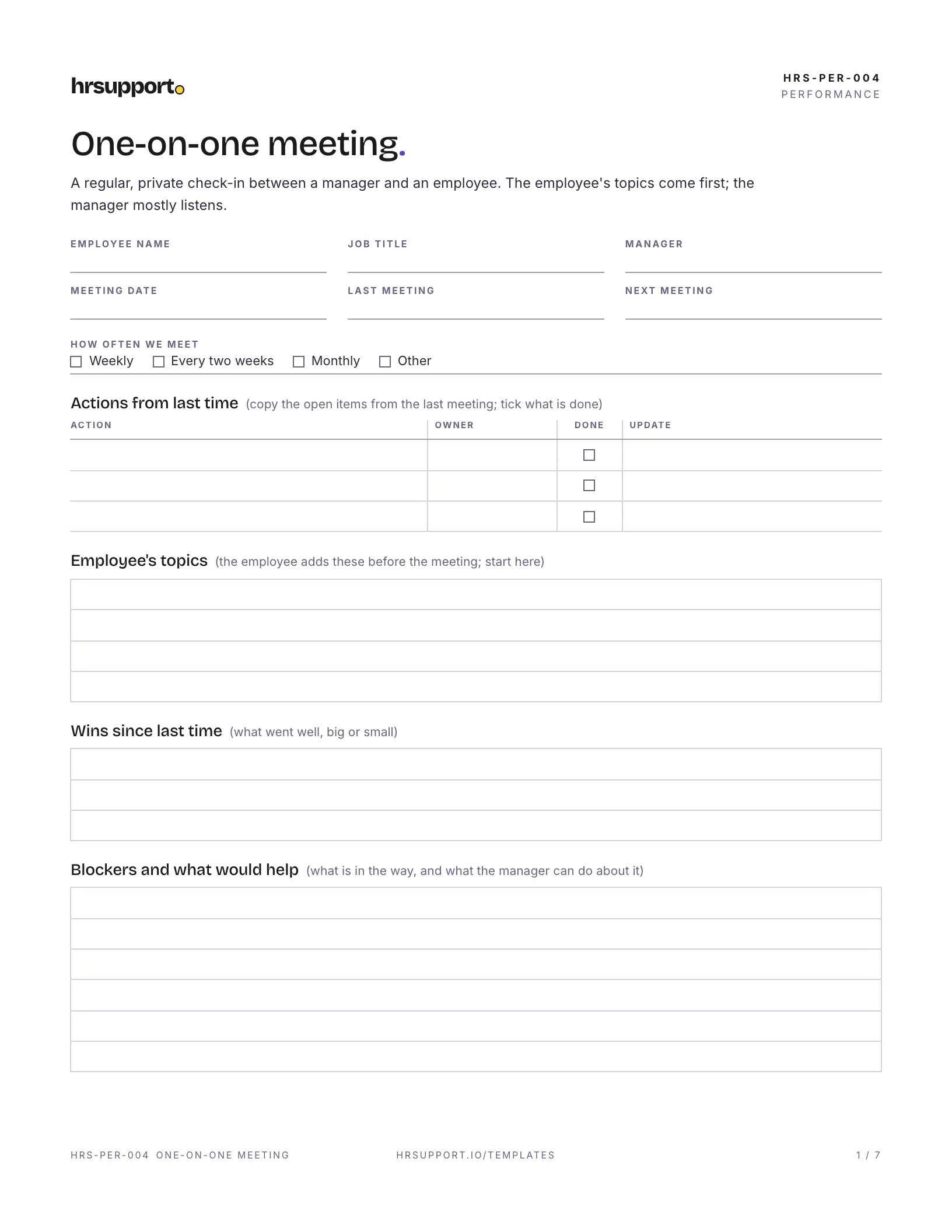
This free one-on-one meeting template gives managers a simple agenda and notes sheet for regular check-ins with each person on their team. The employee’s topics come first, then wins, blockers, feedback both ways, and growth. Every meeting ends with action items that each have an owner and a due date. A third page holds 15 good questions to ask when the conversation needs a push.
A seven-page PDF and an editable Word file, sized for US Letter paper:
Page one records who is meeting, the dates of the last and next meetings, and how often you meet. It also covers the open actions from last time, the employee’s topics, wins, and blockers. Page two covers feedback from the manager, feedback for the manager, growth and development, the action items table and other notes. Page three is the question bank, with a tick box to mark what you asked and a column for the answer.
The example is a one-on-one between the owner of a fictional bike shop and her lead mechanic, held every two weeks. He comes with three topics: a six-day repair backlog, whether a junior mechanic is ready to work alone, and a week off at Thanksgiving. The wins section notes a 40-bike school fleet job finished two days early. The blocker is slow parts deliveries. The owner gives one piece of praise and one change, and he asks for faster answers on parts orders. They agree five action items with owners and dates, and a plan for the backlog. On the questions page, eight questions are ticked with a short answer beside each.
The questions page groups 15 questions by topic: getting started, workload and priorities, blockers, feedback, growth, and the team and the business. A few that work in almost any meeting:
There’s also space for the employee’s questions to the manager. Good ones include “What should I focus on?” and “What would you like me to do more of?”
A weekly one-on-one suits new hires, people in new roles, and busy periods. Every two weeks suits most experienced staff. Monthly can work when you already talk every day, but cover growth and development every time. Whichever you choose, use the same agenda, so both of you know what to bring. The notes also make the next performance review much easier to write.
One-on-ones are where employees often raise problems first. If someone raises discrimination or harassment, or asks for an accommodation for a disability or a religious practice, write it down, act on it, and pass it to whoever handles HR. The EEOC treats these as protected activity, so make sure nothing that follows looks like punishment for speaking up (EEOC: Retaliation).
Not sure how to handle something an employee raised in a one-on-one? That’s what hrsupport.io is for: HR answers for your state, with the law behind every answer.
Ready to use it? It’s free, and comes with a filled-in example.
Template questions
Start with the employee's own topics, then wins since last time and anything blocking their work. Add feedback both ways and, at least once a month, growth and development. Finish with action items, each with an owner and a due date, and review the open ones at the start of the next meeting. This template puts each of those on two pages.
Every week or every two weeks works for most small teams; monthly can be enough for experienced staff who work closely with you every day. What matters most is keeping the slot. A one-on-one that keeps getting moved tells the employee they come last. New hires and people in new roles usually need them more often.
Open questions that get the employee talking: "What's on your mind this week?", "What is getting in your way?", "What do you need from me?" and "What skill would you like to build this year?" Ask two or three, not a list. The template's questions page has 15, grouped by topic, with a tick box and room for notes.
Thirty minutes is a good default for a weekly or every-two-weeks meeting. Monthly meetings, or ones that cover growth and career, can run 45 to 60 minutes. If you regularly run out of time, meet more often rather than longer. If you regularly finish in 10 minutes, the meeting may have turned into a status update.
No. A one-on-one is a short, regular conversation, mostly led by the employee, about what's happening now. A performance review is a formal, written look back over a whole period, with ratings and goals, usually once or twice a year. Good one-on-one notes make the review easier to write, and nothing in the review should come as a surprise.
Either can, but agree who. Many managers ask the employee to fill in their topics, wins and blockers beforehand, and the manager writes the feedback and action items. Keep notes short and factual. Give the employee a copy, keep yours, and start the next meeting by checking the open action items.
Free HR templates
Performance Review TemplateAnnual or 90-day review with 1–5 ratings, goals, self-assessment and signatures.FreeWordPDF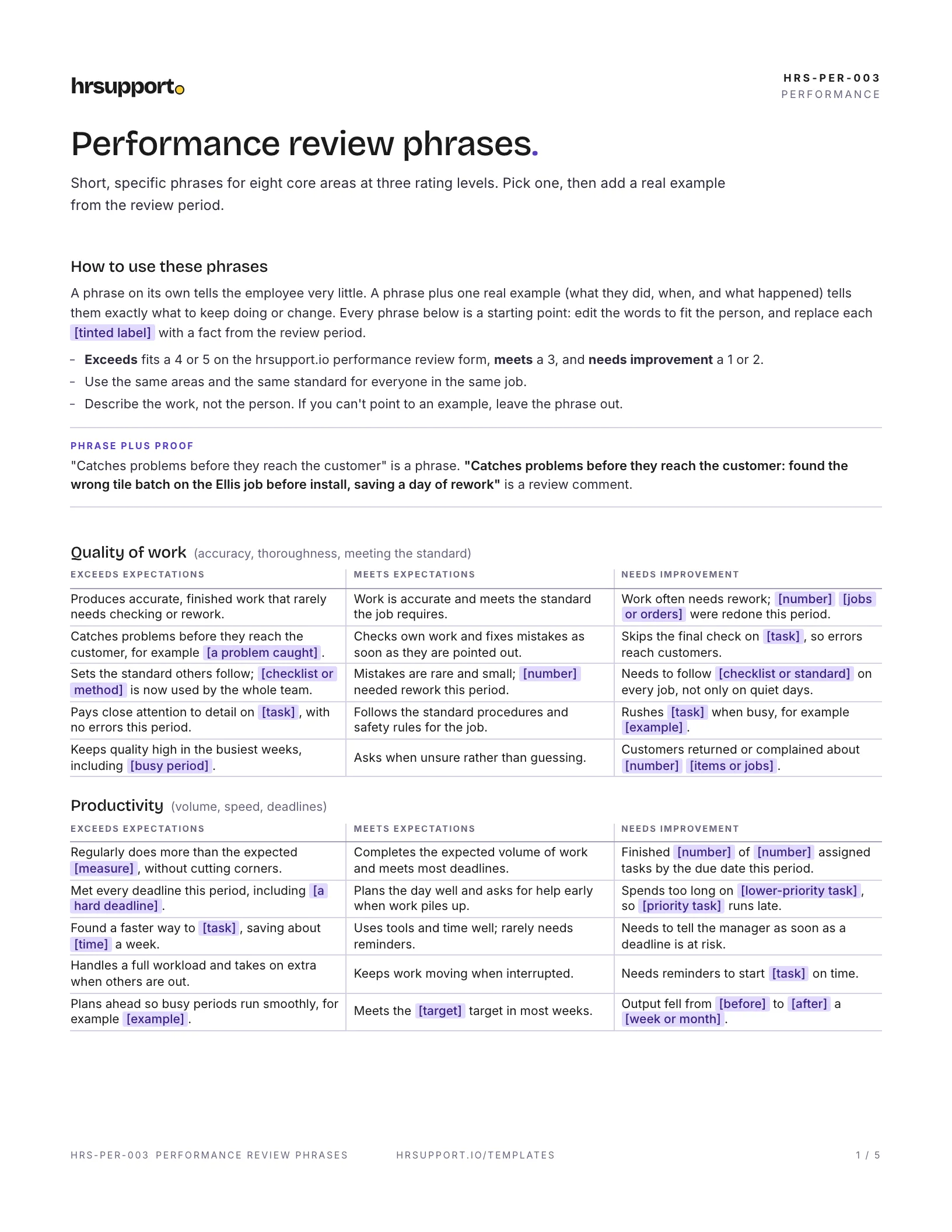 Performance Review Phrases120 review phrases across 8 skills and 3 rating levels, plus phrases to avoid.FreeWordPDF
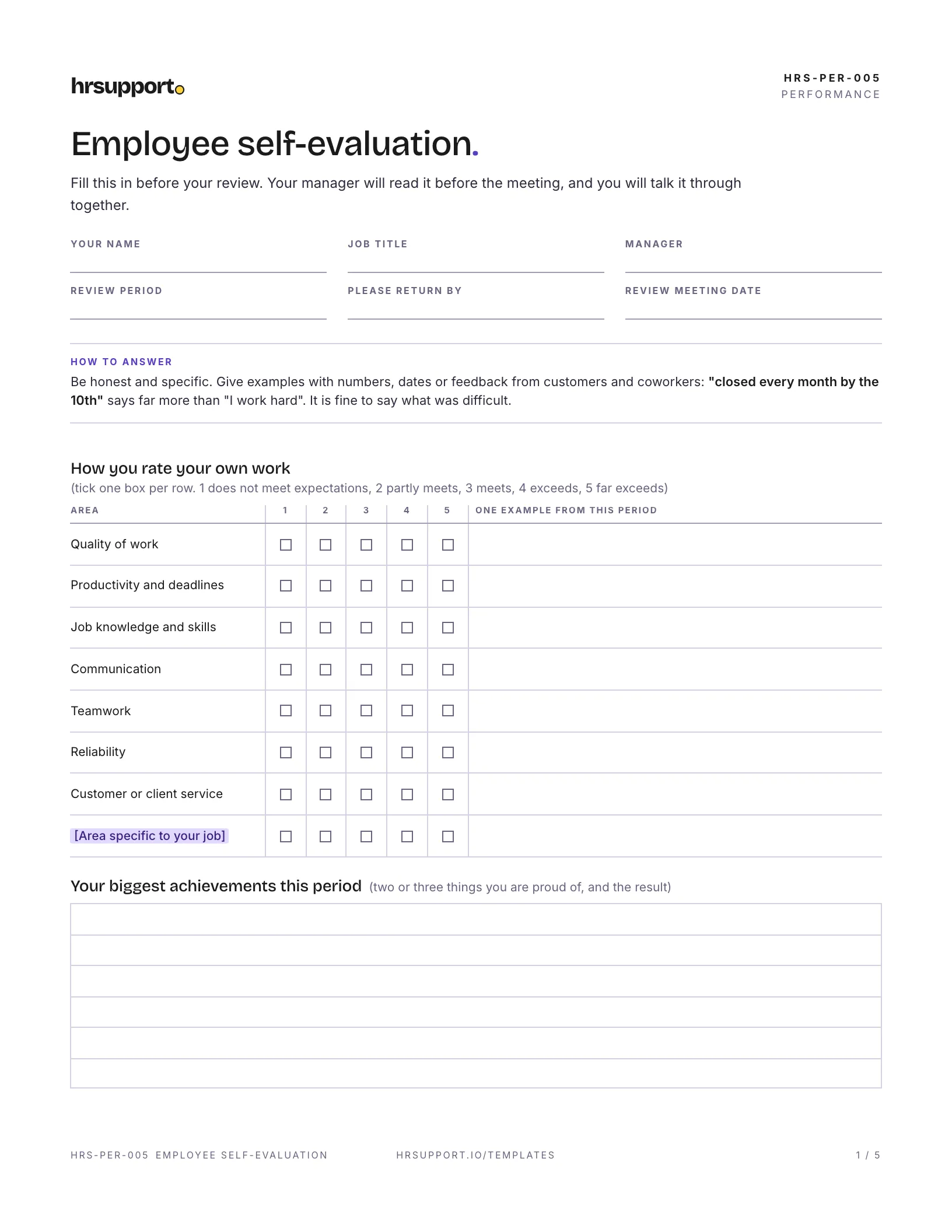 Employee Self-Evaluation FormTwo-page self-evaluation to hand out before a review, with example answers.FreeWordPDF
Join the waitlist for early access and early-access pricing. It takes ten seconds.