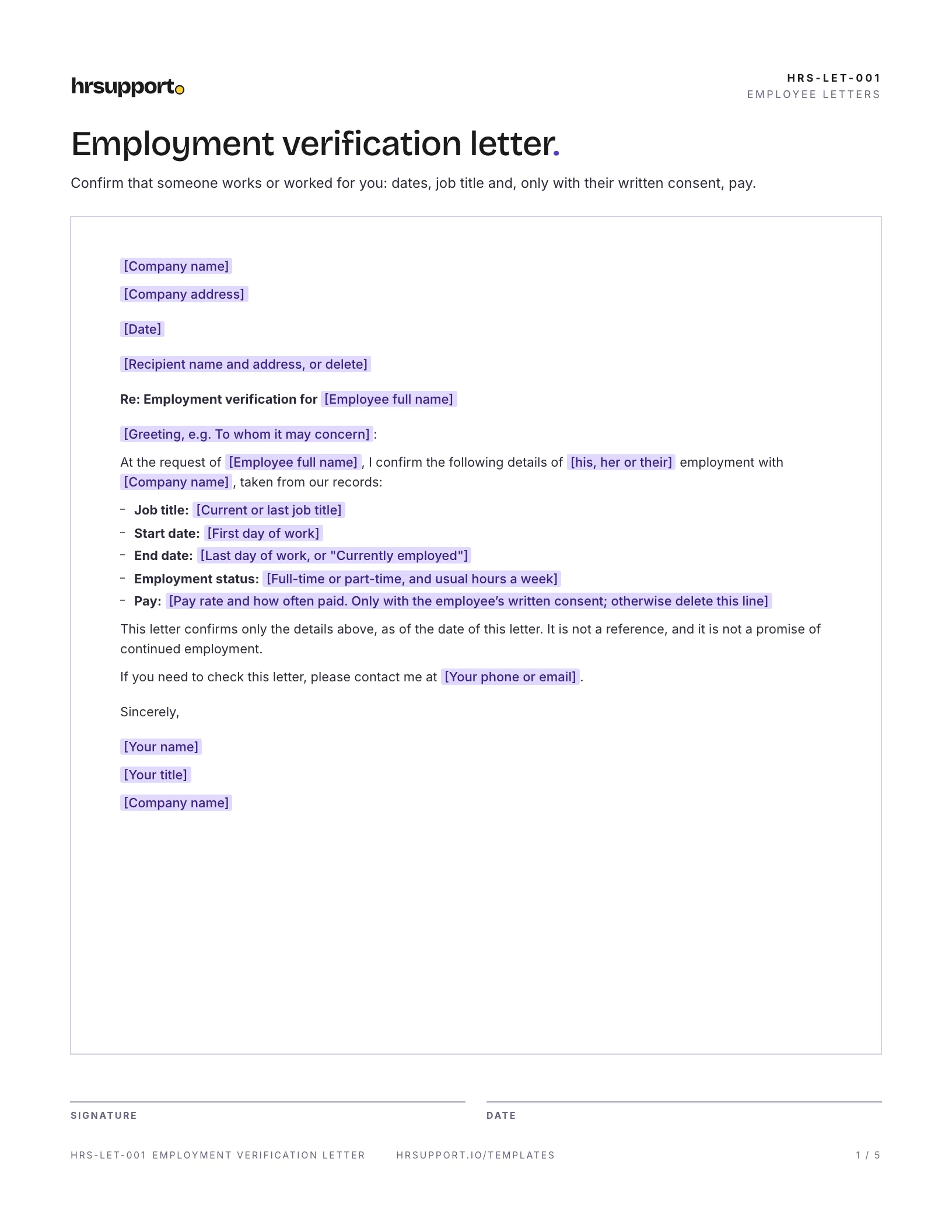
 Employment Verification Letter TemplateConfirm dates, job title and status, with a consent page for pay details.Free
 Word
Word PDF
PDFA letter of recommendation for a current or former employee, written by you as the manager or owner. Plus a neutral reference for when your policy is to confirm facts only.
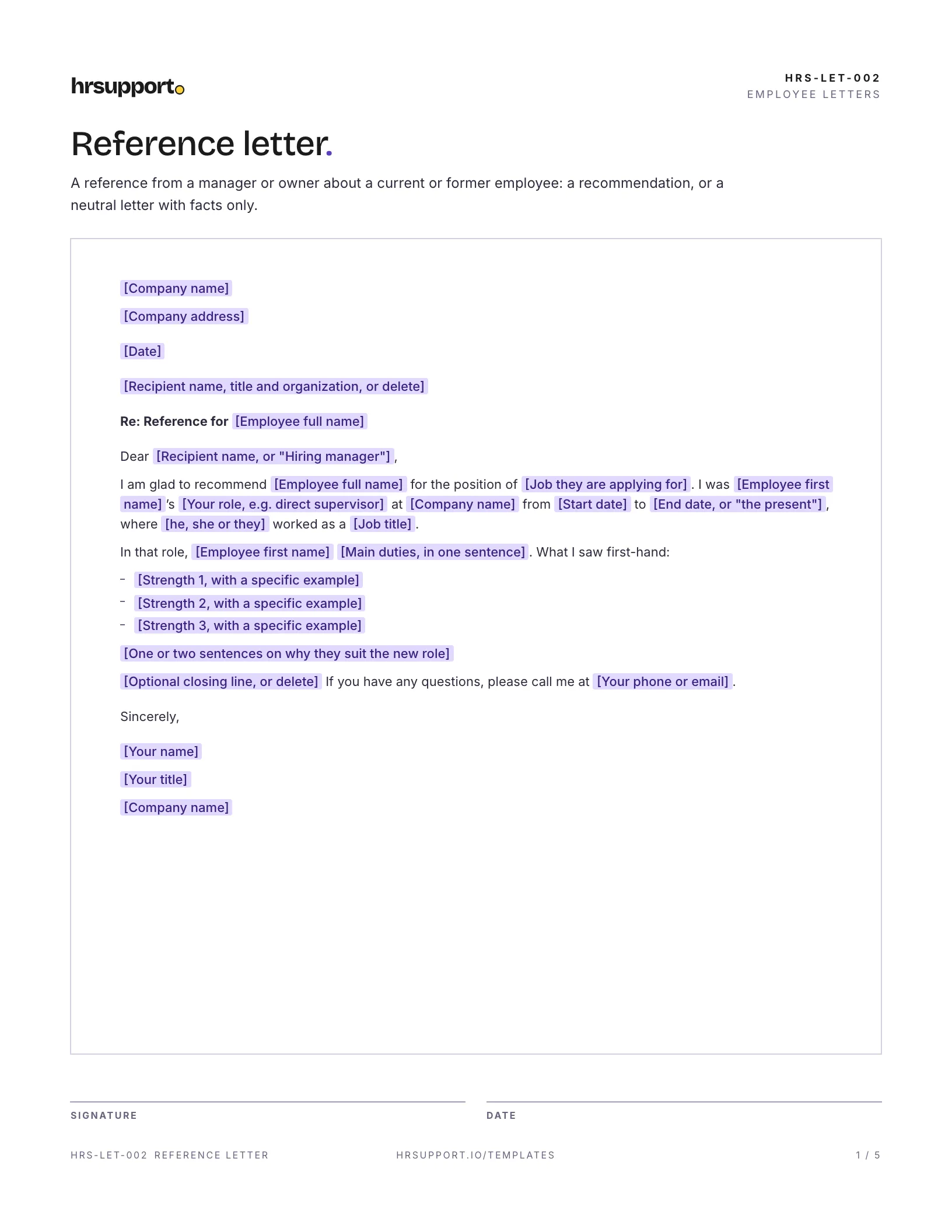
A free reference letter template for US employers, in Word and PDF. Use it when a current or former employee asks you, as their manager or the owner, for a letter of recommendation. It’s built around one idea: write only what you can stand behind. And for businesses whose policy is to confirm facts only, there’s a second sheet: a neutral reference with job title and dates.
The example in the download is from the owner of a fictional print and sign shop in Wisconsin, recommending a former production lead for a production supervisor job. It gives his dates and duties, then three strengths with examples: press operators he trained who stayed, a proof check that cut reprints, and rush deadlines met for the shop’s largest clients. The second example is a neutral reference for a different former employee, a part-time customer service associate, with job title, dates and status only.
If you’re writing as the employee’s direct manager, the letter usually runs like this:
That’s the structure of the template. Keep it to one page; a long letter isn’t a stronger one.
Use the recommendation when you managed the person’s work, you can honestly recommend them, and your business allows managers to give references.
Use the neutral reference when your policy is to confirm facts only, when you didn’t manage the person closely, or when you can’t recommend them honestly. A lukewarm letter, or an inflated one, can mislead the new employer and cause problems later.
Whichever you choose, be consistent. The EEOC says it is illegal to give a negative or false reference, or to refuse a reference, because of race, color, religion, sex, national origin, age (40 or older), disability or genetic information. Its retaliation guidance adds that former employees are protected too: an unjustified negative reference, a refused reference or telling a new employer about a past discrimination complaint can all be retaliation. If you normally give references and suddenly don’t for someone who complained, it can look like retaliation even when it isn’t.
Pause and get advice before writing about an employee who has a complaint, charge or claim open against your business, or who left after a dispute. In those cases, a neutral reference, given the same way you give it to everyone, is usually the safer choice. If you need to confirm someone’s job for a landlord or lender rather than recommend them, use the employment verification letter instead.
Got a reference request and not sure what you can say in your state? hrsupport.io answers HR questions for your state, with the law behind every answer.
Ready to use it? It’s free, and comes with a filled-in example.
Template questions
Who you are and how you know the employee, their job title and dates, their main duties, two or three strengths with a specific example for each, why they would suit the new role, and how to reach you. Keep it to one page. Leave out anything you can't back up, and anything about health, leave, family or other protected traits.
People use the two names for the same thing. Strictly, a letter of recommendation backs someone for a particular job or program, while a reference letter can be more general ("to whom it may concern"). This template works as either. A character reference, written about someone's personal qualities for a court or a landlord, is a different letter.
Many employers decline, or give only dates and job title. What matters is the reason. The EEOC says refusing a reference because of race, sex, age, disability or another protected trait is illegal, and its retaliation guidance treats refusing a reference after a discrimination complaint as possible retaliation. A neutral reference, given to everyone, is the safe middle path.
A short letter that confirms only facts from your records, usually job title and dates of employment, and sometimes full-time or part-time status. It says nothing for or against the person. Many businesses make it their policy for every reference request. Page 2 of the template is a neutral reference, with a line that says you give the same information about everyone.
You can give an honest, job-related account that you can back up with records. EEOC guidance gives an example of a truthful negative reference that was not retaliation. But a negative reference that's unjustified, false or linked to a complaint the person made can be illegal. If you can't say something good and accurate, most small businesses send the neutral reference instead.
Yes, and it carries more weight from the person who supervised the work. Check first whether your business sends all references through the owner or HR. Write in your own name, on letterhead if you have it, and stick to what you saw yourself. If you only knew the employee briefly, say so.
Free HR templates
Employment Verification Letter TemplateConfirm dates, job title and status, with a consent page for pay details.FreeWordPDF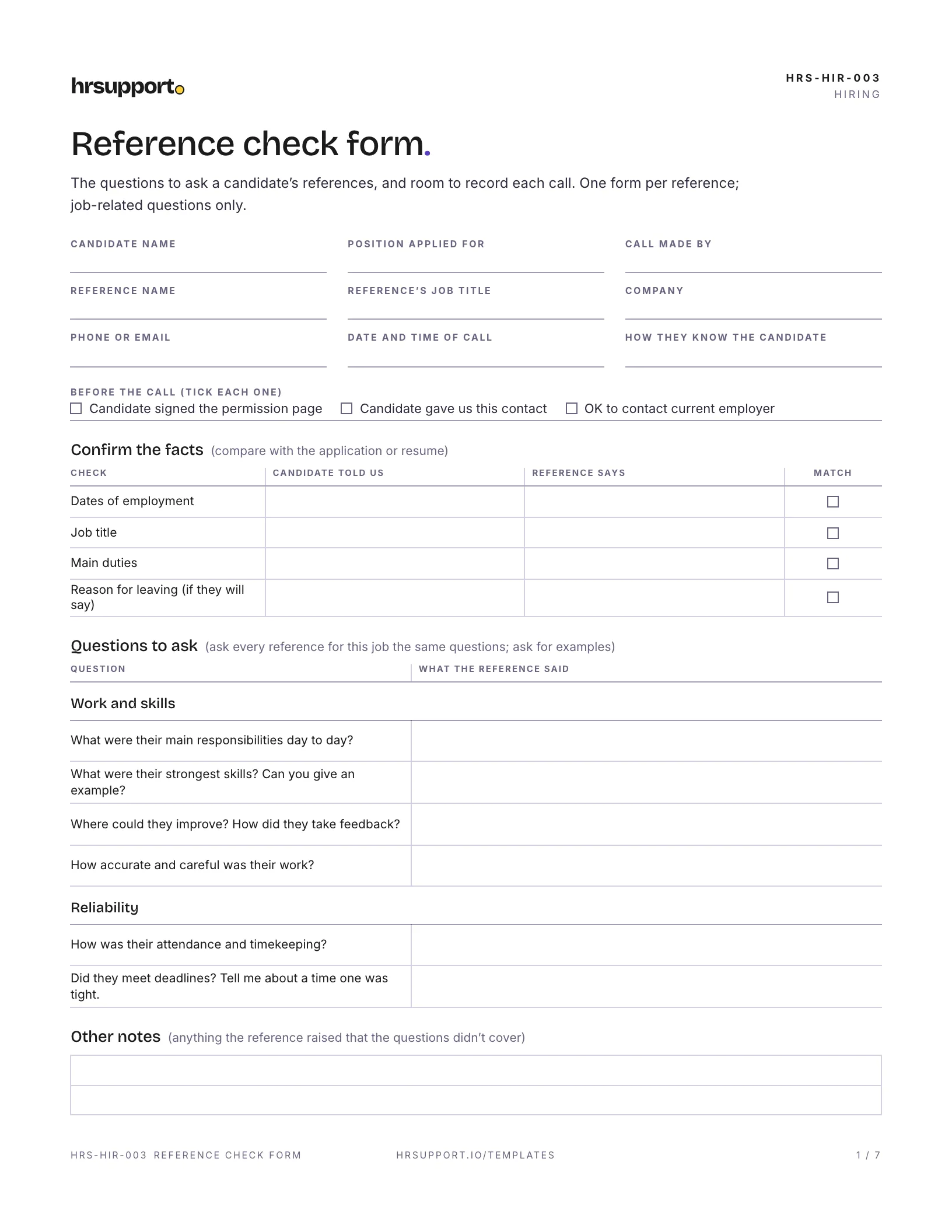 Reference Check Questions and FormJob-related questions, a form for each call, and the candidate's permission.FreeWordPDF
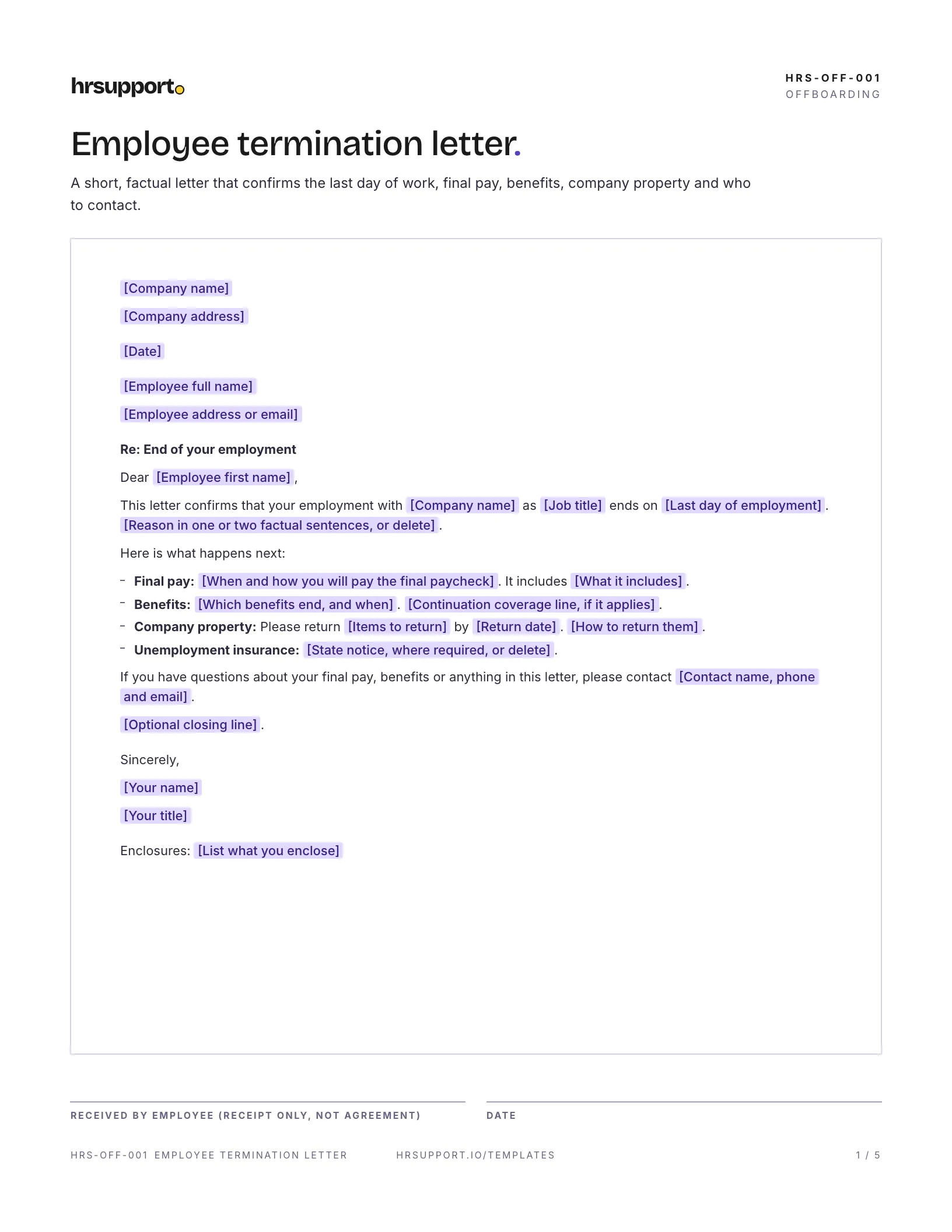 Termination Letter TemplateLast day, final pay, benefits, property and notices, with a termination record.FreeWordPDF
Join the waitlist for early access and early-access pricing. It takes ten seconds.