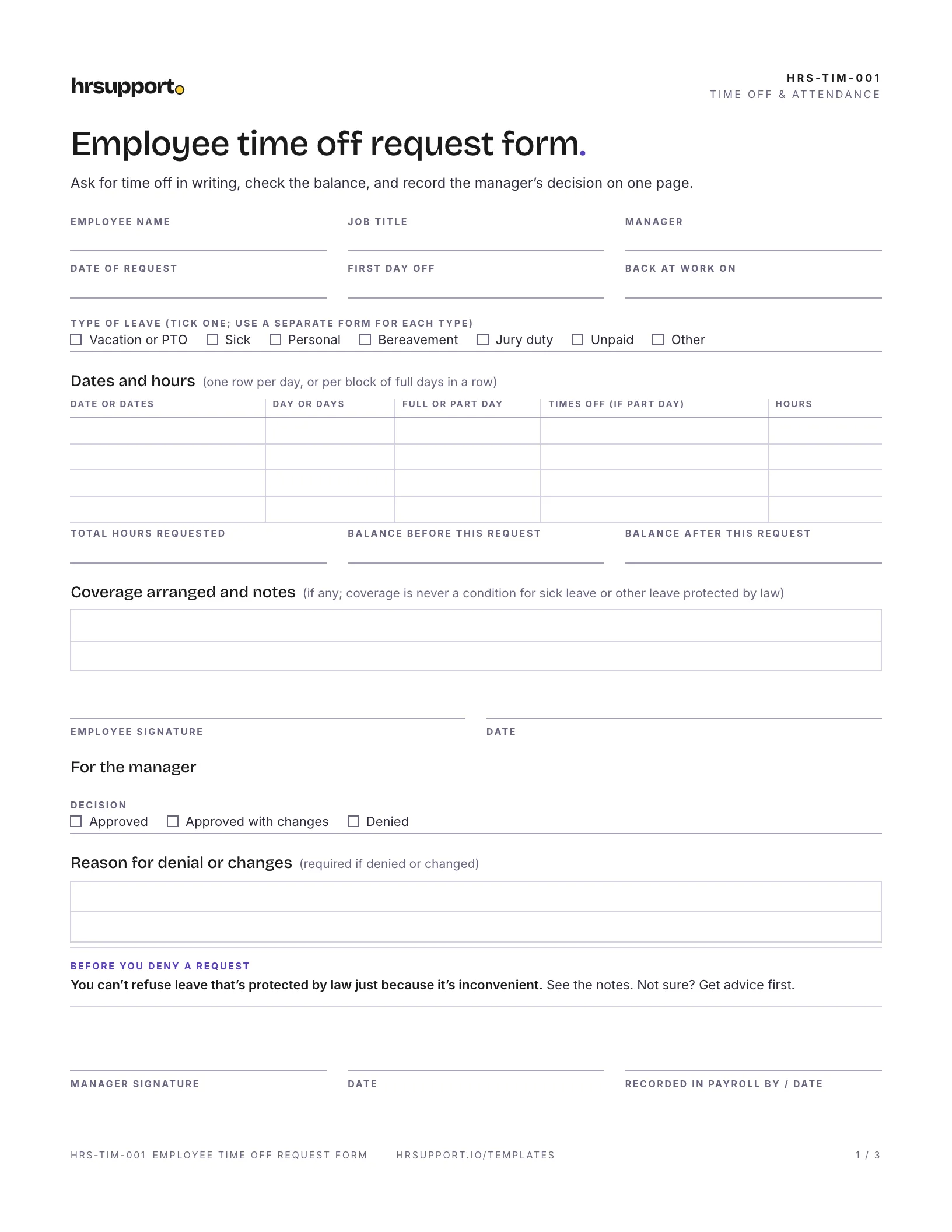
 Employee Time Off Request FormLeave type, dates and hours, balance, coverage and approval on one page.Free
 Word
 PDF
Approve a leave of absence in writing, with the dates, pay and PTO, benefits and premiums, check-ins and what to do to come back. A one-page request form covers the employee's side.
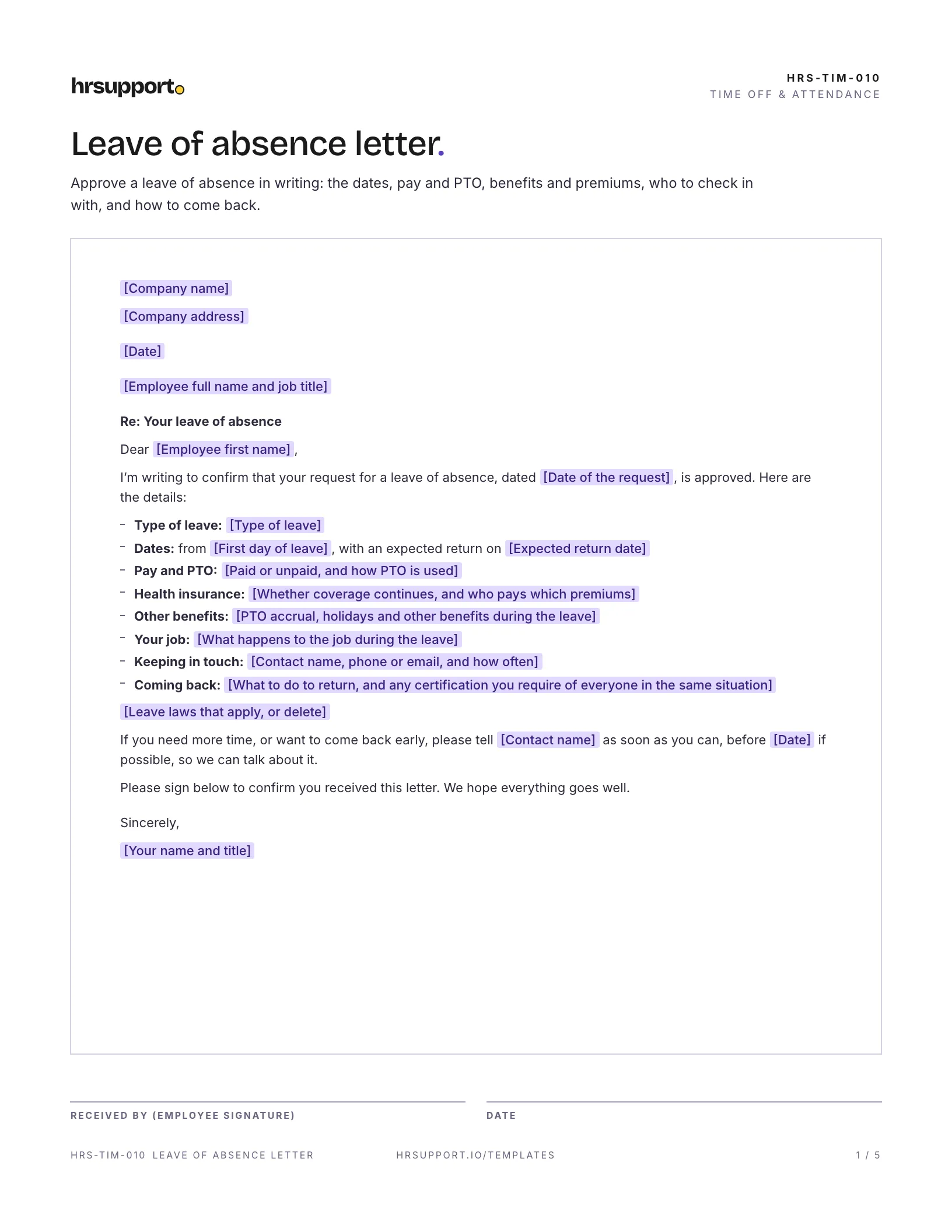
A leave of absence letter confirms in writing that an employee’s leave is approved, and sets out the practical details: the dates, pay and PTO, health insurance, who to check in with and how to come back. This free leave of absence letter template is written for employers at US small businesses. It also includes a one-page leave of absence request form for the employee, so the request and your answer sit together in the personnel file.
A Word file you can edit and a five-page PDF sized for US Letter paper:
Every detail to change is highlighted as a [placeholder] in the Word file.
The example is from a fictional print and sign shop in Ohio with 22 employees. A production lead asks for seven weeks of leave to care for her father after surgery. Because the shop has fewer than 50 employees, the FMLA doesn’t apply, and the owner grants the leave under the shop’s personal leave policy. She uses her 32 hours of PTO for the first four days, and the rest is unpaid. Her health coverage continues, the shop keeps paying its share, and she pays her usual share by check each month. Her job is held, a coworker covers the shift schedule, and she checks in with the office manager every two weeks. She is asked to confirm her return date two weeks before she comes back, and no doctor’s note is needed.
The second page is a one-page leave of absence request form. The employee fills in the dates, the type of leave, whether it’s all at once or on separate days, the reason in general terms, how they’d like to be paid and how to reach them. The employer’s section records which leave laws you checked, the decision and the date you gave the approval letter. For shorter, planned absences such as a vacation, use the time off request form. For time off after a death in the family, set out the rules in a bereavement leave policy.
The FMLA covers employers with 50 or more employees in 20 or more workweeks this year or last (29 CFR 825.104). An eligible employee has worked for you for at least 12 months and 1,250 hours in the last 12 months, at a site with 50 or more employees within 75 miles (29 CFR 825.110), and can take up to 12 workweeks of leave in 12 months for reasons such as their own serious health condition or a new child (29 CFR 825.200).
FMLA leave has its own required notices. You must tell the employee whether they’re eligible, usually within five business days, and give a written designation notice (29 CFR 825.300). The DOL’s optional forms are WH-381 and WH-382 (DOL: FMLA forms). This letter isn’t a replacement for them. During FMLA leave you must keep group health coverage on the same terms, and the employee keeps paying their usual share (29 CFR 825.209). You can ask for a fitness-for-duty certification only under a uniformly applied policy, and you must say so by the designation notice (29 CFR 825.312).
Ask in writing, as early as you can. Say what kind of leave you need, the first day and when you expect to return, and the reason in general terms; you don’t need to share a diagnosis. Say whether you’d like to use PTO and how to reach you, and offer to help hand over your work. The request form on page 2 covers all of it.
Get advice before you deny, shorten or end a leave for the employee’s own health, a family member’s health, a new child or military service. Do the same before you count any of that leave against them, or if they can’t say when they’ll be able to return.
Not sure which leave laws apply to your business? hrsupport.io answers HR questions for your state, with the law behind every answer.
Ready to use it? It’s free, and comes with a filled-in example.
Template questions
The type of leave, the first day and the expected return date, whether it's paid or unpaid and how PTO is used, what happens to health insurance and who pays the premiums, other benefits such as PTO accrual, what happens to the job, who to check in with, and what to do to return. Add a line on any leave law that applies, and a signature line to confirm receipt.
Usually not, unless your policy says so or the employee uses PTO. FMLA leave is generally unpaid, though an employee can choose, or you can require, that accrued paid leave runs at the same time. Military leave works differently, because under USERRA the employee may choose to use vacation but you can't require it. Some states, such as New York, have paid family leave programs.
It depends on the reason and the law. The FMLA gives eligible employees of employers with 50 or more employees up to 12 workweeks in 12 months. Under the ADA (15 or more employees), unpaid leave can be a reasonable accommodation. USERRA protects military service at employers of every size, and state laws can add more. Otherwise, it's up to your policy, applied the same way for everyone.
No. If the FMLA applies, you must give the employee an eligibility notice, usually within five business days, and a written designation notice. The DOL's optional forms are WH-381 and WH-382, and you can use your own if they give the same information. Use this letter alongside them to confirm practical details such as check-ins, but not in place of them.
During FMLA leave, you must keep the employee's group health coverage on the same terms as if they were working, and they keep paying their usual share. During military leave, the employee can choose to continue coverage for up to 24 months. For other unpaid leave, check your health plan's terms and write down in the letter who pays which premiums and how.
Keep it short. Say what kind of leave you need, the first day and when you expect to return, and the reason in general terms; you don't have to share a diagnosis. Say whether you want to use PTO, how to reach you, and offer to help hand over your work. The request form in this template asks for all of this on one page.
Free HR templates
Employee Time Off Request FormLeave type, dates and hours, balance, coverage and approval on one page.FreeWordPDF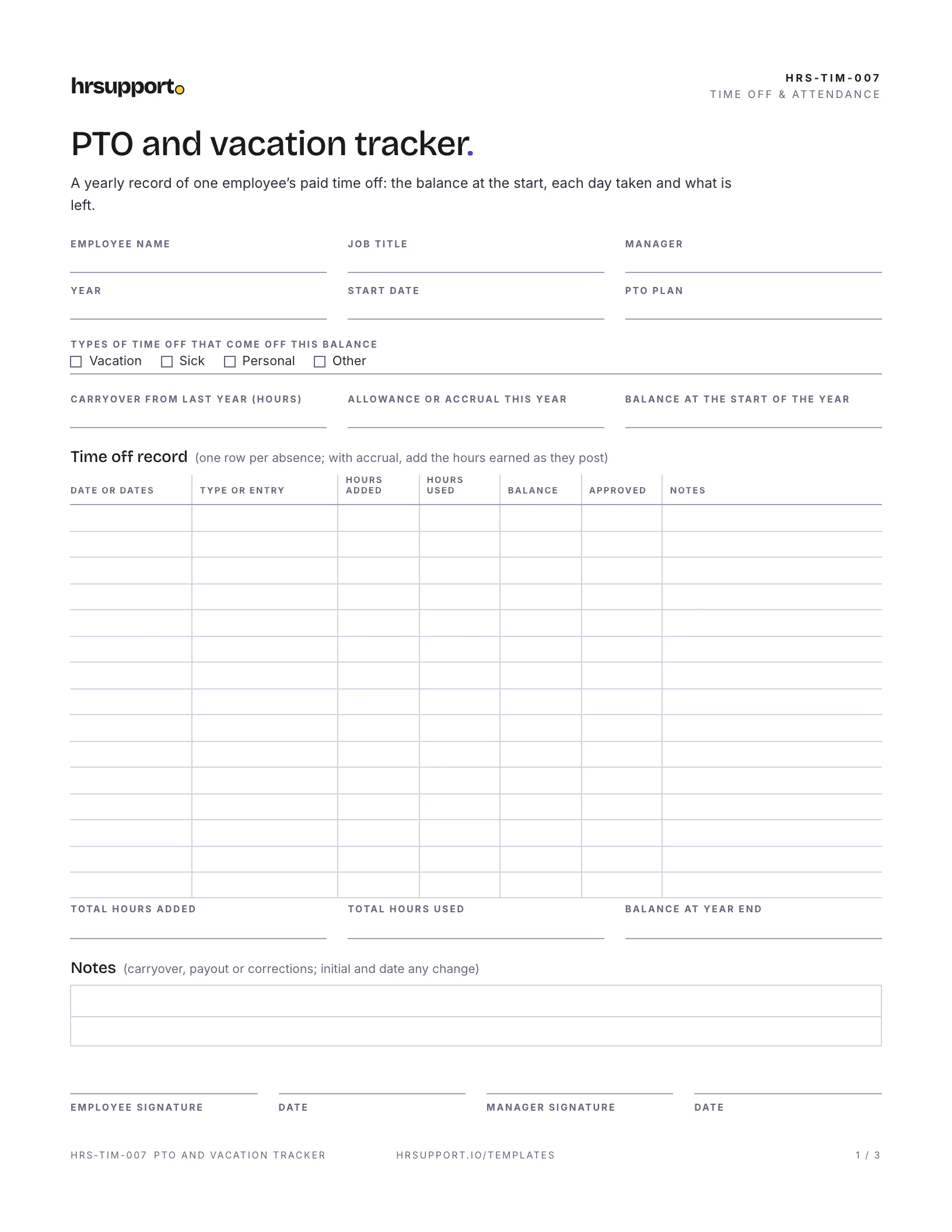 PTO and Vacation Tracker TemplateAllowances or accrual, a time off log, balances by employee and a yearly calendar.Free
 ExcelPDF
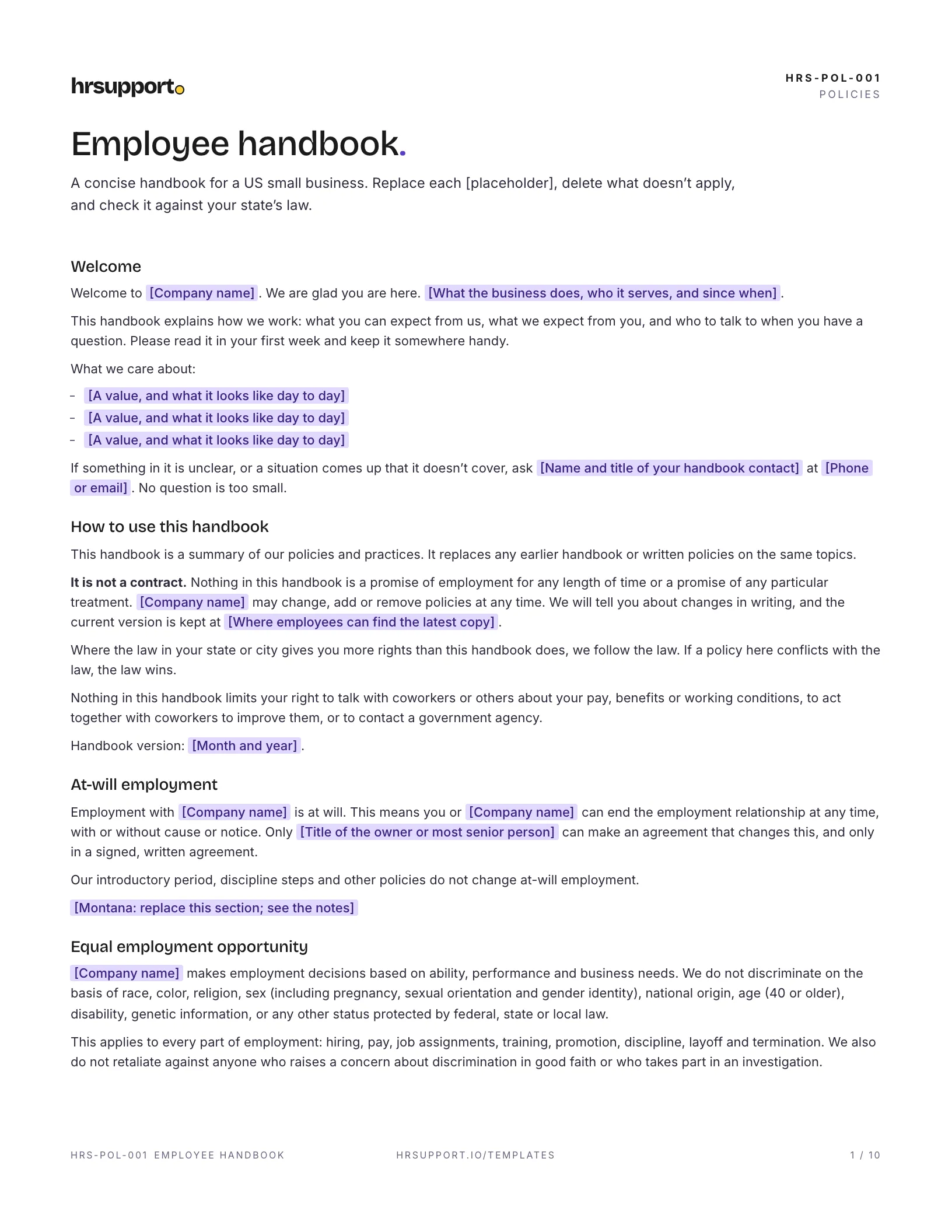 Employee Handbook TemplateTwenty-nine short policies and an acknowledgment page, ready to fill in.FreeWordPDF
Join the waitlist for early access and early-access pricing. It takes ten seconds.